
Student Guide to Living With Host Families in Cork
Study English In Ireland
March 11, 2026

You’ll settle into a Cork host family best if you arrive prepared, respectful, and open-minded. Confirm arrival details, visas, and share flight times. Introduce yourself, learn meal routines, and ask about chores, laundry, Wi‑Fi and quiet hours in the first 48 hours. Agree on money matters and visitor rules, keep common areas tidy, and communicate issues early and calmly. Small gestures and shared meals build rapport, and the following sections give practical tips and examples to help you adapt.
How will you know the right fit? You’ll trust instincts and clear criteria: look for cultural compatibility and openness to your lifestyle. Think about family dynamics—are they lively and social or calm and private? You want hosts who respect your routines, privacy, and goals so you can explore Cork freely. Ask about house rules, meal schedules, visitors, and quiet hours before committing. Seek references and chat candidly about expectations; you’ll spot mismatches fast. Prioritize a host who supports your independence, not someone who micromanages daily life. Choose a family that welcomes questions, encourages local experiences, and lets you come and go with autonomy. That balance gives you a safe base and the freedom to thrive.
Before you step off the plane, get practical things sorted so your first days with a host family in Cork go smoothly: confirm arrival times and directions, share flight details and any delays, check visa and passport validity, and arrange local currency or a means to access funds. Pack a compact welcome kit — a phone charger, adapter, modest gifts reflecting your home, and printed contact info — so you can arrive independent and confident. Learn a few local phrases and basic household expectations to ease cultural exchange without losing your sense of freedom. Ask your host about routines, quiet hours and meal habits to respect family dynamics. Finally, save emergency numbers and your accommodation address both online and on paper.
Once you arrive, take the first day to get the essentials in place so you can relax and start connecting with your host family: introduce yourself properly, confirm household rules and mealtimes, ask where you can store belongings and do laundry, and check Wi‑Fi, heating, and any transport links you’ll use. Use this time to show curiosity about cultural exchange and respect for family traditions while maintaining your independence. Be friendly, clear, and ready to adapt.
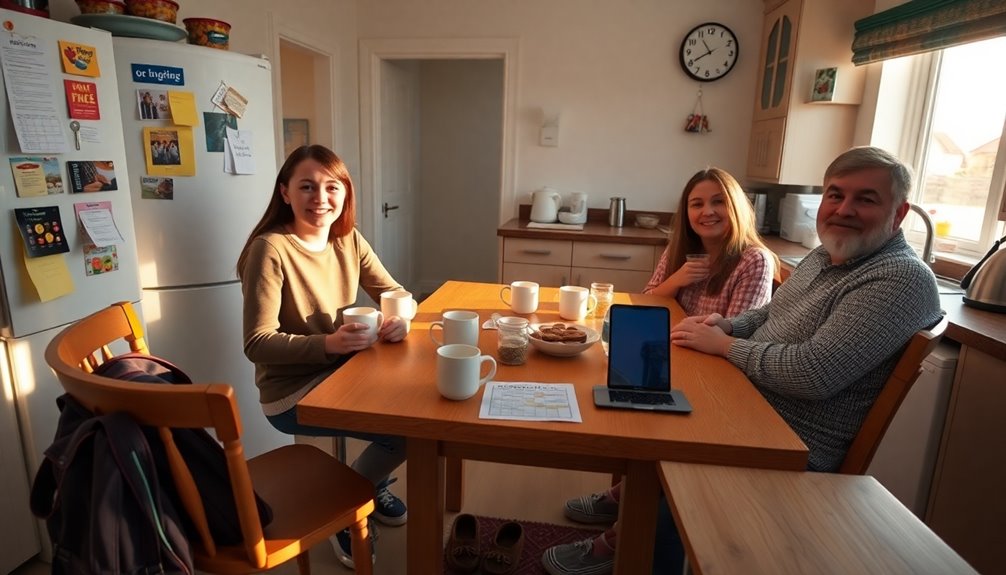
After you’ve settled in, ask about the household chores schedule so you know who does what and when. Clarify expectations for visitors and overnight guests to avoid surprises. Keeping rules and routines clear will help you fit in smoothly.
When you move in with a host family, clear expectations about chores keep everyone comfortable and respectful of shared space; a simple, written schedule prevents misunderstandings and shows you’re committed to pitching in. You’ll want to agree on chore rotation and clearly list cleaning responsibilities so freedom and fairness coexist. Propose a flexible plan that fits your classes and social life, then stick to it. If something’s unfair, talk and adjust.
Keep it simple, fair, and negotiable.
If you’re going to have guests, agree on clear rules up front so everyone feels comfortable and safe; discuss who can visit, acceptable hours, overnight stays, and whether guests can use shared spaces like the kitchen or bathroom. You’ll want straightforward visitor guidelines that let you socialise without compromising your host’s routine. Ask about notice periods, limits on numbers, and any quiet hours. Respect guest etiquette: clean up after visitors, keep noise down, and make sure guests follow house rules. If you want more freedom, negotiate occasional exceptions—just be ready to reciprocate with consideration. If conflicts pop up, address them calmly with your host, aiming for compromises that protect both your independence and the household harmony.

When you first arrive, set household rules early so everyone knows what’s expected. Be explicit about daily routines like mealtimes, chores, and quiet hours to avoid misunderstandings. Agree on how you’ll communicate—texts, notes, or short check-ins—so preferences are clear.
Although it might feel awkward at first, set household rules within the first few days so everyone knows what to expect — discuss quiet hours, guest policies, bathroom routines, and kitchen use, and agree on who cleans what and when. You’ll protect your freedom by defining boundaries that respect both your needs and the host’s household expectations. Talk about privacy, shared chores, and how decisions fit into family dynamics; keep the tone friendly and curious, not defensive. Use a short written list so you can refer back to it.
How do mornings and evenings usually run here? Ask about wake-up times, kitchen access, and quiet hours so you can keep your freedom without surprises. Confirm daily meal plans and whether you join family activities or keep your own schedule. Be direct but polite: say when you’ll leave, return, or cook. Use a quick written note or shared chart to avoid repeated questions.
| Time | Typical Routine | Your Options |
|---|---|---|
| Morning | Breakfast served | Eat or pack |
| Midday | Family lunch sometimes | Solo or join |
| Evening | Dinner time | Join or opt out |
| Night | Quiet hours | Study or socialize |
| Weekend | Shared activities | Free to explore |
Agree on basics, then enjoy flexible, respectful living.
Because clear communication prevents most misunderstandings, agree up front on how you’ll talk about schedules, chores, and guests — whether by quick messages, a shared note, or a weekly check-in. Decide which communication styles suit you and your host: direct texts for urgent matters, a whiteboard for daily plans, or brief face-to-face chats. Be honest about language barriers and ask for clarification when needed; you’ll both save time and avoid tension. Keep it flexible so you still feel independent but respectful.
Wondering how meals will work with a host family in Cork? You’ll want to state your meal preferences clearly—vegetarian, halal, vegan—and note any dietary restrictions or food allergies right away so everyone’s safe. Be open to trying cultural cuisine but also honest about what you can’t eat. Offer to help with grocery shopping or meal planning; that shows independence and makes adapting easier. Suggest cooking together sometimes to share skills and bond without imposing. Keep your own snack options handy for late-night study sessions or picky moments. Agree on routines—who cooks when, costs, and leftovers—so meals stay relaxed. Clear, upfront communication gives you freedom to enjoy food and routines without stress.
When you move in with a host family, respect for shared spaces makes daily life smooth: knock before entering private rooms, ask about quiet hours, and follow simple rules about using the kitchen or laundry. You’ll enjoy freedom while keeping harmony if you practice mutual respect and communicate clearly about boundaries. Treat common areas as shared spaces, tidy up after yourself, and check before inviting friends over. If something’s unclear, ask — hosts usually appreciate directness.
Respect shared spaces: knock, ask about quiet hours, tidy up, label items, and communicate openly with your hosts.
These steps keep independence and trust working together.

If you want to keep goodwill with your hosts, agree up front on laundry, cleaning, and chores so expectations are clear: find out which tasks are yours, how often you should do them, whether you’ll share supplies, and how to handle communal items like towels or vacuuming. Be punctual with laundry etiquette—ask about machine times, detergent, and where to store clean clothes. Stay flexible: offer to swap tasks if someone’s busy, and don’t assume the host will tidy your space. Clarify chore responsibilities for shared areas and personal rooms, and set simple routines that suit your study schedule. If a problem comes up, raise it calmly and suggest a practical fix so everyone keeps their freedom and comfort.
You’ll want a simple weekly budget plan to track your pocket money and avoid surprises. Ask your host about how household bills like utilities and internet are handled so you know what’s included and what you’ll need to contribute. Clear expectations will keep money worries from spoiling your stay.
Because living with a host family changes some expenses, it helps to set a simple weekly budget that covers shared bills, groceries, transport and pocket money. You’ll want practical budgeting tips and easy expense tracking so you keep freedom to explore Cork without money stress. Start by noting fixed contributions and estimating per-week food and travel costs. Agree with your host on shared payments, then set a weekly pocket-money allowance for socials and coffee.
Review and adjust weekly to stay flexible.
While living with a host family, getting clear about household bills will make money matters far less stressful. You should ask early about bill payment routines and who handles what — that avoids awkward splits. Clarify cost expectations for energy usage and water consumption, and whether internet costs are included or shared. Agree on expense sharing for occasional extras, and get household agreements in writing so everyone’s clear on financial responsibilities. Use simple budgeting tips: track what you pay weekly, set aside a small buffer, and limit wasteful utility management habits like leaving lights on. Knowing these details gives you freedom to manage your money confidently, avoid surprises, and enjoy Cork without constant financial stress.
When you move in, take a moment to introduce yourself clearly and ask about house routines—mealtimes, laundry, quiet hours—so expectations are understood from the start. You’ll want to show openness to cultural exchange and keep mutual respect at the core of daily interactions. Be friendly, honest, and independent while staying considerate.
Balance your freedom with responsibility, and you’ll build a relaxed, respectful household relationship.
If a problem comes up, address it early and calmly so small issues don’t grow into bigger ones. You’ll want direct, honest conversation—pick a quiet moment, explain how you feel, and stick to facts rather than blame. Use active listening: let your host finish, ask clarifying questions, and repeat back what you’ve heard. For practical conflict resolution, propose clear solutions and compromises that respect both your independence and house rules. If emotions run high, suggest pausing and returning later. Keep records of important agreements so everyone’s on the same page. For complex issues, involve your programme coordinator as a neutral mediator. Good problem solving keeps your freedom intact while maintaining mutual respect and a stable home life.

Resolving issues calmly makes it easier to enjoy life outside the house, so once household tensions are settled you can turn your attention to exploring Cork. You’ll want to immerse yourself in local culture, try markets, live music, and day trips that suit your pace. Balance independence with respect for your hosts’ space and routines, and ask for recommendations — they’ll often point you to lesser-known gems.
Keep plans flexible so you can choose what feels liberating.
Yes, you’ll usually need health insurance requirements met; it’s wise to have coverage that includes emergency medical care and repatriation. Don’t restrict yourself—choose flexible plans that let you travel, explore, and stay worry‑free.
Usually yes, but not always — guest policies vary, so you’ll want to ask first; clear communication expectations keep freedom intact, you’ll respect house rules and boundaries while enjoying occasional overnight guests or partners with mutual agreement.
Yes — you should follow internet etiquette and streaming guidelines set by your host; they’ll usually allow reasonable streaming but expect fair use, bandwidth respect, and polite sharing of schedules, so you won’t be restricted if you’re considerate.
You’ll notify your host family immediately; they’ll explain the key replacement process and host family policies, you’ll cover replacement costs if at fault, and you’ll follow agreed security steps so you can keep your independence and trust.
Yes — you can, like a traveller asking to join a feast, as long as you respect your host’s religious customs and holiday traditions; you’ll ask first, share your freedom-loving spirit, and accept whatever boundaries they set.
You’ve chosen Cork, packed your bags, and knocked on the door that might change your life. You’ll meet your host’s smile, learn the kitchen rules, and find a favourite café down a Liffey-like lane. Nights will bring laughter, small misunderstandings, and quiet conversations that teach you more than any guide. Stay curious, listen, and step outside your comfort zone—because somewhere between kettle whistles and local banter, something unexpected is waiting to become yours.
Promote our brand and get paid—enroll in our affiliate program!