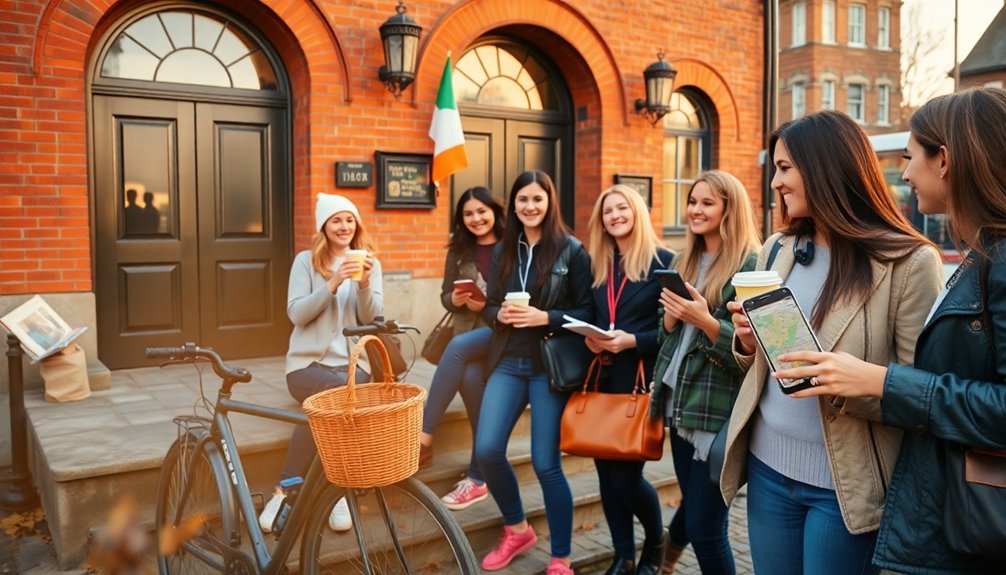
Student Tips for English Language Schools Ireland
Study English In Ireland
January 22, 2026

Pick a city and school that match your goals—conversation practice, exam prep or cultural immersion—and check reviews and accreditation. Book safe, flexible accommodation early and compare homestays, student residences and private rentals. Learn local transport, healthcare and budgeting tips, join social activities and practise speaking every day with shadowing and short goals. Maximise class time by asking questions and joining group work. Keep fit and plan exam practice; continue and you’ll find practical steps and resources to help.
When picking a city and school, start by matching them to your goals—are you aiming to boost conversation skills, prepare for exams, or immerse yourself in a culture? You’ll want to weigh city characteristics like size, pace, nightlife, and transport, since those shape daily practice and freedom. Smaller towns give quieter immersion; big cities offer constant interaction and events. Then check school reputation: reviews, accreditation, and graduate outcomes tell you how seriously they teach. Contrast course offerings, class size, and teacher experience to match your learning style. If you value independence, pick a place where you’ll get real-world speaking chances and a school that supports autonomous learning. Decide quickly, but choose deliberately.
Because where you stay shapes daily practice, start booking accommodation early to lock in safe, affordable options and avoid last-minute stress. You’ll want flexibility, freedom to explore, and clarity on contracts. Compare homestays, student residences, and private rentals; ask for references, read recent reviews, and confirm what’s included. Prioritize locations near your school but also near social spaces. Use safety tips like checking locks, neighbourhood reviews, and host verification. Negotiate short-term trial stays if possible.
| Type | Cost range | Safety tip |
|---|---|---|
| Homestay | Low–Medium | Meet host, verify ID |
| Residence | Medium | Check 24/7 security |
| Private rental | Variable | Inspect locks, contracts |
Book through trusted platforms or your school to protect your freedom and wallet.
Wondering how to get around Ireland without feeling like a tourist? You’ll want to embrace public transport and local tips to move freely. Learn fare systems for buses and trains, check bus routes in advance, and grab travel passes when you’ll commute often. Use transport apps to track schedules, book rides, and compare taxi services when you need speed. Explore cycling options for short trips—many towns have bike rentals and safe lanes—while walking paths reveal neighborhoods you’d miss by car. Practice basic navigation skills with offline maps and landmarks so you’re never stranded. Mix modes: a cycle to the station, a train to the city, then walk. That flexibility gives you freedom and confidence.

To get the most from class, focus on active listening—note key words, intonation, and examples your teacher uses. If something’s unclear, don’t hesitate to ask a brief clarifying question so you can move on confidently. Join group activities and speak up; practicing with classmates is the fastest way to improve.
If you want to get more from every lesson, active listening is the skill that turns hearing into learning; it means focusing on the speaker, anticipating what’s next, and checking your understanding as you go. You’ll stay present by silencing distractions, noting key ideas, and matching tone to content. Practice with short comprehension exercises between classes to sharpen recall and spot gaps. Don’t wait for permission to engage — lean in, volunteer summaries, and mirror phrases to internalise structure. Balance note-taking with mental processing so you’re not just transcribing. Treat listening as an active choice that frees you to participate confidently, absorb faster, and steer your own progress without relying solely on teachers or written materials.
Active listening sets you up to ask better questions, because when you catch a gap or hear a new idea, a quick, clear question will deepen your understanding and keep the class moving. When something’s unclear, don’t wait — ask concise questions that target the gap: “Do you mean X or Y?” or “Could you give one example?” That habit resolves clarifying doubts fast and shows you’re engaged without monopolising time. Frame questions to invite useful responses: neutral phrasing, one point at a time, and a tone that signals openness. You’ll learn more, feel freer to explore ideas, and help classmates learn too. Good questions are a simple, powerful tool for effective communication in class.
When you join group activities, you’ll get more from class by contributing clearly, listening to others, and staying focused on the task; these moments let you practise language in real time, try new ideas, and learn from peers’ mistakes and strengths. You’ll feel freer to experiment when you treat mistakes as steps, not failures. In team building exercises, take simple leadership: suggest roles, set a time limit, and invite quieter classmates to speak. For collaborative projects, agree goals, split tasks by interest, and check progress regularly. Keep language practical—use short sentences, useful phrases, and questions that move work forward. Stay open, flexible, and respectful; that balance helps everyone improve while keeping your learning independent and enjoyable.
Get out and speak with locals as often as you can—short daily conversations build confidence and real-world vocabulary. Try quick chats at shops or on public transport, and set a goal for number of exchanges each day. Use shadowing by repeating phrases from native speakers or podcasts to improve rhythm and pronunciation.
Although it can feel intimidating at first, talking with locals is the fastest way to improve your spoken English because it forces you to practice real conversations, pick up natural phrases, and get immediate feedback. Seek out casual settings—cafes, markets, parks—where people are relaxed and willing to chat. Ask about local slang and cultural expressions to learn meanings and when they’re appropriate. Don’t worry about mistakes; most people appreciate the effort and will help. Listen actively, mirror pronunciation, and jot down new words on your phone. Set small goals like initiating one conversation daily and celebrating progress. This approach gives you freedom to learn authentically, builds confidence quickly, and turns everyday moments into practical lessons.
Want a simple habit that boosts your speaking fluency without taking hours each day? Use daily short conversations to practice daily greetings, small talk and ice breakers. Keep it light, free, and consistent.
These micro-interactions build confidence, help you experiment with tone, and fit a lifestyle that values freedom while steadily improving spoken English.
How would your pronunciation, rhythm, and confidence change if you repeated short chunks of native speech out loud right after hearing them? You can use shadowing techniques anywhere—on buses, in cafés, or during breaks. Pick short audio clips, mimic intonation and pacing, and focus on effective pronunciation rather than literal word-perfect accuracy. Don’t worry about mistakes; freedom comes from practice, not perfection. Record yourself, compare, and adjust small details: vowel length, stress, linking. Alternate between faster and slower repeats to internalize natural flow. Aim for daily short sessions—five to ten minutes beats occasional long drills. Over time your speech will feel freer, your ear sharper, and your confidence will grow without needing rigid rules or endless study.
Managing your budget as an international student doesn’t have to be stressful — start by tracking every expense for a month to see where your money actually goes. You’ll gain control through simple budget planning and smart discount hunting, so you can afford experiences and freedom. Prioritise essentials, set weekly spending limits, and use apps or a notebook to stay honest.
Track every expense for a month, set simple budgets and weekly limits, and hunt discounts to enjoy life without money stress.
Keep receipts, review weekly, and adjust limits as you learn. Small changes free up cash so you can explore Ireland without financial stress.

Looking to make friends quickly when you arrive? Use social activities and local events to meet people who want freedom and fun. Join language meetups and cultural exchanges to practice English and swap stories. Try friendship apps for quick connects, then move to coffee chats or study groups so bonds deepen naturally. Sign up for community volunteering or sports clubs to share purpose and active time together. Go to cultural festivals to relax, celebrate, and expand your circle. Balance planned meetups with spontaneous invites — a walk, a museum trip, or a pub night. Keep contacts, follow up, and be open: friendships grow fastest when you show curiosity, generosity, and a willingness to explore together.
Because staying healthy affects your studies and daily life, get clear on local healthcare options, insurance requirements, and where to find support before you need it. You’ll want reliable health insurance and to know how healthcare access works so you can act fast. Look for local clinics and student wellness programs that offer affordable care, nutrition advice, and exercise options that fit your schedule. Prioritise mental wellness and learn where support services are—counselling, peer groups, or hotlines—so you can stay independent and resilient.
You should start by getting to know the exam format so you know what to expect in each section and which skills are weighted most. Practice with timed mock tests to build speed and spot weak areas. Use a simple study schedule that breaks tasks into short, focused sessions and regular review.
When preparing for an English exam, get to know the test format inside out so you won’t be surprised on test day; learn the sections, timing, question types, and scoring so you can practice strategically and pace yourself. You’ll feel freer when you understand what’s expected: focus on exam techniques, take practice tests, and review common question formats. Know which tasks reward risk-taking and which need careful accuracy. Familiarity reduces anxiety and lets you allocate effort where it counts.
Although exams test your knowledge, they’ll also test how well you manage the clock, so planning time is as important as studying content. You want freedom to explore Ireland and still perform, so use time blocking to create focused study windows and free blocks for life. Start each week with priority setting: list tasks by impact and deadline, then assign short, realistic sessions. During practice tests, mimic exam timing to build pacing instincts. Cut distractions—phone off, notifications muted—so your blocks stay pure. Review weaker areas in brief daily bursts rather than marathon cramming. Leave buffer zones for rest and unexpected events; those keep your routine flexible. With clear blocks and priorities, you’ll control both schedule and progress.
Because cultural norms shape how people give and receive respect, paying attention to local etiquette helps prevent small actions from turning into big misunderstandings. You’ll want to learn common greeting styles, personal space expectations, and polite conversation topics so you can move freely without awkwardness. Watch tone and humor—what’s casual to you might be misread. Note common misunderstanding phrases and ask for clarification when unsure; people usually appreciate the honesty.
Pay attention to local etiquette—match greetings, space, and tone, ask when unsure, and apologize to smooth misunderstandings.
You’ll keep your independence while showing respect and avoiding friction.

Respecting local etiquette also helps you in the job market—employers and volunteer coordinators notice punctuality, politeness, and how you handle feedback. When job searching in Ireland, focus on flexible roles that fit class schedules: cafés, retail, tutoring, or event work. Use local job boards, college noticeboards, and networking—chat with teachers, classmates, and locals; freedom comes when you build connections. For volunteer opportunities, pick causes you care about; community centres, animal shelters, and festivals often need short-term help. Volunteering boosts your CV and improves English without formal pressure. Know legal limits on work for students, keep documents ready, and be upfront about availability. Stay proactive, open-minded, and you’ll balance study, work, and exploration.
Yes — you can usually open a local bank account as a short-term student, but you’ll need to meet banking requirements like ID, proof of address and student status; choose flexible banks that support easy opening accounts and freedom of access.
Yes — think of a compass guiding you: many Irish carriers offer mobile plans with student discounts, including EU roaming. You’ll find flexible, budget-friendly options that let you roam freely while studying, often with easy top-ups.
You register with the Garda by booking an appointment at your local Garda station, bringing required documents (passport, visa, proof of address, letter from school), completing the Garda registration process, and keeping copies for your own freedom and records.
Yes — you can bring prescription meds, but you’ll need to follow import regulations and carry medication documentation, like prescriptions and doctor letters; keep originals, declare controlled drugs, and don’t risk liberty by arriving without proper paperwork.
Like finding open doors, yes — you’ll often get cultural discounts and festival access as a student; bring your ID, hunt online or at box offices, and you’ll freely explore museums, gigs, and events without breaking the bank.