
IELTS Prep With Truly Authentic Guidance
Study English In Ireland
February 16, 2026

You’ll get to your target IELTS score faster when guidance mirrors real test conditions and gives honest, actionable feedback. Set clear milestones from your exam date, use timed mocks that simulate the test, and track recurring errors to adjust your plan. Pick interactive workshops led by proven instructors and pair up for short accountability check‑ins. Use reflection logs after practice and prioritize high‑impact drills. Keep going and you’ll uncover smart strategies, tools and tweaks that speed progress.
Because exam strategies and real test conditions often differ, getting authentic guidance for IELTS events makes a big difference in your preparation. You’ll value authentic insights and expert opinions that respect your need for independence, helping you choose test strategies that match your learning styles. With clear goal setting and resource sharing, you can design a plan that’s yours, not imposed. Feedback loops and progress tracking keep you honest without feeling controlled, so event outcomes reflect real improvement. Community building lets you swap tips and stay motivated while keeping autonomy. This kind of guidance treats you as capable: it offers precise tools, honest appraisal, and flexible support so you can pursue the score you want on your own terms.
When you’re planning around specific IELTS event dates, map backward from each deadline to set clear milestones for skills, practice tests, and review sessions so your efforts stay focused and measurable. You’ll design a flexible weekly plan that respects your need for freedom while enforcing disciplined time management blocks: focused study, timed mocks, and recovery or leisure. Use goal setting to define what you’ll achieve each week—vocabulary targets, a full writing task, or a listening mock—and assign realistic durations. Build buffer days for unexpected life events and deliberate review sessions to consolidate gains. Regularly reassess milestones, trimming or expanding them as progress dictates, so your schedule empowers choice without sacrificing consistent momentum toward exam readiness.
When choosing workshops and seminars, make sure the goals match the skills you need to improve so your time’s well spent. Check the instructor’s qualifications and past student outcomes to confirm they’re credible. Also pick a format and schedule that fit your learning style and availability so you can attend consistently.
Before you pick a workshop, be clear about what you need to improve—whether it’s timing and fluency for speaking, task achievement for writing, or listening for specific accents—and choose sessions that target those exact skills. You’ll want concise goal setting so each session advances a measurable aim, and look for workshop collaboration that lets you practice freely with peers. Choose formats that match your rhythm: short intensive drills, extended practice labs, or mixed seminars that respect your autonomy. Pick workshops that let you steer practice toward your weaknesses, and value feedback that empowers rather than constrains.
Although you’re enthusiastic to sign up, take a close look at an instructor’s qualifications so you’ll get teaching that actually improves your scores. You want freedom to choose guidance that fits your goals, so check instructor experience: years teaching IELTS, scores students achieved, and familiarity with test updates. Don’t rely on claims alone; insist on certification verification for relevant credentials and recognized training programs. Ask for sample lesson plans or short trial sessions to gauge style and rapport. Prefer instructors who balance strategy with authentic practice and who respect your pace. By verifying background and methods up front, you’ll avoid wasted time and pick workshops that genuinely move your band score forward while keeping your options open.
Once you’ve confirmed an instructor’s credentials, narrow your focus to workshop format and schedule so the course actually fits your life and learning style. You want flexibility without sacrificing momentum: pick sessions that match your preferred study environment, whether quiet focused labs or lively practice groups. Check duration, frequency, and whether recordings are available so you can manage study time around travel, work, or creative pursuits. Consider intensity — immersive weekends vs. steady weekly lessons — and how each supports your time management goals. Choose formats that let you pause or accelerate progress when needed, keeping freedom central.

Wondering how to tell if an IELTS speaker or course provider is genuine? Look for clear speaker credibility: verified credentials, recorded talks, and transparent teaching history. Check course reviews across platforms, focusing on consistent praise or repeated complaints rather than isolated stars. You’ll want to see concrete outcomes—students reaching target scores or demonstrable progress—plus syllabi that match official exam demands. Ask about refund policies and trial lessons; authentic providers welcome scrutiny. Beware vague promises, pressure to buy, or miracle guarantees. Trust providers who explain methods, show sample materials, and connect you to alumni. Ultimately, choose the option that respects your autonomy, lets you test its value, and gives you the freedom to walk away if it’s not authentic.
A timed mock test is your best mirror: it shows where you’re fast, where you stall, and which question types drain your score. You’ll treat each session like a mission: pick clear goals, apply varied practice techniques, and record outcomes. After every mock, review mistakes, note action steps, and adjust time management strategies so you control the clock, not the clock controlling you. Own your progress; choose tasks that free you from repetition without purpose.
When you attend IELTS prep events, start conversations with a specific question or observation to show confidence and purpose. Swap useful resources like study guides, sample answers, or practice schedules to broaden your toolkit. Then set short-term accountability checks with a partner to keep both of you progressing.
Although walking into a room full of fellow IELTS candidates can feel intimidating, you can start conversations confidently by using simple, friendly openers and showing genuine interest in others. Embrace confidence building through small wins: introduce yourself, ask about goals, and listen actively. Use practical conversational techniques to keep exchanges light, curious, and freeing—you’re choosing connection, not performance.
These steps help you connect freely and confidently.
Resources make networking at IELTS events practical, not performative — bring a few targeted items you’d actually use and offer them casually. You’ll stand out by sharing concise handouts, a list of high-impact practice tests, or links to curated online platforms you trust. Keep offers optional: “If you want this, take it,” feels freeing and low-pressure. Use QR codes or short URLs to avoid bulky files and to encourage instant exchanges. Note names and interests quickly so future resource sharing feels natural, not transactional. Follow up with a brief message that recalls a shared topic and the exact item you promised. That way your network grows through useful exchanges, respecting everyone’s time and independence.
If you want steady progress, pair up with peers at events to build real accountability—set specific goals, agree on check-in rhythms, and choose communication channels everyone will actually use. You’ll want study partnerships that respect your freedom: pick partners who share your pace, keep meetings brief, and let you skip a session without drama. Turn accountability groups into flexible systems that push you gently toward targets while preserving autonomy.
These steps keep you accountable without locking you in.

When you simulate the IELTS under real exam conditions, you’ll get a clear sense of pacing, pressure, and the small habits that cost points—so schedule timed practice sessions, sit in a quiet room, and follow official instructions exactly as you would on test day. You’ll build confidence by doing realistic simulations that mirror seating, lighting, and allowed materials, so distractions can’t surprise you. Treat each run like a commitment to your freedom: control the environment, honor timing, and choose tasks that match test formats. During listening and reading, resist pausing; during speaking, record yourself and stay within prompts. Embrace timed practice to learn your natural rhythm, reduce anxiety, and free yourself to perform at your best on exam day.
After each practice event, you should analyze your score patterns to see which sections are improving and which lag behind. Note recurring errors—grammar mistakes, timing issues, or weak vocabulary—and quantify how often they happen. Use those insights to update your study plan with targeted exercises and realistic timelines.
Start by pulling together your recent test scores and notes so you can spot real patterns instead of relying on memory. You’ll map score trends across sections and track performance metrics to see where freedom to change methods matters most. Look for steady rises, plateaus, or dips and link them to study choices, timing, or stress.
You’ll then decide which strategies to keep, adapt, or drop, staying flexible so your preparation fits the life you want.
Now that you’ve mapped score trends and flagged where progress stalls, turn attention to the specific mistakes that keep recurring across practice tests and timed drills. You’ll want to catalogue error patterns—grammar slips, time mismanagement, misunderstanding question stems—so you can see what freedom-robbing habits stop your progress. Be ruthless: mark each common mistake, note when it happens, and record what thought or move preceded it. That data lets you target small, high-impact fixes instead of vague effort. Keep entries brief and dated so you can spot improvements or regressions. Over time you’ll reclaim control of your prep by removing predictable errors, freeing up mental space to practice strategy and fluency rather than firefighting the same avoidable faults.
Once you’ve logged recurring errors and tracked score shifts, update your study plan to reflect what actually worked and what didn’t—trim or replace activities that didn’t produce measurable gains, reallocate time toward persistent weak spots, and add short, focused drills that target the specific mistakes you’ve catalogued. You want freedom to choose exercises that move the needle, so prioritize flexible blocks that can shift as you improve. Use your exam strategy notes to decide which formats need practice and when to simulate full tests. Keep adjustments small and measurable so you can revert if needed.
When you’re attending a lecture or workshop, effective note-taking and gathering resources means deciding quickly what matters and capturing it in a way you’ll actually use later. You’ll focus on practical note taking techniques: shorthand headings, bullet summaries, and tagging quotes or examples for quick retrieval. Record action items, vocab, and recurring exam tips, then flag anything you want to explore deeper. For resource evaluation, check credibility, date, and relevance to IELTS tasks before saving links or handouts. Use a single app or folder so materials stay portable and searchable—you want freedom to study wherever. After the event, spend ten minutes pruning notes: merge duplicates, add missing context, and note one clear next step you’ll actually do.
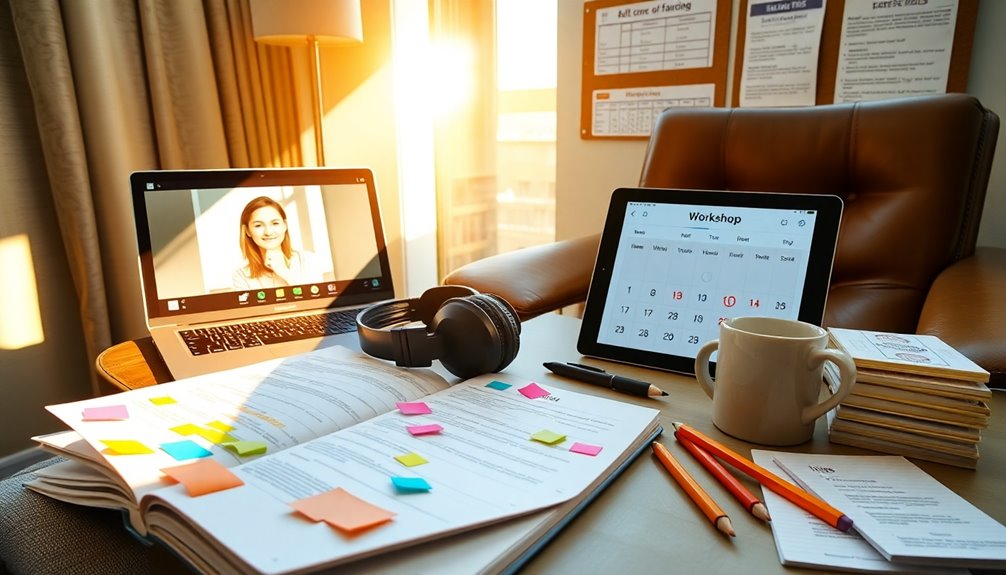
Notes and resources from events are great, but you’ll get the most progress by balancing that input with focused self-study. You’ll want to marshal event benefits without relying on them entirely — use workshops to expose gaps, then apply self study techniques to close them. That gives you freedom to shape timing, pace, and focus.
Although events can feel overwhelming, they’re one of the best tools for reducing test anxiety because they turn abstract pressure into concrete practice. You’ll find controlled settings—mock tests, timed speaking slots—where you can face nerves deliberately and build choice. Use mindfulness techniques before and during events to center breathing, notice thoughts without judgment, and stay present rather than catastrophize. Pair those with short relaxation exercises—progressive muscle release or guided imagery—to lower physiological arousal so you approach tasks calmly. Treat each event as data, not a verdict: you’re gathering information about timing, focus, and content gaps. That mindset lets you experiment, adjust strategies, and reclaim autonomy over your preparation, transforming anxiety into informed readiness.
After practicing in event settings and treating each session as feedback, bring others into the loop: peer feedback and group study turn personal data into actionable insight. You’ll expand perspective through peer evaluation, spotting blind spots and refining timing, tone, and structure. Collaborative learning keeps you accountable while letting you choose pace and focus. You’ll trade real examples, rehearse speaking parts, and get concise critiques that free you to improve fast.
Turn practice into progress: invite peers, trade concise critiques, rehearse together, and refine timing, tone, and structure.
Embrace autonomy within a supportive study collective.
A student once got extra time and a quiet room; you can request test accommodations like extended time, assistive tech, or sign language interpreters, and access disability resources so you’ll feel supported and free to perform your best.
Yes — attending events can boost your band scores by offering event benefits like focused practice and personalized feedback, which support skill enhancement in listening, speaking, reading or writing, letting you learn freely and apply new strategies confidently.
“Measure twice, cut once.” You’ll check event verification by cross-referencing official IELTS specs, contacting organizers for material updates, reviewing sample tasks, and choosing providers who publish revision histories so you’re free to trust authentic, current resources.
Yes — you can often access scholarship eligibility and discount programs for low-income attendees. Check event pages, apply early, provide income proof, and contact organizers directly; they’ll usually respect your autonomy and help you secure affordable access.
You should contact organizers ASAP to request a makeup session or access the event recording; they’ll usually offer options or refunds. If not, ask for materials and get peer notes so you can keep your momentum and freedom to learn.