Budget Guide to Living in Dublin as a Language Student
Study English In Ireland
December 14, 2025

You can live in Dublin on a tight student budget by prioritising affordable housing, cheap transport and smart shopping. Find shared flats or dorms to cut rent, plan meals and buy staples at markets, and use a Leap Card or cycle for daily travel. Buy used books, share internet, and hunt part-time work or small bursaries for extra cash. Track spending weekly and set realistic caps — keep going to discover specific savings, resources and job tips.
When planning your monthly budget as a language student in Dublin, focus on the essentials first—rent, groceries, transport and utilities—since they’ll take up the biggest share of your expenses; everything else, like entertainment and travel, should be budgeted around what’s left. You’ll list fixed and flexible costs, set a realistic monthly cap, and track spending weekly. Include occasional extras: visa, insurance, and course materials. Use budget planning tools or a simple spreadsheet to stay accountable. Seek free language exchange events for practice without cost. That way you’ll keep financial freedom while enjoying Dublin and improving your English.
When you’re looking to keep costs down in Dublin, shared student housing is usually the cheapest option, with rooms often ranging €350–€600 per month depending on location and amenities. University dorms can be pricier but give you fixed-term security and utilities included, typically €500–€900 per month. For short stays, short-term rentals or private lets (including homestays) offer flexibility but may cost more per week, so compare total monthly and utility costs before you commit.
1 main option for keeping costs low in Dublin is shared student housing — you’ll split rent and bills with flatmates, which cuts your monthly outlay considerably compared to living alone. You’ll find shared living in flats or houses across neighborhoods; expect single rooms from €350–€600 depending on area and amenities. Communal benefits include shared groceries, utilities and cleaning rotation, which reduce costs and free your time. Look for listings on student boards, Facebook groups and housing portals, meet potential flatmates, and agree on house rules and bill-splitting methods. Shared housing gives flexibility, social life, and lower expenses while you study.
University dorms are a reliable, often budget-friendly choice for language students looking for convenience, community and predictable costs. You’ll find single or shared rooms with basic utilities included; expect €350–€650/month depending on location and en suite options. Meals may be available via campus plans, lowering daily expenses. Dorms connect you to university facilities like study rooms, gyms, and libraries, so you can focus on classes and leisure. Resident activities and social events help you meet classmates and practice language skills. Contracts usually run by term, giving you flexibility compared with long leases while keeping budgeting simple.
If dorm life doesn’t suit your schedule or you’d like more privacy, short-term rentals give you flexibility and often better value for a few weeks to a few months. You can find studios, rooms in shared flats, or entire apartments through rental platforms and local Facebook groups. Expect €600–€1,200/month inner city for a room, €1,200+ for a one-bed; suburbs are cheaper. Look for short term leases with clear utilities and deposit terms. Inspect listings, confirm Wi‑Fi, and read reviews. Negotiate for monthly discounts, avoid wire transfers, and get receipts to protect your freedom and budget.
While groceries can quickly eat into your budget, a few simple habits will cut costs without sacrificing nutrition or convenience. You’ll save by meal planning weekly, choosing budget recipes that use staples like pasta, rice, beans, eggs and seasonal veg. Shop local markets near closing time for discounts, buy store brands, and compare unit prices. Cook larger portions to freeze portions for busy study days. Bring a reusable bag, avoid impulse buys, and track spending with a simple app or notebook. Eating out less and mastering a few versatile dishes gives you freedom and control over your wallet.
Because Dublin’s public transport and bike-friendly streets are your best bets for keeping travel costs low, it’s worth learning the cheapest options early on. Get a Leap Card and compare bus passes and tram services prices for weekly or monthly savings. Use transport apps to plan routes, check real-time departures, and find cheaper fares. Explore bike rentals for short hops and healthier freedom, or stick to walking routes in central areas to save most. Look for student discounts on passes and occasional ride sharing for late nights. Mix modes to balance cost, speed, and independence.
You can cut study costs by buying used coursebooks or photocopying just the chapters you need instead of new editions. For your phone, look for pay-as-you-go or student-friendly SIM-only plans from local providers to avoid long contracts. At home, compare low-cost broadband deals or share a flat’s connection to keep internet bills down.
1 simple trick will cut your study-material bill: buy smart, not new. You can rely on second hand textbooks for core coursebooks—check university noticeboards, Facebook groups, and local bookshops. For copies, use campus printers or self-service shops; print double-sided and in grayscale to halve costs. Supplement with free online resources: open textbooks, language apps, and university lecture slides. Share purchases with classmates and swap extras to spread expense. Keep digital backups so you won’t repurchase lost pages. Small habits—repairing covers, using PDFs, and pooling orders—let you study fully without feeling tied down by rising material costs.
Wondering how to keep your phone and internet bills low while studying in Dublin? You’ll want to compare mobile network options: major providers offer reliable coverage, while smaller MVNOs give cheaper data bundles. Choose prepaid plans if you prefer control and no contracts—top-ups let you pause spending between semesters. Look for student discounts, bundled SIM data for EU travel, and pay-as-you-go call credits. Use Wi‑Fi at cafes and campus to save mobile data. Check network coverage in your neighbourhood before committing. With a flexible plan and occasional top-ups, you’ll stay connected without feeling tied down.
After picking a mobile plan that fits your budget, it’s worth looking at low-cost home internet so your study materials and calls don’t blow your monthly spend. Shop local budget providers offering no-frills internet plans or student discounts. Choose speed based on usage: 50–100 Mbps is fine for video lessons and cloud study, faster only if you stream or game a lot. Check contract length and exit fees so you can move freely. Consider shared flats splitting a single connection to cut costs. Compare setup fees, bundle deals with your mobile plan, and read reviews before committing.
While Dublin can feel expensive at first, you can still enjoy a lively social life without breaking your budget by choosing low‑cost venues, free events, and student discounts. You’ll find free events in parks, museums and community centres, plus lively local festivals that showcase music, food and culture. Join social clubs at your language school or university to meet people and split costs for outings. Seek budget friendly activities like walking tours, gallery nights, quiz nights and pub sessions where cover is low or non‑existent. Plan, prioritise experiences that matter to you, and you’ll feel free to explore Dublin affordably.
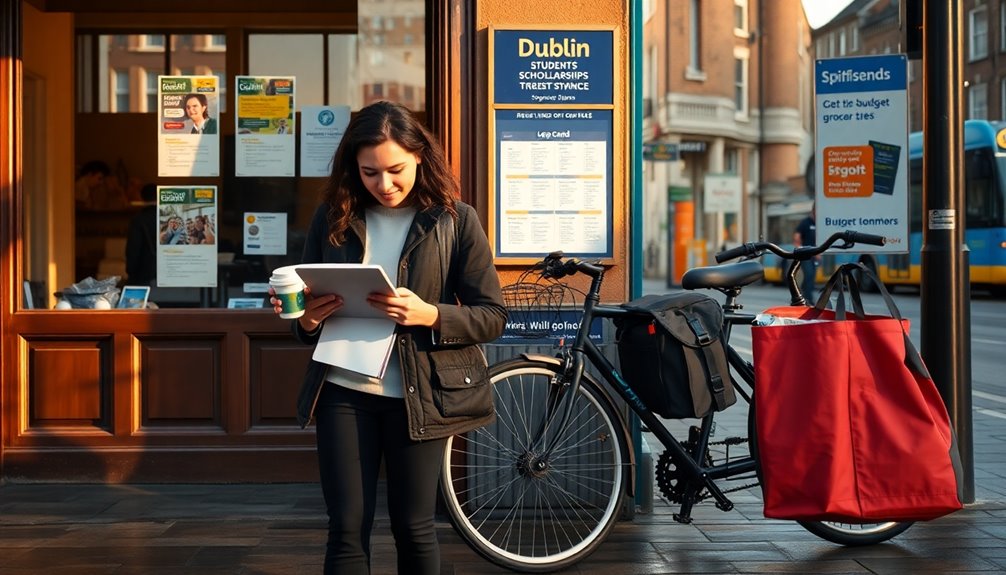
If you want to stretch your student budget in Dublin, combine simple daily habits with a knowledge of local supports: cook at home and use weekly market bargains, get a student Leap Card for cheaper public transport, and sign up for university or language-school noticeboards that list scholarships, bursaries and part‑time roles. Look for supermarket discounts, share flat costs, and use free campus facilities. Apply early to scholarship opportunities and monitor deadlines; even small awards add up. For income, seek part time jobs in cafes, retail or admin with flexible hours that won’t block study. Balance work, learn to budget, and keep options open.
Taxes reduce your take-home pay because tax regulations determine whether your part-time income is taxed and at what rate. You’ll use income thresholds to see if you’re below personal allowance or liable for PAYE, USC, or PRSI. Keep records, apply for correct tax credits, and get an Irish PPS number. That way you’ll minimise deductions legally, keep flexibility, and know when extra earnings push you into higher taxation.
Yes — you can usually open a local account even if you don’t yet have an Irish address, though it can feel like maneuvering a bureaucratic jungle. Check local banking options: major banks and fintechs often accept passport, student ID, and a temporary address or proof of enrollment. Irish residency requirements vary by bank; some ask for a lease or utility bill, others accept a letter from your school. Compare fees and switching ease.
Yes — you can often access reduced healthcare options and some dental services as a student. You’ll find university clinics, student health centers, and private practitioners offering discounts or lower-cost plans if you show a student ID. Public options like the HSE have schemes for reduced fees in certain cases. Always ask providers about student rates, compare walk-in clinic prices, and consider a supplemental student health insurance plan for extra freedom and coverage.
Keep an emergency fund in a separate account and a hidden cash stash — because Murphy’s Law loves vacations. You’ll want emergency fund strategies like a locked savings account, one-month living expenses accessible, and a smaller local-currency cash reserve. Pair that with thorough travel insurance options for medical evacuation and lost-stuff coverage. Share access with a trusted contact, set alerts, and review policies before travel so you’re free to explore without financial panic.
Yes — you can bring a bike or buy one affordably in Dublin. Check bike import regulations first (customs, VAT) if shipping it; folding bikes are easiest. Otherwise, look for affordable bike shops and local classifieds (Grafton Street, Rathmines, or online marketplaces) and student discounts. You’ll want a sturdy lock, lights, and helmet. Buying locally gives easier servicing and parts, while bringing yours keeps familiarity and potentially saves money.
You’re ready to live affordably in Dublin if you plan, track spending and use student deals. For example, Maria, a Spanish student, saved €150/month by sharing a flat, cooking, and biking instead of taxis — and still enjoyed free museum days and language cafes. With smart choices on housing, groceries, transport and part-time work, you’ll stretch your budget, practice English, and make the most of Dublin without breaking the bank.