What Are Ireland’s Affordable Summer Language Schools?
Study English In Ireland
December 17, 2025
You can find affordable summer language schools across Ireland that pair accredited English tuition with homestays or student residences, cultural activities, and exam preparation. Expect budget options from about €300–€700 for short stays, mid-range €700–€1,500 for longer or smaller classes, and premium programs above that. Smaller cities like Galway, Limerick, Cork and Sligo often cost less and offer genuine immersion. Keep an eye out for early-bird, group and scholarship discounts to lower costs further — more practical tips follow.
Because English is spoken everywhere, Ireland gives you a natural, immersive setting to improve your language skills while experiencing vibrant culture and friendly locals. You’ll get authentic language immersion through everyday interactions, structured classes, and conversational clubs that build confidence fast. You can explore music, festivals, pubs, and historic sites for rich cultural experiences that deepen understanding beyond vocabulary lists. Small class sizes and welcoming homestays let you practice freely and shape your schedule around travel or study. If you want independence, Ireland’s compact cities and reliable transport make short trips easy, so you learn and roam on your terms.
You’ll typically see program prices ranging from budget-friendly options to premium courses, so it helps to compare rates by length and intensity. Check exactly what’s included—tuition, materials, activities, and accommodation can vary widely. Also budget for extras like airport transfers, meals outside the plan, and local transport so there aren’t any surprise costs.
Many Irish summer language programs fall into three broad price ranges, so you can match cost to your needs: budget options typically run €300–€700 for one- to two-week courses (often group lessons with shared homestays), mid-range programs cost about €700–€1,500 (longer sessions, small classes, or private-student packages), and premium offerings exceed €1,500 (extended stays, private tuition, exam prep, or inclusion of activities and excursions). When comparing program price, weigh length, class size, and flexibility. A quick value comparison helps you pick freedom-friendly options that fit your schedule and priorities without overpaying for extras you won’t use.
When you’re comparing Irish summer language programs, check exactly what’s included in the fee so you’re not hit by surprise costs later. Look closely at tuition fees and whether course materials are supplied or charged separately. Ask if airport transfers, accommodation placement, and in-class extras (like exam prep or small-group sessions) are bundled. Confirm meal plans, local activity access, and insurance coverage; freedom to explore depends on knowing limits. Get a written breakdown and cancellation terms before you book. That way you’ll choose a program that fits both your budget and your desire to travel without unexpected charges.
After confirming what’s included in your program fee, it helps to estimate the extra expenses you’ll likely face so you can budget accurately. You’ll want to list transport, meals beyond plan, local SIM/data, activity fees, and visa or insurance charges. Allow a daily allowance for cafés, sightseeing, and incidental supplies. Factor in luggage fees and any course materials not provided. Set aside a contingency fund for unforeseen costs like medical care or schedule changes. Compare school estimates and local prices so you keep freedom to explore without overspending. Prioritize essentials, then decide how much leisure spending you’ll permit.
While Dublin is famous, you’ll save a lot by choosing smaller cities and towns — places like Galway, Limerick, Cork (outside the city center), and Sligo offer lower accommodation and living costs while still providing quality language schools and cultural activities. You can enjoy Galway culture in compact streets, local music, and seaside walks while avoiding the heavier price tag tied to Dublin attractions. Choose a town that matches your pace: student hubs like Limerick have lively scenes; Cork’s suburbs give quieter stays; Sligo offers nature and solitude. These options let you study affordably and live freely without sacrificing experience.
When choosing a budget-friendly school, you’ll want to compare accredited course value so you know what quality you’re getting for the price. Check whether the school is a recognized examination center, since that can save you travel and exam fees. Also look for affordable accreditation options and package deals that keep both tuition and certification costs low.
Accreditation matters because it guarantees that the cheap courses you choose meet recognized academic and quality standards, so you’re not paying for subpar instruction or credentials that won’t be accepted later. When you pick a budget-friendly school, check course accreditation and program recognition to verify transferable credits and employer credibility. Accredited programs often use vetted syllabi, trained teachers, and reliable assessment—so your time and money free you to focus on learning and travel, not remediation. Look for national or international accrediting bodies and clear statements about outcomes; that clarity protects your investment and preserves your options abroad.
If you’re choosing a budget-friendly language school in Ireland, pick one that’s an officially recognized examination centre so the tests and certificates you earn are accepted by universities and employers. You’ll want clear examination benefits: on-site testing saves time and reduces stress, and examiners follow standard procedures so results are reliable. Check that schools offer multiple certification options — Cambridge, IELTS, or Trinity — so you can pick what fits your goals. Choosing a recognized centre gives you freedom to plan study and travel without extra bureaucracy, and guarantees the qualification you earn opens doors at home and abroad.
Although you’re working with a tight budget, you can still choose a language school in Ireland that holds respected accreditation, which guarantees quality teaching and recognized qualifications. You’ll find budget-friendly schools that meet national accreditation standards and offer program recognition from official bodies. Look for institutions with transparent inspection reports, clear curricula and certified teachers. Ask about included materials, assessment methods and post-course certificates so your time and money are well spent. Choosing an accredited, affordable option gives you freedom to travel and study confidently, knowing your qualification will be accepted by employers and other schools abroad.
When you’re choosing a short-term summer course in Ireland, you’ll find options that range from intensive two-week programs to relaxed month-long stays, each priced according to length, class hours, and included extras like accommodation or activities. You’ll pick between varied short term course formats — morning intensive classes, afternoon workshops, or combined language-plus-activities weeks — and estimate total cost by checking tuition, materials, and exam fees. Use simple price comparison strategies: divide total cost by weeks and hours, note what’s included, and compare value rather than sticker price. That way you’ll choose a course that fits your budget and freedom.
Because accommodation can make up a large portion of your summer study budget, comparing homestays and student residences helps you decide where your money goes and what you get for it. You’ll usually pay less for a homestay, and homestay benefits include meals, local insight and a quieter setting for study. Residences often cost more but include residence amenities like gyms, common rooms and social events that save you time and let you meet peers. Choose homestay if you want immersion and routine; choose a residence if you value convenience, facilities and a more independent, social summer experience.

You’ll want to budget for local transport like buses, trams or occasional taxis, which can add €2–€10 per trip depending on the city and distance. Daily living expenses—meals, groceries, coffee and basic leisure—typically run €25–€45 per day if you eat modestly and use supermarket options. Knowing these ranges helps you compare total program costs and choose a school or accommodation that fits your budget.
If you’re staying in a city like Dublin or Cork, local transport will be one of your regular daily expenses, so it’s good to know typical costs and ticket options ahead of time. You’ll find reliable public transport networks — buses, trams and regional trains — with single fares around €2–€3 in-city, cheaper with day or weekly passes. Taxi services are handy late at night or with luggage; short trips usually cost €6–€12. Consider contactless cards or transport apps to save time and track spending. Budget for transfers to campuses; walking or cycling can cut costs and boost independence.
While transport is a big part of your daily budget, other everyday costs — like groceries, phone/data, laundry and occasional leisure — will quickly add up, so it’s useful to plan a weekly spend. You’ll find grocery shopping in Ireland ranges from budget supermarkets to farmers’ markets; cook when you can to save. Compare phone/data prepaid plans for short stays. Use coin-operated laundrettes or ask host families about facilities. Explore transportation options for discounts — weekly passes, student rates and bike rentals. Track spending in a simple app and set a flexible weekly cap so you stay free and in control.
Many summer schools in Ireland offer scholarships, group discounts, and early-bird rates that can greatly lower your overall costs; checking eligibility deadlines and application requirements early is key to securing these savings. You’ll find scholarship programs for merit, need, or teaching-practice placements—apply quickly and provide required documents. Watch discount availability notices on school websites and subscribe to newsletters so you’re alerted to limited-time offers. Early-bird rates often shave significant fees if you commit months ahead. Read terms carefully (refunds, date changes). With planning and timely action, you can stretch your budget and keep your summer flexible and adventurous.
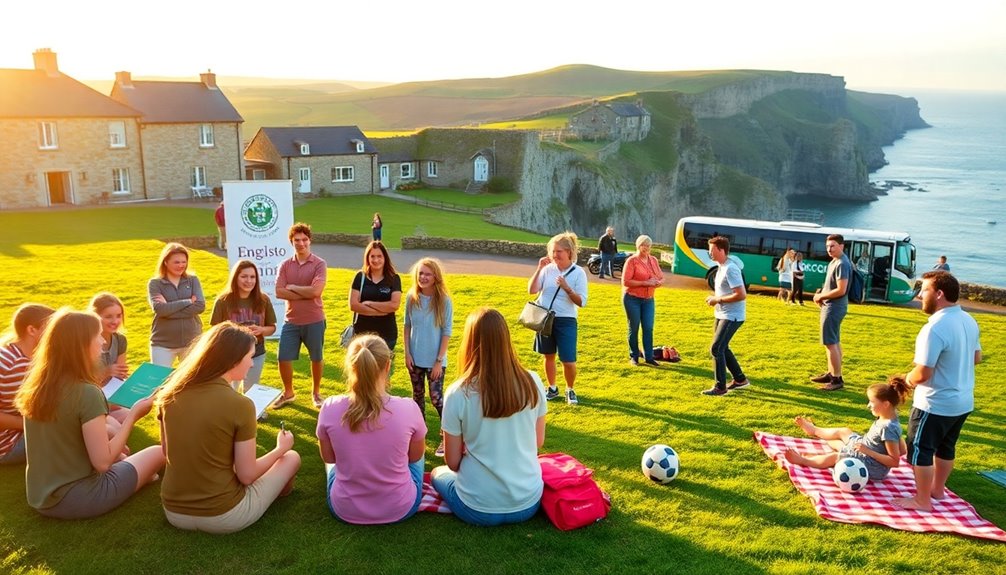
When you’re booking for a group, family, or school, summer language programs in Ireland usually offer reduced rates and tailored packages that can make a trip much more affordable and logistically simpler. You’ll find clear group discounts for friends, student clubs, or corporate teams—often scaling with numbers and duration. Family packages bundle lessons, accommodation, and activities so everyone saves and enjoys flexible scheduling. Schools partner with local providers for bespoke itineraries, supervising staff, and discounted excursions. Ask for itemized quotes, cancellation policies, and included extras so you can compare offers and choose the option that preserves your freedom and budget.
Groups and families often find discounts and packaged logistics helpful, but if you’re looking to stretch your budget further, work-study, volunteering, and other cost-reducing options can cut fees and add meaningful experience. You can seek work study options through host schools or local businesses — roles often include admin, classroom assistance, or hostel work in exchange for reduced tuition or housing. Volunteering opportunities with community projects or festivals give immersion and sometimes free room and board. Check visa rules, time commitments, and reputable placements. These paths let you learn, contribute, and keep spending low while staying flexible and independent.
If you want to keep daily costs down without missing out, plan meals, social activities, and day trips ahead so you can pick budget-friendly options and take advantage of discounts. You’ll save by doing meal planning: shop local markets, cook with flatmates, and pack lunches for excursions. Use social budgeting to set a weekly fun fund, prioritise free events, and split costs for taxis or group tours. Look for student discounts, city tourist cards, and early-bird deals on museums and ferries. Stay flexible: swap pricier outings for scenic hikes or community festivals to stretch your freedom and funds.
Because cheaper isn’t always better, you’ll want to weigh price against course quality and the outcomes you care about, like language improvement, cultural immersion, and certification. Start with a focused value assessment: list tuition, materials, accommodation, and extras. Check class size, teacher credentials, and real student feedback to judge quality. Define outcome measurement for yourself—fluency targets, exam readiness, or confidence speaking in real situations—and prefer programs with clear metrics or certificates. Compare cost per outcome rather than per week. Finally, factor flexibility, local experiences, and refund policies so your choice supports freedom and real progress.
Yes — you can combine language lessons with exam preparation during summer. You’ll get language immersion to boost fluency while focusing on exam strategies for formats like IELTS. Schools often offer blended programs: general communication, targeted skills (listening, writing), practice tests, and timed tasks. That approach gives you flexibility to explore Ireland and study efficiently, so you’ll enjoy freedom and confidence when you sit the exam.
Yes — you can find summer schools tailored for students with learning differences. You’ll want programs that emphasize inclusive teaching and adaptive learning methods, small classes, trained staff, and flexible pacing. Look for schools offering personalized plans, assistive tech, and ongoing assessment so you retain independence while learning. Ask about specific accommodations, staff qualifications, and trial days to guarantee the environment supports your goals and learning style.
Absolutely — yes, many do. You’ll find schools offering supervised weekend excursions to nearby countries, blending safety with spontaneous cultural experiences so you won’t miss out. Trips are chaperoned, planned, and tailored to student needs, often including transport, lodging, and guided activities. You’ll get freedom to explore within clear boundaries, experience local life, and return refreshed. Check each program’s supervision ratios, itineraries, and any extra costs before booking.
You’ll usually find small class sizes of 8–15 students, giving flexible class structure that balances group work and individual feedback. Teachers generally have formal qualifications (CELTA/TEFL or university degrees) plus 2–10+ years’ teacher experience, often in immersive summer programs. That means you’ll get structured lessons but freedom to explore language use, with experienced instructors adapting pace to learners’ needs and offering extra practice or one-on-one support when required.
Yes — sometimes you can, but it depends. In contrast to casual short courses, programs with academic agreements often offer assessed modules designed for credit transfer. You’ll need course syllabi, official transcripts, and a formal articulation or pre-approval from your home institution. Check whether the school has partnerships with universities, ask about ECTS or credit equivalencies, and secure written confirmation before enrolling so the freedom to travel doesn’t cost you lost academic progress.
Choosing Ireland for a summer language course can be both affordable and rewarding. One striking stat: many accredited schools report average weekly fees between €150–€250 for group lessons, showing quality study doesn’t always mean high cost. By picking smaller towns, short-course bundles, or group/family rates and combining volunteering or homestays, you’ll cut expenses without sacrificing immersion. Plan ahead, compare accreditation and outcomes, and you’ll get the best value for your summer language investment.