
Avoid These Summer English Courses in Ireland?
Study English In Ireland
December 1, 2025

You should avoid summer English courses that advertise very low fees and large class sizes because they often lack proper accreditation, adequate teaching hours, or clear student support and safety protocols. Check for verified school accreditation, transparent fee breakdowns, secure accommodation options, and emergency procedures before you commit. Also verify transport links, nearby amenities, and campus security. If you want to make a safe, economical choice with solid academic value, keep going for the checklist and red flags.
When choosing between Dublin, Galway, and Cork for a summer English course, weigh practical factors—cost, class availability, and transport—against experience-based ones like local culture and pace of life. You’ll want clear data: tuition ranges, typical class sizes, and transit times to campus and accommodations. Dublin culture offers diverse social and professional networks but often higher prices and busier streets; choose it if accessibility and broad extracurricular options matter. Galway scenery and a smaller urban footprint suit learners seeking a calmer setting and easier walking routes; expect fewer evening transport options and a more seasonal tourist rhythm. Cork balances cost and convenience, with regional transport links and modest nightlife. Prioritize safety: verify school accreditation, emergency contacts, and local healthcare access. Check crime statistics, lighting on common routes, and accommodation inspection reports. Make decisions driven by documented metrics rather than impressions to reduce risk and guarantee predictable daily life.
After you’ve compared cities, narrow focus to the neighborhoods around your chosen school—proximity influences daily commute, safety, and living costs more than citywide averages. You’ll assess neighborhood features that matter: street lighting, visible CCTV, well-maintained sidewalks, reliable public transport, and nearby amenities like pharmacies and grocery stores. Map walking routes to campus at different times to judge lighting and foot traffic. Check crime statistics and local council reports rather than relying on anecdotes. Evaluate community vibes by visiting cafes, parks, and transit hubs: are residents relaxed and occupied, or do streets feel deserted after dark? Ask the school about student-focused zones and any partnership with local businesses for safer evenings. Prioritize areas where emergency services are reachable within minutes and where student groups are active; these reduce isolation and improve response if concerns arise. Your decision should balance convenience with measurable safety indicators, not just atmosphere.
1 clear priority is finding accommodation that keeps living costs predictable without sacrificing safety or study-friendly conditions. You should compare university halls, purpose-built student accommodation (PBSA), and vetted homestays for total monthly cost, contract length, and included utilities. Affordable housing options often bundle bills and internet, which reduces bill variability and aids budgeting. Check whether providers offer student discounts for longer stays or off-peak summer terms; those can lower effective rent. Prioritize properties with secure entry, clear emergency procedures, and quiet study spaces or communal study rooms. Vet lease terms for deposit rules and maintenance response times so unexpected repairs don’t disrupt safety or finances. Use official accommodation offices, verified platforms, and reviews from other international students to confirm legitimacy. If you choose a flat-share, insist on written agreements outlining rent shares and conduct expectations. That approach keeps costs manageable while preserving personal security and a stable environment for language study.
If you’re planning daily travel for a summer course in Ireland, evaluate schedules, costs, and reliability across buses, trains, cycling, and walking before committing to housing or class locations. You’ll want to map public transport options for peak and off-peak hours, checking frequency, first/last services, and connection times to avoid unsafe waits. Compare single fares, weekly passes, and student discounts so you’re not surprised by costs. For short distances, assess bike rental schemes and local shops: verify helmet availability, bike condition, and secure parking to reduce theft risk. Inspect walking routes for lighting, footpaths, and traffic crossings; choose routes with clear sidewalks and frequent pedestrian signals. Factor in weather — slippery surfaces lengthen travel time and increase accident risk. Prioritize accommodation within reliable transit zones or on safe cycling corridors. Confirm emergency contact options and local transport apps so you can react quickly if plans change.
A nearby grocery, bank branch, and post office determine how conveniently you’ll handle basic errands during a summer course, so map their locations, hours, and services before choosing housing. You should check whether grocery shopping options include a supermarket with extended hours, a local market for fresh produce, or only small convenience stores — each affects cost, safety, and late-evening access. Confirm banking services like ATM availability, branch hours, and English-speaking staff to avoid unexpected closures or long-distance travel for transactions. Post office services matter for receiving documents, parcels, and registered mail; note weekday schedules and weekend limitations. Assess walking routes and lighting between your accommodation and these amenities; safer, well-lit paths reduce personal risk. Prioritize accommodations within a 10–20 minute walk to at least one full-service supermarket, an ATM-equipped bank, and a post office, so you can manage essentials securely and with minimal disruption to study time.
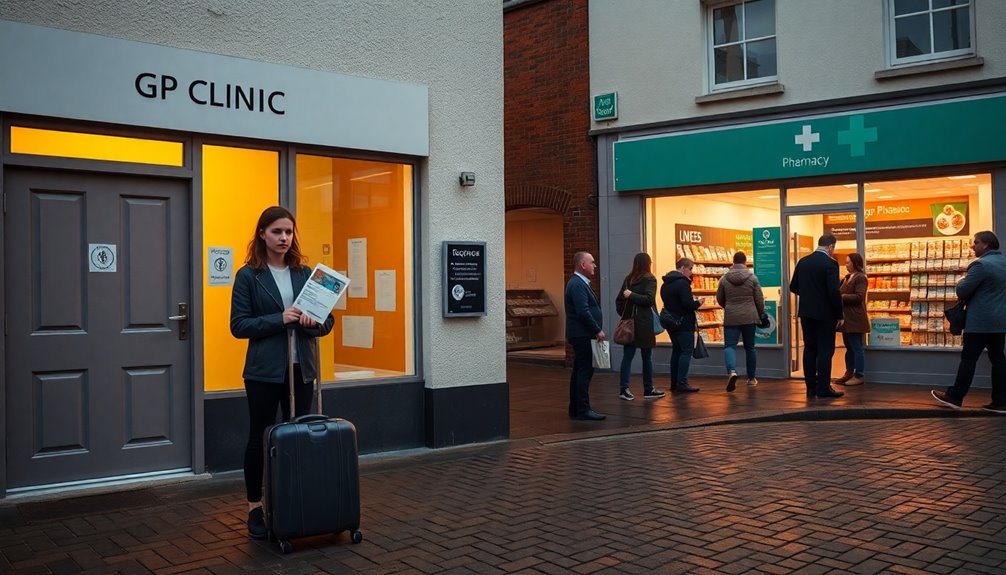
Having nearby shops, banks, and a post office is useful, but you also need to know how you’ll access healthcare while you’re studying. You should check local healthcare services coverage for international students: know which clinics accept your insurance and whether the school has arrangements with a GP. Registering with a GP early reduces delays for routine care and guarantees continuity if you need referrals or prescriptions.
Understand pharmacy regulations: pharmacies in Ireland can supply over‑the‑counter meds and dispense prescriptions, but controlled drugs and some OTC items require prescriptions or ID. Confirm opening hours and emergency on‑call pharmacies nearby, especially for weekends and nights. Keep copies of your medical records, a list of medications, and emergency contact details. Ask the school for guidance on nearest GP practices and how to register as a temporary patient. Prioritize locations where healthcare services are transparent, accessible, and compliant with local regulations to reduce risk while you study.
Work options while studying in Ireland will shape your budget and professional development, so you should assess visa restrictions, weekly hour limits, and employer expectations before committing. You’ll want to identify reliable part time opportunities that align with course schedules and local labor laws. Compare hourly pay, contractual clarity, and shift predictability to avoid income gaps that compromise study time.
For internships, weigh internship benefits objectively: skill relevance, supervision quality, and whether the placement offers documented learning outcomes or references. Short-term internships can enhance your CV if they provide measurable responsibilities and mentorship.
Volunteer roles can supplement experience but shouldn’t be a substitute for paid work unless you’re clear about time investment and personal safety. Prioritize placements with formal agreements, transparent contact points, and realistic time commitments. Keep records of agreements, hours, and contacts so you can verify experience for employers and guarantee compliance with visa and institutional requirements.
Because safety affects your daily routine and learning outcomes, you should check emergency procedures, campus security services, and local emergency numbers before you arrive. You’ll want clear information on how the institution handles incidents, reporting channels, and response times. Evaluate whether the program provides 24/7 campus security, escorted transport options at night, and visible safety signage.
Assess student safety resources beyond security: on-site medical services, mental health counseling, and accessibility support. Verify hours, languages spoken, confidentiality policies, and whether appointments are required. Ask if staff are trained for international students’ needs and coordinated with local hospitals.
Confirm emergency procedures are documented and distributed—evacuation plans, severe-weather protocols, and communication trees that use phone, email, and SMS. Get local emergency numbers and nearest embassy details. Before enrolling, request written policies and recent incident statistics so you can objectively judge risk management and whether the support infrastructure meets your expectations.
While academic quality matters, your day-to-day experience will be shaped by the program’s social life, cultural events, and student clubs, so evaluate what’s offered and how accessible it is. You’ll want clear information on organized social gatherings: frequency, supervision, costs, and attendee limits. Check whether events are mandatory or optional, and whether they accommodate diverse comfort levels and mobility needs. For cultural festivals, verify safety plans, crowd control, and transport options; festivals can enrich learning but pose logistical risks if poorly managed. Look for active student clubs with transparent leadership, meeting schedules, and vetting of external speakers. Confirm whether staff monitor clubs and provide reporting channels for concerns. Ask for past event records, participant feedback, and emergency procedures tied to social programming. Prioritize programs that publish guidelines on inclusivity, alcohol policies, and late-night transport. A program that balances vibrant social life with documented safety practices will better protect your wellbeing and support a positive cultural experience.
Generally no — most programs don’t allow pets. You’ll need to check pet policies and course accommodations before booking, since housing often has strict rules for health, allergies and liability. If a program permits animals, expect documentation requirements: vaccination records, behavior assessments, and possible additional fees or restricted housing options. Prioritize safety by confirming emergency plans, local veterinary access, and whether course activities or shared spaces remain pet-free.
Usually not — most courses don’t include meals. Picture cafeteria trays and menus; you’ll need to plan. Check each provider’s fine print for meal options and whether they offer packed lunches, vouchers, or on-site cafeterias. Ask specifically about accommodating dietary restrictions (allergies, halal, vegan) before booking. If safety and routine matter to you, confirm meal availability, costs, and emergency contact procedures so you won’t be caught unprepared.
For short stays, you’ll usually want a local SIM or an eSIM from reputable eSIM providers for security and convenience. Local SIMs give reliable coverage and easier top-ups; eSIM providers offer instant activation and no physical card risk. Compare data caps, roaming policies, and customer support; pick providers with clear refund and theft policies. Keep your device accessible, register the SIM if required, and store provider contacts securely.
Yes — many courses offer certified language proficiency exams. You’ll want to check certification requirements upfront: some schools include exam preparation and test dates, others only offer classes. Exam availability varies by provider and season, so confirm which tests (e.g., IELTS, Cambridge) they administer or prepare for, how often they run, and any additional fees. Prioritize accredited schools with clear protocols to guarantee your results are valid and securely handled.
A student who missed urgent surgery overseas found they’d been denied class access without coverage. You’re usually not legally required to have travel insurance for enrollment, but many schools list it among enrollment requirements to protect you and them. Check policy limits for medical evacuation and COVID coverage, confirm whether the school offers or mandates a specific provider, and keep documentary proof ready to avoid last-minute denial of course participation.
You’ve weighed city pros and cons, checked neighborhoods, housing, transport, and local services, and sized up work and social options, so pick the program that fits your priorities. Don’t ignore safety, healthcare registration, or student supports — they’re the backbone of a smooth stay. Treat your choice like a compass: let practical factors point the way rather than flashy ads. If something feels off, probe further or walk away.