
Where to Stay in Limerick While Studying English
Study English In Ireland
December 15, 2025

You should base yourself near the city centre or Castletroy for easy access to classes, cafes and transport, or choose quieter Raheen for a more residential feel. Consider university halls or purpose-built student housing for security and facilities, homestays for daily language practice, or short-term flats if you want flexibility. Budget for rent, bills and a contingency, vet hosts carefully, and prioritise safety and commute time — continue on for practical tips and checklist guidance.
Limerick’s compact size, friendly neighborhoods, and strong educational infrastructure make it an excellent choice for English students looking to live and learn in Ireland. You’ll find a city that balances safety and accessibility, so getting to classes, language exchanges, and libraries is straightforward. The manageable scale reduces travel time, letting you focus on study and on exploring cultural experiences that reinforce classroom learning. Local attractions — museums, historic sites, and riverside walks — provide low-risk opportunities to practice English in real contexts and meet residents. Educational institutions often work with community organizations, creating structured volunteer or internship options that enhance language acquisition while keeping you supported. Public transport is reliable and well-lit, and student services offer clear guidance on housing and healthcare, which helps you feel secure. Overall, Limerick’s combination of practical amenities and rich, approachable culture makes it an efficient, reassuring base for intensive English study.
Where should you base yourself to get the most out of student life in Limerick? Focus on neighborhoods that balance convenience, safety, and social life. The city centre and the Georgian Quarter put you within walking distance of student hangouts, cafés, libraries, and essential services — ideal if you want short commutes and secure streets. Raheen and Castletroy offer quieter residential streets and good transport links; they suit students who prefer calm study environments while still accessing nightlife options via short buses or bike rides. Pery Square and O’Connell Street areas provide denser evening activity and better nightlife options, but check local reviews and lighting for peace of mind. Wherever you look, prioritize well-lit routes, proximity to healthcare and shops, and a mix of rental types. Visit neighborhoods at different times to gauge atmosphere. That way you’ll choose a spot where social life and personal safety are both strong.
Considering your priorities—budget, independence, and proximity to campus—university and college accommodation in Limerick ranges from catered halls and self-catered residences to purpose-built student apartments and college-run houses. You’ll find on campus facilities designed for study, socialising and wellbeing, with reception, security, laundry and common rooms that make daily life predictable and safe. Evaluate contracts, notice periods and deposit protections so you know your rights before signing. Self-catered residences give you control over meals and routines, while catered halls reduce food logistics if you prefer simplicity. College-run houses often place you within established student communities, which helps with integration and mutual support, but check household rules and safety arrangements. Prioritise proximity to lecture theatres and public transport links for convenience. Before committing, tour options, ask about maintenance response times and security measures, and compare total monthly costs to guarantee the accommodation matches both your academic needs and personal sense of security.
If university-run flats and college houses cover the basics of campus life, purpose-built student housing (PBSA) offers a private-sector alternative that’s been designed specifically around student needs. You’ll find modern security features, dedicated maintenance, and well-lit communal spaces that help you feel safe and supported. PBSA often includes amenities—study rooms, gyms, bike storage—that reduce daily stress, but you should weigh affordability factors: rent can be higher than college housing, and extras may add up.
Community atmosphere is usually strong in PBSA, with events and shared areas that help you make friends quickly, yet that closeness isn’t guaranteed; roommate matching and building culture matter. Contracts tend to be strict, so check lease terms, deposits, and cancellation policies to avoid surprises. If you prioritize convenience, predictable services, and a secure living environment, PBSA can be a smart choice—provided you compare costs and read the fine print before committing.
Ever thought about living with a local family while you study? Homestays offer structured cultural immersion and steady supervision, which can be reassuring if safety is a priority. You’ll practice English daily in a real-home setting and observe authentic family dynamics — meal routines, local customs, and conversational norms — that accelerate language learning more than classroom drills.
When evaluating host families, check references, vetting procedures, and whether the provider conducts background checks; reputable agencies will match you based on preferences and compatibility. Clarify house rules, curfew, guest policies, and any costs up front to avoid misunderstandings. Consider the host’s experience with international students and their willingness to discuss expectations openly; a clear agreement reduces stress.
Homestays can feel like a safety net: you get private space with household support, plus opportunities for trusted social contact. If you value predictable structure and close cultural contact, a homestay is a practical, secure choice.
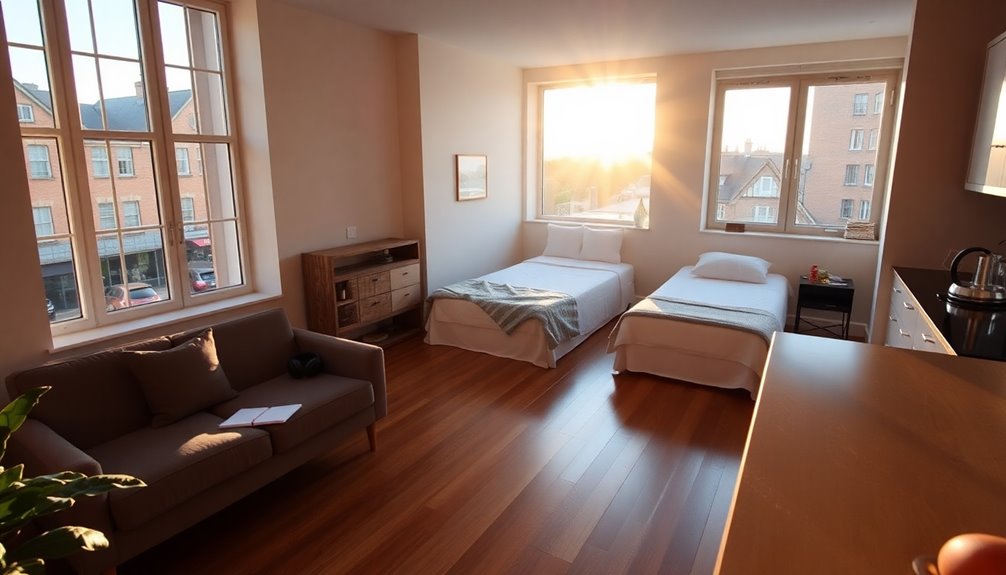
While you’ll find homestays offer steady support, short-term rentals and shared apartments give you flexibility and independence for stays from a few weeks to several months. You can choose a private studio or a room in a shared apartment depending on how much privacy and interaction you want. Short term rentals often come fully furnished and include utilities, so check listings for clear duration, deposit, and refund policies. In shared apartments, vet potential flatmates and meet them beforehand when possible; this reduces mismatched expectations and helps guarantee a respectful, safe living environment. Prioritize listings with good reviews, secure locks, and proximity to public transport and your school. Ask owners about cleaning routines, guest policies, and who’s responsible for minor repairs. If you’re unfamiliar with local neighborhoods, use reputable platforms and request identification from tenants or landlords. By being methodical and practical, you’ll balance independence with security during your study period.
Short-term rentals and shared apartments offer flexibility, but you’ll want a clear budget before committing to any lease or booking. Start by researching the local cost of living: average rents by neighborhood, typical utility costs, and grocery and transport expenses. Create a monthly spreadsheet that separates fixed costs (rent, insurance, internet) from variable ones (food, leisure, emergencies). Include a contingency line for unexpected bills so you’re not caught off-guard.
Use practical budgeting tips: set percentage caps (e.g., keep rent under 35% of your net income), automate bill payments, and track actual spending for two months to calibrate estimates. When comparing options, factor in one-off fees like deposits and agency charges. Prioritize safety by allocating funds for secure accommodation and emergency contacts. With disciplined monitoring and realistic assumptions, you’ll maintain financial stability while studying in Limerick and avoid compromising safety or wellbeing because of avoidable financial surprises.
Anyone looking for housing in Limerick should begin with a clear checklist that balances location, cost, and safety—identify your non-negotiables (maximum commute time, rent cap, room type), research neighbourhood pros and cons, and prepare key documents (ID, references, proof of income or funding) so you can move quickly when a good place appears. Next, use reputable housing resources: university bulletin boards, accredited letting agents, vetted online platforms and student groups. Inspect properties in daylight, test locks, heating and water, and ask about building security and local crime rates. Clarify utilities, deposit handling and notice periods before committing. Read rental agreements thoroughly — check for hidden fees, subletting rules and termination clauses — and request amendments in writing if necessary. If you’re unsure, consult your institution’s housing office or a qualified advisor. Keep copies of all documents and receipts, and arrange renter’s insurance to protect your belongings and reduce personal risk while studying.
Usually you can’t — most student accommodation bans pets, though some exceptions exist. You’ll need to check pet policies carefully and ask about additional accommodation fees for cleaning or deposits if pets are allowed. Consider service animal documentation, cage or small-pet clauses, and neighbors’ safety. Get any permission in writing, confirm vet and emergency plans, and weigh risks to your studies and housing security before committing to bringing a pet.
Yes — you can often choose between co ed housing and single gender options. You’ll find mixed flats or dorms for a social vibe, and dedicated single gender residences if you prefer privacy and reassurance. Check safety features, roommate screening, and local reviews. Ask the provider about policies, visitor rules, and emergency procedures so you’ll feel secure and informed before committing to any student housing choice.
Emergency medical services are generally within a short drive of most student neighborhoods, so you can expect prompt emergency response and strong student safety measures. Hospitals and urgent care centers sit near campus corridors, while ambulances and walk-in clinics cover residential areas. You’ll want to check local response times, register with campus health, and note nearest A&E locations. Being proactive about contacts and routes boosts your personal security and peace of mind.
Yes — and then a small catch: while many places do offer bike storage, its quality varies, so you’ll want to check specifics. You’ll find secure, covered racks or locked rooms in modern student complexes and some gated houses, improving housing security. Older buildings may only have outdoor stands or limited space. Inspect access controls, lighting, and lock types, and ask landlords about CCTV or assigned spots to guarantee your bike’s safe.
Yes — you can often extend your lease after your course ends, but you’ll need to review lease options and rental agreements carefully. Ask your landlord or agency about extension terms, notice periods, and any rent changes. Get agreed amendments in writing, confirm deposit protections and safety provisions, and check local tenant rights. Planning ahead reduces risk, so start discussions early to secure continuity and guarantee your housing remains safe and legally sound.
Choosing where to stay in Limerick will shape your study experience, so weigh convenience, cost, and social fit carefully. Consider that over 20% of Limerick’s population are students, which keeps neighborhoods lively but can push up demand for housing. Opt for university halls if you want structure, a homestay for immersive language practice, or shared apartments to save money. Stay proactive, inspect places, read contracts closely, and you’ll settle into a supportive, convenient base for learning English.