
10 Essential Dublin Public Transport Tips for Students
Study English In Ireland
December 18, 2025

Get a Student Leap Card and top it up to cut fares by up to 50%, use Hopper caps and day tickets to limit costs, and plan routes with the Transport for Ireland app to compare peak vs off-peak prices. Shift departures by 20–30 minutes to avoid rush-hour crowds, board Luas/trains politely and quickly, validate tickets to avoid fines, and map safe campus-to-home multimodal routes; keep real-time alerts on for disruptions and alternatives — more practical tips follow.
If you’re a student in Dublin, get a Student Leap Card — it cuts fares by up to 50% on buses, trams and trains and gives access to student-only season tickets and discounts. You’ll register with your college details, confirm eligibility, and receive a photocard that links to stored value. Card benefits include lower per-journey fares, capped weekly spends on some routes, and access to targeted student discounts at partner retailers. Top up online or at trusted vendors; contactless bank cards aren’t accepted for student rates, so keep sufficient balance to avoid stranded situations. Monitor usage: the app and website show transaction history and remaining balance, helping you forecast monthly transport costs and maintain safety by avoiding last-minute cash searches at late hours. Replace a lost card promptly — report it to Leap support to freeze funds and request a replacement. Following these steps minimizes interruptions and secures consistent, economical travel while you study.
Once your Student Leap Card is set up and topped up, use the Transport for Ireland (TFI) app to plan routes, check real-time arrivals, and compare journey times across buses, trams (Luas), and trains (DART/Iarnród Éireann). The app’s route planning lets you pick fastest, fewest transfers, or lowest-walk options; it shows estimated travel time, distance, and step-by-step directions so you can avoid unnecessary street crossings or late-night transfers. App features include live vehicle locations, delay alerts, platform identifiers, and accessibility filters — use them to choose well-lit stops and accessible entrances. You can save frequent journeys and set departure or arrival reminders; push notifications warn you of cancellations or service disruptions so you can adjust before you leave. For safety, confirm real-time arrival windows and planned interchange walking paths, and share trip details with a friend. Rely on the TFI app as your primary planning tool to make efficient, predictable, and safer travel choices.
How should you position yourself and move when boarding Luas trams and DART/Commuter trains to keep trips efficient and safe? Stand behind the yellow line and form orderly queues at stops and platforms; research shows clear boarding zones reduce delays by up to 20%. For Luas etiquette, let passengers exit first, then board through designated doors — move quickly to available space instead of lingering near entrances. On trains, distribute along the carriage length; peak-load data indicates even spacing shortens dwell time. Hold handrails, face forward where possible, and secure backpacks to avoid obstructing aisles. Announce intentions with brief eye contact or a nod when space is tight — nonverbal cues cut conflicts. If you need priority seating, display a card and sit only when necessary. Keep phones low-volume and bags on laps or between feet. These behaviours lower risk, improve punctuality, and make commutes safer for everyone practicing consistent train boarding and Luas etiquette.
Because short transfers add up, use the Hopper fare and day tickets to cut costs when hopping between Luas, buses and commuter services — Hopper caps multiple bus/Luas trips within 60 minutes at a single low price, and day tickets give unlimited travel for 24 hours. You’ll save money on multi-leg commutes: data shows Hopper fare benefits reduce short-trip costs by up to 40% compared with individual fares, while day ticket savings become clear if you make more than two return journeys in a day. Use your Leap Card or contactless bank card to guarantee correct capping and avoid disputes; keep proof of payment visible to inspectors. For safety, plan routes with well-lit stops and avoid isolated transfers late at night; a day ticket can let you reroute without extra cost if you need a safer option. Track your trips in the transport app to confirm capping and daily usage, so you’re always aware of fares paid and protected against unexpected charges.
If you can shift departures by 20–30 minutes, you’ll often avoid the worst of Dublin’s rush-hour squeeze: peak loads on Luas, DART and main bus corridors typically spike between 07:30–09:30 and 16:30–18:30 on weekdays, increasing travel time and seat availability issues by 20–40% according to ridership data. Plan classes or study sessions with that window in mind so you reduce time spent standing and lower your exposure to crowded compartments. Use real-time apps and service alerts to pick departures with lower load indicators; choose slightly earlier or later services for consistent on-time performance. If you must travel during peaks, board at end-of-line stops for better seat chances and avoid high-density carriages. These rush hour strategies trim commute variability and improve personal safety by reducing close contact in confined spaces. Track typical crowding trends for your route over a week to lock in reliable peak time avoidance habits that save time and stress.
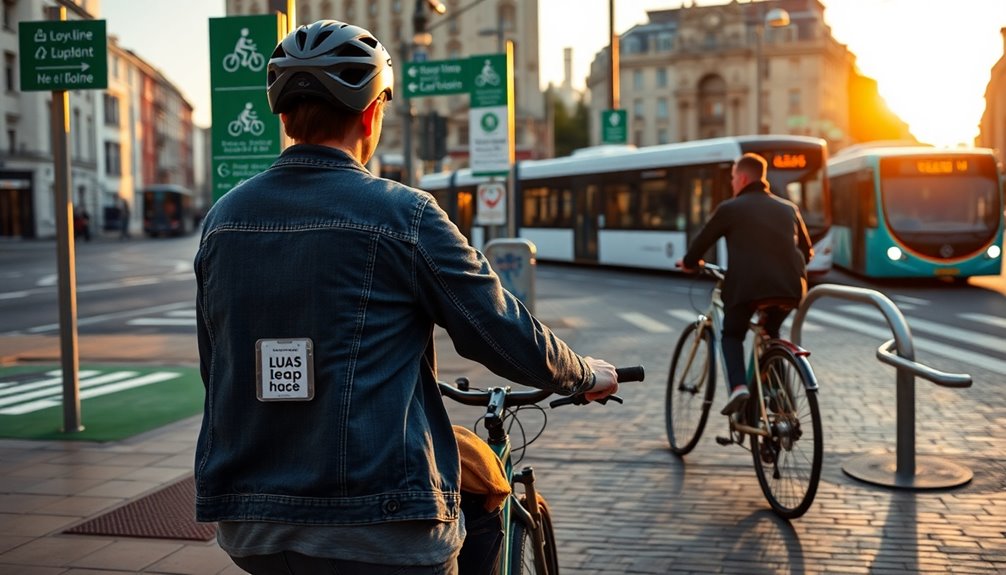
Combining a bike with Dublin’s public transport can cut door-to-door travel time by 10–25% on short trips under 8 km and expands your catchment area for Luas stops, DART stations and bus corridors. You’ll get faster first/last‑mile links by cycling to nearby stops instead of walking. Use bike sharing programs for flexible access without storage concerns; compare docking vs. dockless availability, pricing and helmet provisions. Plan routes that avoid major junctions and peak pedestrian flows; prefer protected lanes and quieter parallel streets. Check Luas and DART policies for bike carriage windows and secure your bike when leaving it. For safety, wear high‑visibility clothing, use lights after dark and maintain brakes and tyres; a short pre‑ride check reduces mechanical risk. Integrate cycling into journey planning apps to measure total travel time and evaluate integrated travel options — combining public timetables with realistic cycling speeds gives the best decisions for speed and safety on short student trips.
When you travel on Dublin’s buses, Luas or DART, validate your ticket or Smartcard as soon as you board or enter the platform — failure to do so can trigger on‑the‑spot fines of €100–€150 or higher for repeat offences. You should tap the Leap card reader or keep a paper ticket clearly visible; inspectors perform random checks and won’t accept “I forgot.” Consistent ticket validation reduces risk, speeds inspections, and supports service safety funding.
Know penalty consequences: inspectors can issue fixed penalties, require ID, or remove you from services. First-time penalties typically match the €100–€150 range; unpaid fines escalate and may lead to court summons. If a machine faults, document the issue (time, vehicle, reader ID) and report it promptly to Bus Éireann, Luas, or Iarnród Éireann customer service to avoid liability.
Carry proof of purchase and a charged Leap card. When in doubt, validate—it’s the simplest, data-backed step to protect your wallet and travel confidence.
Because multimodal routes open up faster, cheaper and more reliable commutes, map out 2–3 campus‑to‑home options that mix walking, bus, Luas and DART so you can switch when delays hit. Start by plotting primary and backup lines: a direct DART or Luas leg plus a walking or campus bus routes feeder, and an alternative that uses bike sharing for the first/last mile. Quantify time: note scheduled run times, typical peak delays (add 5–15 minutes buffer) and transfer walking distances under 800 m to keep you safe after dark.
Assess cost: compare weekly Leap card fares across options and include any campus bus routes that may be free or subsidised. Check shelter availability at transfer points and well-lit walking paths. Practice each route once to verify timings and identify safe waiting spots. Keep a compact one-page route sheet with contact numbers, bike docking locations and a clear decision rule for when to switch to your backup.
Once you’ve practiced your primary and backup routes, keep real‑time alerts on so you can switch plans immediately when delays or cancellations appear. Turn on real time notifications in the Transport for Ireland app and any operator apps you use (Dublin Bus, Luas, Irish Rail). Data shows on‑time performance can vary by route and time; alerts give minute‑by‑minute updates so you avoid stranded waits and unsafe late-night transfers.
Configure notifications for service updates only — major disruptions, platform changes, and cancellations — to reduce noise. Set geography-based alerts (home, campus, regular stops) so you get relevant warnings without being overwhelmed. If a disruption happens, the alerts should point you to alternatives: reroutes, replacement buses, or nearest stations. You’ll save time, lower exposure to isolated stops, and keep travel predictable during exams or bad weather. Regularly update apps and check permissions so alerts arrive reliably when you need them most.
If you can shift classes or labs by an hour or two, you’ll save money and avoid crowded vehicles—off‑peak fares on Dublin Bus, Luas, and Irish Rail are often cheaper and services are noticeably less busy outside morning and evening rush hours. Choose later or earlier departure times where possible: off peak benefits include reduced single and return fares, lower short-hop costs, and more reliable boarding times. Data shows passenger loads drop substantially mid‑morning and mid‑afternoon, so you’ll spend less time standing and more time seated, reducing fatigue and exposure in crowded spaces. For safety, pick well‑lit stops and carriages with other passengers and keep belongings secure. Use the Transport for Ireland journey planner to compare costs and journey times for peak vs off‑peak options; a small schedule tweak can cut travel expenses by up to 20% on some routes. Plan ahead, adjust your timetable, and enjoy quieter journeys that are safer, cheaper, and more predictable.
No, you generally can’t use a student leap card on private bus services like Aircoach. The student leap card is valid on Dublin Bus, Luas, DART and most public commuter services; private bus services set their own fares and typically require separate tickets or passes. For safety and cost certainty, check the private operator’s website for accepted payments, advance booking, and refund policies before travel so you’re prepared and protected.
Yes — you can get student discounts for Dublin Bike subscription options. You’ll find reduced annual and short-term rates through university partnership schemes or by verifying student status via approved documentation. Check the official Dublin Bike site for current prices, eligibility, and secure payment methods. Always lock bikes properly, follow helmet and traffic safety guidance, and keep your account details protected to avoid unauthorized charges or misuse while using discounted subscriptions.
You can get a refund by reporting leap card issues to Leap Support and following the official refund process immediately. You’ll need your card number, transaction details, and ID; submit these via the Leap website or by phone (keep timestamps). They’ll investigate, usually responding within 10 working days, and issue a credit or bank refund if valid. Keep records, use tracked communication, and escalate to the National Transport Authority if unresolved.
Yes — you can bring large luggage or surfboards, but you’ll need to follow Luas luggage policy and train surfboard regulations. Keep items compact, stored clear of aisles and doors, and avoid peak hours to reduce crowding. On trains, secure boards and use designated luggage areas where available; staff may refuse oversized items if they risk safety. Always prioritize safe stowage, clear signage, and courteous placement so others aren’t obstructed.
Yes — but with caveats. Think of night bus routes as special shifts: hopper and day tickets generally don’t cover them. Hopper/day ticket validity usually ends at service cutoff, and many night routes require a separate fare or Nightlink ticket. Check route-specific timetables and contactless/Leap validation rules before travel. You’ll stay safer knowing which services need extra payment, when they run, and where staff or CCTV are available.
You’ve now got the essential toolkit to navigate Dublin like a pro: a topped-up Student Leap Card, route plans in your pocket, and smart fare choices that slice travel costs. Treat rush-hour windows like tidal flows, time trips to ride the quieter currents, and keep real-time alerts switched on. Validate tickets every trip to avoid fines, map multimodal routes, and you’ll turn daily commutes into reliable, cost-effective routines.