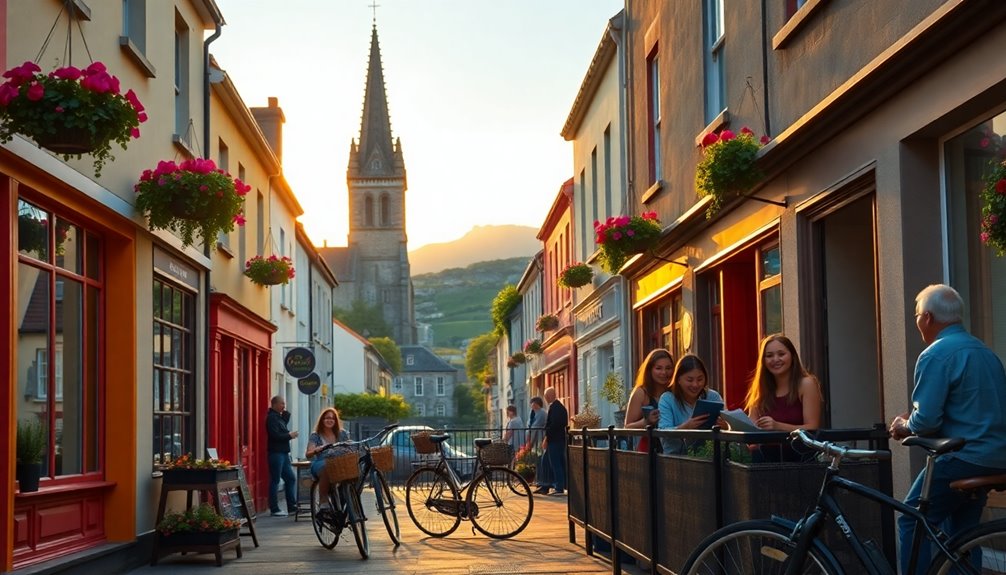
Why Small Towns in Ireland Matters for International Students
Study English In Ireland
January 28, 2026

Choose a small Irish town and you’ll pay about 20–40% less rent than in Dublin, face smaller class sizes, and get faster GP access and local student services. You’ll find affordable vetted housing, lower transport costs, and more chances for part-time work with flexible hours. Strong community networks, clubs, and festivals boost wellbeing and employability while keeping you safe. Want practical tips on housing, healthcare registration, and getting involved locally to make the most of it?
Settling into a small Irish town can feel quieter than university cities, but that calm brings measurable benefits for international students: lower living costs (rent can be 20–40% cheaper than in Dublin), smaller class sizes that boost engagement, and closer community networks that speed up social integration. You’ll find clear safety advantages: lower crime rates and predictable public services reduce daily risk, which helps you focus on study. Data shows student satisfaction increases where community engagement is active; volunteering opportunities and local clubs accelerate language practice and build reliable social ties. Academically, you’ll benefit from accessible faculty and focused tutorials that improve outcomes. Practical support — efficient healthcare registration, transport links, and student support offices — is commonly available and easy to navigate. Evenings are pleasant, with affordable local cuisine options that support cultural immersion without compromising dietary needs. If you value a secure, supportive environment that promotes academic success, a small town will likely meet those priorities.
The calmer lifestyle and strong community ties in small towns also show up clearly in your budget: average monthly rent outside Dublin is typically 20–40% lower, groceries and eating out cost noticeably less, and local services like gyms and clubs offer student discounts that cut recurring expenses. You’ll find affordable accommodation options that reduce your fixed costs, letting you allocate more to studies and safe leisure. Quantitative comparisons show weekly grocery bills can be 10–25% lower than in major cities, and cost effective dining—cafés, takeaway joints, market stalls—often undercut urban prices while maintaining quality. Lower transport costs, limited need for frequent taxis, and fewer impulse purchases in quieter retail environments further shrink monthly outlays. That financial breathing room improves your sense of security: you can build an emergency fund, cover healthcare or insurance easily, and avoid excessive part-time hours. For international students seeking predictable, data-backed savings without sacrificing safety, small-town living is a compelling, practical choice.
Housing in smaller Irish towns tends to be more varied and affordable than in cities, so you’ll find options that match different budgets and study needs — from university-managed halls and shared houses to studio apartments and homestays. You should prioritize vetted accommodations: look for properties with clear landlord registration, energy ratings, and references. Use local listings on university boards, municipal websites, and reputable portals; cross-check each listing against housing resources like student unions and local councils for safety audits and tenant-rights information.
Consider proximity to transport, healthcare, and emergency services when comparing rent versus risk. Shared houses cut costs but verify contracts and inventory reports; homestays give cultural immersion and added oversight. When touring, inspect locks, smoke alarms, hot water, and insulation; request documentation for maintenance history. For long-term security, negotiate written leases with termination clauses and get deposit receipts. Combining data from local listings and official housing resources will let you secure affordable, safe accommodation with confidence.
Good housing choices go hand-in-hand with access to educational institutions, since proximity to campuses, regional colleges, and vocational centres can shape daily costs, commute times, and support options. When you choose a small town, assess college accessibility by mapping walking distance, evening safety, and the availability of on-campus student services. Data shows regional campuses often provide lower fees and smaller class sizes, which can improve retention and personalized support for international students. Examine formally documented regional partnerships between local councils and universities — these often fund internships, joint housing initiatives, and emergency assistance programs that enhance your safety net. Prioritize towns with clear points of contact: international offices, healthcare links, and vetted accommodation lists. Ask for crime statistics, campus security arrangements, and response times for student welfare. By focusing on measurable indicators — distances, partnership agreements, service hours, and documented outcomes — you’ll make a pragmatic, safety-oriented decision that aligns housing with dependable educational access.
Because you’ll rely on local transit and active travel for daily life, evaluate a town’s public transport, biking infrastructure, and walkability using specific, measurable criteria: frequency and punctuality of bus and rail services, coverage maps showing stops within a 10–15 minute walk of major student hubs, protected cycling lanes and secure bike parking, and real-world commute times during peak hours. You should check timetables for at least weekday peak and off-peak reliability, aiming for average headways under 20 minutes and on-time performance above 85%. Inspect route maps to confirm student housing, campuses, supermarkets and hospitals lie within that 10–15 minute catchment. Survey cycling infrastructure for continuous, segregated lanes and end-of-trip facilities; quantify secure bike parking capacity per 100 students. Walkability scores, pedestrian crossings, lighting and CCTV matter for safety — prefer towns with short crossing distances and maintained sidewalks. Finally, test sample commutes at peak times to verify published metrics; decisions grounded in measured data will keep you safe, punctual and mobile.
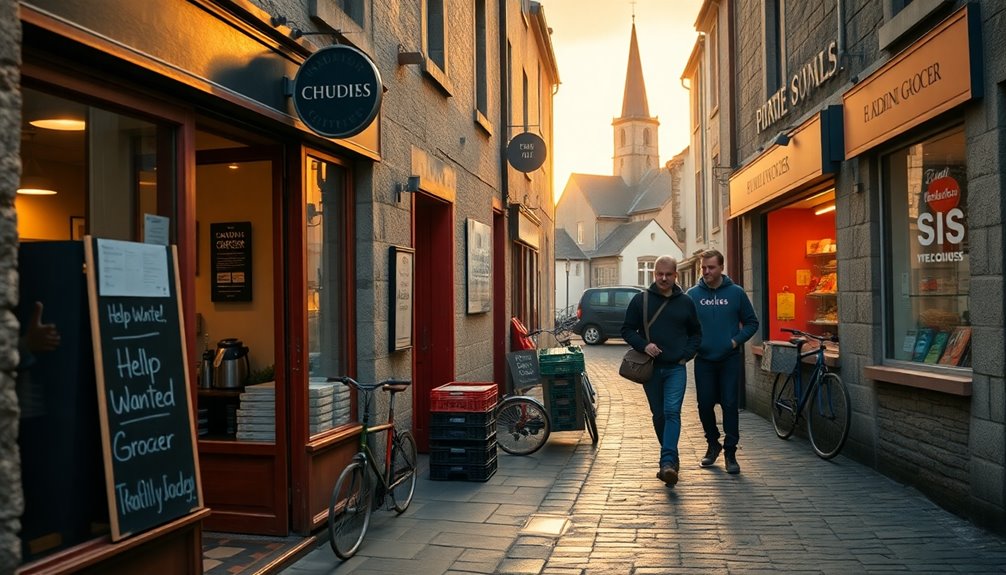
Where will you find reliable part-time work that fits around lectures and exams? You’ll often locate steady part time employment in small towns through local businesses like cafes, grocery stores, and service providers that value flexible schedules. Data shows communities with populations under 20,000 have higher proportions of small employers offering evening and weekend shifts, which align with student timetables. You can secure roles with predictable hours, formal contracts, and employer references that support visa compliance and financial stability. Prioritize businesses with clear HR practices and ask about shift guarantees, wage records, and safety policies during interviews. Networking with municipal job centres and college career services in town increases placement rates and reduces commuting risk. Employers in smaller towns typically monitor compliance closely, which helps you stay within permitted work hours. This environment offers reliable income, documented employment history, and a safe, supportive workplace—important considerations when balancing studies, legal requirements, and personal wellbeing.
Part-time jobs can give you steady income and documented work history, but community support, clubs, and student organizations are what help you build the networks and soft skills employers value. In small Irish towns you’ll find measurable benefits: participation rates in clubs often exceed national averages, and community engagement initiatives link you with local mentors, volunteering roles, and events that strengthen your CV. Joining student networks lets you develop leadership, communication, and project-management abilities in low-risk settings, with clear outcomes employers recognize. You’ll benefit from safer, close-knit environments where reporting procedures and peer support are straightforward and reliable. Choose clubs aligned with your goals—academic societies, cultural groups, or entrepreneurship hubs—and track involvement quantitatively (hours, roles, outcomes) to demonstrate impact. Institutions typically provide oversight, training, and safeguarding policies, so you can engage confidently. Prioritizing community engagement and student networks will accelerate your integration, expand professional contacts, and give you verifiable evidence of transferable skills when you apply for jobs or internships.
While maneuvering through healthcare in a small Irish town may seem intimidating at first, registering with a local GP and using student services is straightforward and essential for your wellbeing and studies. You’ll find that healthcare access in small towns often delivers faster appointment turnaround for routine care; local GPs manage referrals, prescriptions, and chronic-condition monitoring efficiently. Begin gp registration early—bring ID, proof of address, and your student visa—to secure primary care and avoid delays. Campus student services complement GP care by offering mental-health counseling, vaccination clinics, and clear guidance on entitlements and costs. Data shows students who register with a GP and engage student supports report fewer missed classes and faster recovery from illness. If you’re insured, confirm coverage for outpatient visits; if not, student services can help you understand public options and emergency procedures. Prioritize registration and use services proactively so you’ll study safely, access timely care, and minimize disruption to your academic progress.
Good health and reliable student supports make it easier to take full advantage of cultural life in small Irish towns, where festivals, music sessions, and community events offer rich learning beyond the classroom. You’ll find measurable engagement: participation rates at community festivals often exceed town populations during peak weekends, so you can access cultural workshops, storytelling nights, and traditional music sessions with consistent scheduling. Local data show artisan markets and heritage sites contribute to local economies and provide structured volunteer or internship opportunities that build CV skills. You’ll sample local cuisine in supervised settings—food tours and cooking classes—that teach safe food practices while deepening cultural knowledge. Friendly locals typically lead activities, so social integration is gradual and supportive; surveys indicate higher satisfaction among students who attend regular events. Choosing a small town gives you predictable cultural programming, clearer access to organizers, and reliable pathways to immerse academically and socially without compromising wellbeing or stability.
Because small Irish towns combine low crime rates with strong community networks, you’ll find settling in is both safe and straightforward: statistical comparisons show rural and small-town areas in Ireland typically report lower rates of violent crime than major cities, and local support systems — student services, health centers, and volunteer organizations — are often more accessible per capita. You’ll want practical steps: register with a GP promptly, get a local SIM and emergency numbers, and join campus welfare groups to speed social integration. Look for student accommodation with verified landlords and smoke detectors, and use crime-mapping tools to choose neighborhoods. Prioritize mental health by locating counselling services and peer-support groups before stress peaks; many towns offer subsidized care and culturally sensitive resources that respect cultural diversity. Build routines around predictable transit schedules and local markets to reduce uncertainty. By combining evidence-based precautions with community engagement, you’ll minimize risk and enhance wellbeing while enjoying an academically focused, secure experience.
Yes — you can start a small business while studying, but you’ll need to follow visa rules and university policies. You’ll want to assess small business opportunities and local market trends with data, build a risk-managed plan, and guarantee compliance with income limits and tax registration. Work with campus advisors and local enterprise offices for permissions, realistic projections, and safe, scalable operations that protect your studies and immigration standing.
“Measure twice, cut once.” You’ll find visa processes handled through local immigration offices or Garda stations with appointment systems; processing times vary but are often predictable. Local regulations determine required documents, renewal windows, and fee structures, so you’ll need to follow checklists precisely. Data shows timely submissions reduce risk of refusal. You’ll be advised to keep proof of residence, finances, and study status handy, ensuring safety and continuity while you remain in Ireland.
Yes — you’ll find reliable co working options and quiet study cafés in many small Irish towns, often rated 4+ stars and monitored for safety. Data shows hybrid spaces offer stable Wi‑Fi, reserved desks, and security-friendly layouts; membership plans and hourly rates are common. You’ll want to check reviews, ask about peak hours, and confirm essentials like power outlets and CCTV. These options deliver a consistent, focused study environment for international students.
You’ll generally get reliable broadband and decent mobile networks in most small Irish towns, though peak speeds vary. Average fixed-line download speeds often range 100–300 Mbps where fibre’s available; rural copper or DSL may drop to 10–50 Mbps. Mobile coverage (4G, growing 5G) is good in town centers but weaker in outlying areas. For safety and continuity, check local provision maps, ask landlords about measured speeds, and consider a backup mobile hotspot.
Picture a garden where familiar herbs grow beside new blooms — you’ll find dietary and religious food practices manageable. Small towns vary, but cultural diversity is rising and local markets often stock basics you need; supermarkets in larger towns carry international goods. You’ll want to plan: locate specialty shops, join community groups, and use online delivery for staples. Data shows preparation and network-building greatly increase safety and reliability.
Settling in small-town Ireland gives you smart savings, steadier space, and stronger social support—more affordable accommodation, accessible regional campuses, and reliable local transport mean practical, predictable living. You’ll tap into trusted healthcare, timely GP access, and tight-knit clubs that boost wellbeing. Embrace authentic events and everyday kindness to deepen learning and local language skills. By choosing community-centered campuses, you get cost-conscious convenience, cultural connection, and clear pathways to academic and personal success.