3 Best Volunteer Options for Language Immersion in Ireland
Study English In Ireland
February 4, 2026

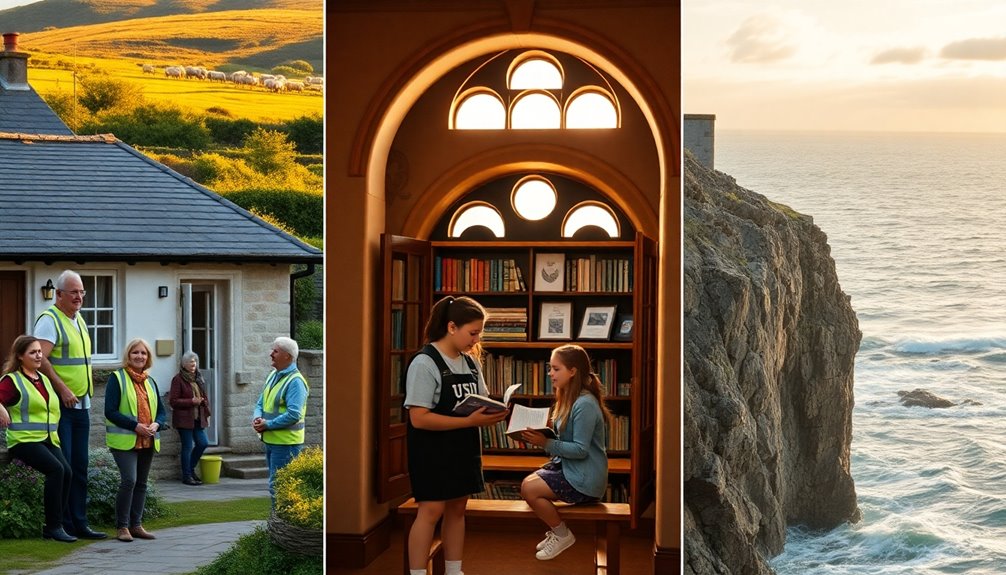
If you want to fast-track your Irish, try teaching in a Gaeltacht immersion program where you’ll guide conversation, games and cultural activities. Volunteer with youth language projects to run clubs, workshops and arts sessions while learning safety and community skills. Join conservation teams that use Irish during hands-on ecological work, so vocabulary sticks to action. Each option gives real-life practice, local dialect exposure and strong community ties—keep going and you’ll find practical tips and program examples ahead.
If you want to teach in a Gaeltacht immersion program, expect your role to be more than lesson plans—you’ll live and breathe the language alongside learners, guiding conversations, games, and cultural activities that make Irish feel immediate and usable. You’ll shepherd safe, steady progress: structuring daily language exchange, modeling simple phrases, and easing newcomers into talking without fear of mistakes. Observing local rhythms, you’ll pair structured tasks with informal moments — walks, songs, kitchen chats — where vocabulary lands naturally. You’ll set clear boundaries and routines so learners feel secure while taking risks, and you’ll adapt when a tired voice needs gentler prompts. Practical materials and predictable schedules reduce anxiety; warm corrections and patient repetition build confidence. You’ll also coordinate cultural activities that root language in place — storytelling evenings, craft demonstrations, and community teas — letting learners connect words to living tradition. Your presence will be calm, practical, and encouraging, keeping the immersion safe and rewarding.
Beyond classroom walls, you’ll find language living in playgrounds, youth clubs, and weekend workshops—places where kids and teens mix Irish with laughter and play. You’ll join structured activities that prioritize safety: clear safeguarding policies, vetted coordinators, and small-group settings that help you build trust while guiding simple language games, storytelling, or arts projects. Your role supports youth engagement—encouraging confidence, conversational practice, and peer-led moments that feel natural rather than forced. You’ll witness cultural exchange firsthand as young people share local songs, dialects, and community traditions, and you’ll mirror that openness with respectful curiosity. Practical training and ongoing supervision mean you’re never left guessing how to handle sensitive situations. Choose programs with transparent background checks, child-protection training, and clear boundaries so your immersion stays rewarding and secure. This path gives you grounded, everyday exposure to Irish, rooted in community rhythms and mutual respect.
When you kneel to plant a hedge on a windswept coast or help clear an alder-lined stream, the Irish language often comes woven into the work—short instructions, place names, and the quiet songs volunteers hum between tasks. You’ll learn terms for tools, habitats, and safety checks while practicing low-impact techniques that emphasise sustainable practices. Tasks are hands-on but controlled: wearing gloves, following briefings, and working in pairs keeps you safe while you absorb vocabulary tied to land and weather.
You’ll join local rangers or community groups who link ecological care with cultural heritage, explaining why a peat restoration or dune repair matters in both environmental and linguistic terms. Conversation flows naturally as you perform measured tasks; phrases stick because they’re tied to action. If you choose a supervised programme, you’ll get clear guidance, modest physical demands, and a reassuring structure that supports both learning and the wellbeing of the habitats you help protect.
No, you don’t need prior Irish language skills to apply. You’ll find roles that list specific language proficiency in their application requirements, but many programs welcome beginners and offer support or classes. You’ll feel safer choosing placements that clearly state training, mentoring, and emergency contacts. Be sure your application requirements match your comfort level, ask about supervision, and expect gradual immersion so you can build skills confidently while volunteering.
Mostly, placements aren’t paid, but some offer stipend availability to help with basics; don’t worry, it’s not impossible to get a modest support. You’ll see volunteer benefits like accommodation, meals, language classes, and local mentoring that make you feel secure and cared for. Imagine arriving with guidance, a warm room, and daily practice — the program covers essentials so you can focus on learning, not surviving.
You’ll usually get a choice: a Host family stay for safe, immersive daily practice, or Shared dormitories with fellow volunteers for social support. Host families give private or semi-private rooms, meals, and cultural guidance; dorms offer simple rooms, shared kitchens and bathrooms, and easy access to group activities. Both options prioritize safety—hosts are vetted and dorms are supervised—so you can focus on language learning and feeling secure.
Yes — you can combine volunteering with formal language classes. You’ll often split days between hands-on volunteer work and sessions at local language schools, giving steady practice and safe structure. It feels like cultural exchange with purpose: classroom grammar meets real-life conversation. Choose reputable programs that partner with accredited schools, confirm schedules and accommodation safety, and you’ll get immersive learning while contributing meaningfully, with clear support and supervision.
About 60% of short-term volunteers are aged 18–30, so you’ll often find peers if you’re young. Yes, there are age requirements and visa types to take into account: some programs set minimums (usually 18) or upper limits, while others welcome families or retirees. Short stays may fit tourist or volunteer visas; longer placements might need work or specific volunteer permits. Check program rules and Irish immigration guidance so you’ll stay safe and compliant.
You’ll go thinking you’ll “learn Irish” fast, then find yourself knee-deep in Gaeltacht chatter, chasing kids with flashcards, or planting a bog as if it’s a language lab. You’ll smell peat, hear lilting reprimands, and realize fluency isn’t a classroom—it’s embarrassment, repetition, and laughter at dawn. So pack boots, patience, and a notebook; you’ll leave with a battered accent, a cleaner trail, and stories that actually speak.