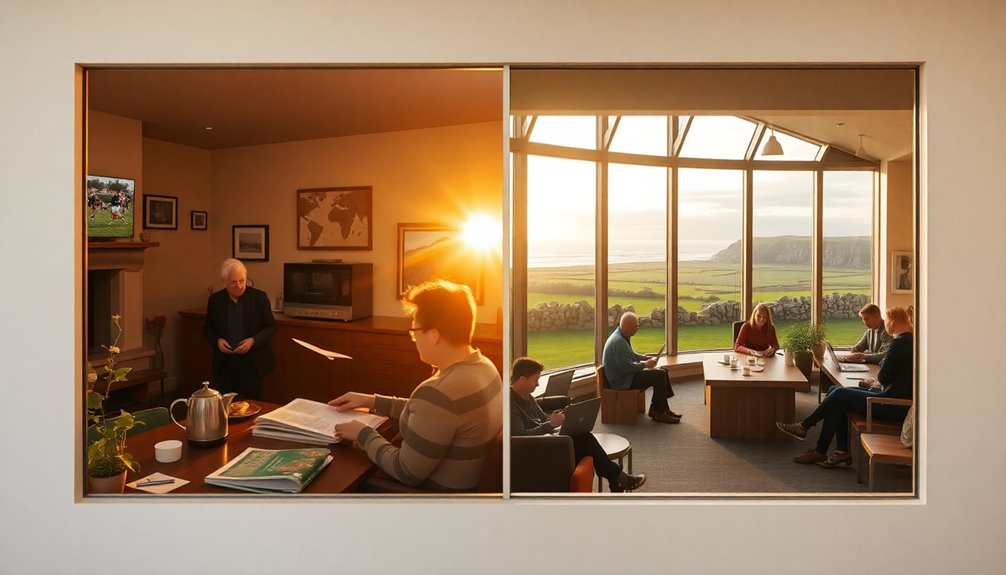
How Benefits of Homestay Vs Student Residence in Ireland Can Improve Your Study Abroad Experience
Study English In Ireland
December 15, 2025

Choosing a homestay or student residence in Ireland can shape your budget, daily routine, and social life. A homestay gives you home-cooked meals, native conversation practice, and deeper local ties, often with utilities included. Residences offer independence, closer campus access, on-site support, and fast peer networking, though you’ll manage groceries and bills. Think about privacy, commute, and language goals to pick the best fit — keep going to see practical tips and comparisons.
When you’re choosing between a homestay and a student residence in Ireland, cost will likely be one of the biggest deciding factors — and the differences aren’t always obvious. You’ll want a clear cost analysis: homestays often bundle utilities, meals, and laundry, cutting daily expenses, while residences charge rent plus bills, groceries, and maybe internet. Think about hidden fees, deposit rules, and travel time to campus. Use budgeting strategies that match your lifestyle — set weekly limits, track shared costs, and allow a buffer for social outings and emergencies. If you value flexibility, choose the option that lets you redirect savings toward travel or extra courses. Run numbers for a semester so you won’t be caught off guard.
If you choose a homestay, you’ll get daily conversational practice at the dinner table and through household routines that expose you to local expressions and customs. In a student residence, you’ll still find language practice but it’s often peer-focused and less tied to Irish cultural rituals. Think about whether you want immersive everyday routines or a more social, student-centered environment for building your language skills.
Because you’ll be speaking with native speakers every day in a homestay, your conversational skills usually improve faster than in a student residence where English practice is mostly peer-to-peer; homestays give natural exposure to everyday phrases, accents, and cultural cues during meals and household routines, while residences offer more structured language practice through study groups, clubs, or formal conversation partners. You’ll get daily conversation that feels effortless and relevant, letting you test new expressions and hear instant corrections. If you crave freedom, a homestay lets you steer chats toward interests, travel plans, or local life. Residences give targeted practice opportunities—conversation clubs, language exchanges, study partners—great when you prefer planned sessions. Choose the vibe that matches how you like to learn and live.
Anyone staying in a homestay will quickly notice how daily rituals—shared meals, tea breaks, and weekend errands—shape both your language practice and cultural understanding. You’ll see cultural celebrations woven into routines and everyday daily customs that feel effortless, letting you join or step back as you prefer. In residences, routines tend to be more self-directed, giving you freedom but fewer organic cultural touchpoints. Consider how rituals influence your days:
These contrasts help you choose the setting that matches your desire for immersion or autonomy.
While homestays wrap language learning into daily life through constant, natural interaction, residences give you targeted opportunities to practise with peers and in clubs. You’ll find homestays push you to use everyday phrases — shopping, meals, jokes — so language practice feels effortless and tied to real routines. In a residence, you can join study groups, conversation circles, or language exchanges that fit your schedule and social goals, giving structured practice without losing independence. Both options spark cultural exchange: homestays expose you to household norms and slang, residences connect you with international students and campus events. Choose what matches your freedom: immersive, domestic correction and warmth, or flexible, social practice with diverse peers and organised activities.
When choosing between a homestay and a student residence, you’ll want to think about whether you need a guaranteed private room or can accept shared sleeping spaces. Homestays often provide a private bedroom but come with household routines and rules, while residences offer more flexibility in daily schedules but sometimes less personal space. Consider how much control you want over your daily routine and alone time before deciding.
Privacy matters a lot when you pick between a homestay and a student residence: in a homestay you’ll usually get a private bedroom that comes with more personal space and a predictable routine set by your host, whereas in a residence private rooms vary from single en-suite units to shared suites where common areas are the focus. You’ll want to weigh how much private space you need, and which room amenities matter — desk, storage, lockable door, ensuite bathroom. Homestays often give quieter, homely spaces; residences give modern, flexible options.
Having a private room doesn’t just affect quiet and storage—it shapes how free you are to run your day. You get daily schedule adaptability: wake, work, or relax on your terms. In a homestay you might negotiate quiet hours; in a residence you often control your own routines with roommates nearby. Both let you practice routine personalization, but homestays add family rhythms while residences offer independence. Choose what matches your need for freedom.
| Situation | Homestay | Residence |
|---|---|---|
| Wake-up flexibility | Moderate (family rules) | High (your control) |
| Meal timing | Shared (family meals) | Full independence |
| Social interruptions | Possible | Variable (roommates) |
Although both homestays and student residences aim to keep you safe, they do it in different ways: homestays rely on the host family’s familiarity and local knowledge for day-to-day support, while residences provide formal on-site staff, security systems, and structured emergency protocols. You’ll choose based on how much independence you want versus structured backup. Homestays give personal support networks and easy access to emergency contacts through hosts; residences give monitored entry, 24/7 staff, and clear evacuation plans. Consider response speed, privacy, and who you trust when something goes wrong.
Homestays offer personal, local support; residences provide formal security, 24/7 staff, and clear emergency procedures.

Safety and support shape more than just emergencies — they also affect how easily you’ll meet people and build a social life. In a homestay, you’ll slip into a household rhythm, get invited to community gatherings and local cultural events, and connect with neighbors who can introduce you to authentic experiences. A student residence pushes you into peer networks, shared interests, and late-night study groups where friendships form fast and independence is encouraged. Both settings offer networking: homestays give deeper local ties and mentoring, residences offer breadth and fast socializing. Think about how free you want to be — cozy integration or wide social circles — and choose the environment that makes it easiest for you to explore events, build networks, and feel part of a community.
When you pick between a homestay and a student residence, food becomes part of daily life and can shape your routine as much as your room does. You’ll weigh meal plans against the freedom to cook, and your meal preferences and cooking styles matter. Homestays often offer home-cooked meals that introduce you to local dishes and flexible dietary adjustments; residences usually provide set meal plans or shared kitchens where you control your menu. Consider how much autonomy you want, dietary needs, and social eating.
Because your daily life will revolve around classes, shops, and social spots, where you live changes how much time and money you spend getting around. You’ll notice location convenience immediately: a homestay might place you in a quieter neighborhood with longer commutes, while a student residence often sits closer to campus and nightlife. Think about campus accessibility — is the route walkable or served by frequent buses? Shorter commutes give you more freedom to study, explore, or meet friends without planning every trip. Longer travel can mean cheaper rent but less spontaneity. Also check access to grocery stores, gyms, and cafés; these everyday amenities shape your routine. Balance travel time, cost, and the lifestyle you want while keeping movement and choice in mind.

Now that you’ve weighed location, commute and nearby amenities, it’s time to match those practical factors with what matters most to you. You want a living choice that fits your rhythm, so consider how homestay or residence aligns with your need for independence, routines, and social energy. Think about personal comfort and whether quiet evenings or lively common areas suit you. Respect for your cultural values or a desire to explore new ones will shape daily life and friendships.
Choose the option that preserves your freedom while meeting learning and wellbeing goals.
Generally no — most homestay and residence pet policies forbid personal pets, though some offer limited animal accommodations (e.g., support animals or host pets). You’ll want to check each host’s rules and request exceptions confidently.
Utilities are usually lower in homestays since some utility expenses may be included, but student residences split bills or charge extras; internet reliability tends to be stronger in student residences, though homestays can offer decent connections.
Yes — overnight policies differ: homestays often have guest restrictions set by hosts, while residences usually allow visitors within specified hours and registration rules; you’ll want to check each host’s or hall’s rules so you can plan freely.
Like a welcoming harbor, yes — you’ll find homestays often flexible and culturally sensitive, accommodating prayer spaces and dietary restrictions; you’re free to discuss routines and needs upfront so your beliefs and practices are respected.
You’ll need your visa application to include your Irish address, and hosts or residences must provide address verification for Garda registration; check specific visa rules, register with immigration, and keep copies for freedom and flexibility.
Choosing between a homestay and a student residence is really about finding the right kind of “home away from home” for you. You’ll want to weigh cost, privacy, social life, food, and convenience — and remember that a homestay offers gentle cultural hand-holding while a residence hands you lively independence. Trust your instincts, be honest about your needs, and pick the option that feels like the softest fit for your study-life puzzle in Ireland.
https://shorturl.fm/3jZjh
https://shorturl.fm/L6rHS
https://shorturl.fm/EiA8q