
The Pros and Cons of Learn English in Ireland
Study English In Ireland
January 18, 2026

You’ll improve your English fast in Ireland thanks to constant real-life practice, friendly locals, and lots of chances to join clubs and campus life. Cities vary — Dublin’s vibrant but costly, Galway’s artsy and coastal, Cork feels relaxed, Limerick is cheaper — so pick what fits your budget and goals. Expect reliable transport, student housing options, and part‑time work rules to learn. Keep going and you’ll get practical tips on costs, visas, health, and daily life.
While Ireland’s friendly locals and clear English make it a natural choice for learners, each city offers a distinct vibe that shapes your experience: you’ll find Dublin’s vibrant energy and diverse opportunities, Galway’s artistic pulse and coastal charm, Cork’s relaxed confidence, and Limerick’s emerging creativity. You can immerse yourself in Irish culture through music, pubs, festivals, and everyday conversation, while choosing a city atmosphere that matches your pace—busy and cosmopolitan or chilled and community-driven. That choice affects how freely you practice, who you meet, and how quickly your confidence grows, so pick the setting that suits your goals.
When you plan studying in Ireland, you’ll want to budget carefully for accommodation and rent, which can vary a lot between cities. Factor in food costs and whether you’ll cook or eat out, plus transport expenses like monthly passes or occasional taxis. Comparing city averages and student housing options will help you choose the best balance of cost and comfort.
Because rent takes up the biggest slice of your budget, getting a clear picture of accommodation options and typical prices is essential before you arrive in Ireland. You can choose student residences, private studios, or shared housing to suit your independence and budget. Check rental agreements carefully for deposits, notice periods, and utilities included. Expect higher rents in Dublin, lower in smaller cities; plan a buffer for upfront costs. Visit properties or use trusted agents and university housing services to avoid scams. Flexibility helps — shorter leases and flatshares let you explore Ireland without being tied down.
Having sorted your housing and budgeted for rent, you’ll want to understand everyday costs like food and transport, which shape your weekly spending. You can enjoy Irish cuisine affordably by mixing traditional dishes with market buys: local markets and food festivals offer fresh, cheap options and chances to explore. Cooking at home cuts costs; eating out is pricier but social. For getting around, rely on public transport networks; student discounts and monthly travel passes lower fares and free you to roam. Balance spontaneity with simple budgeting, and you’ll keep living costs manageable while savoring local flavor.
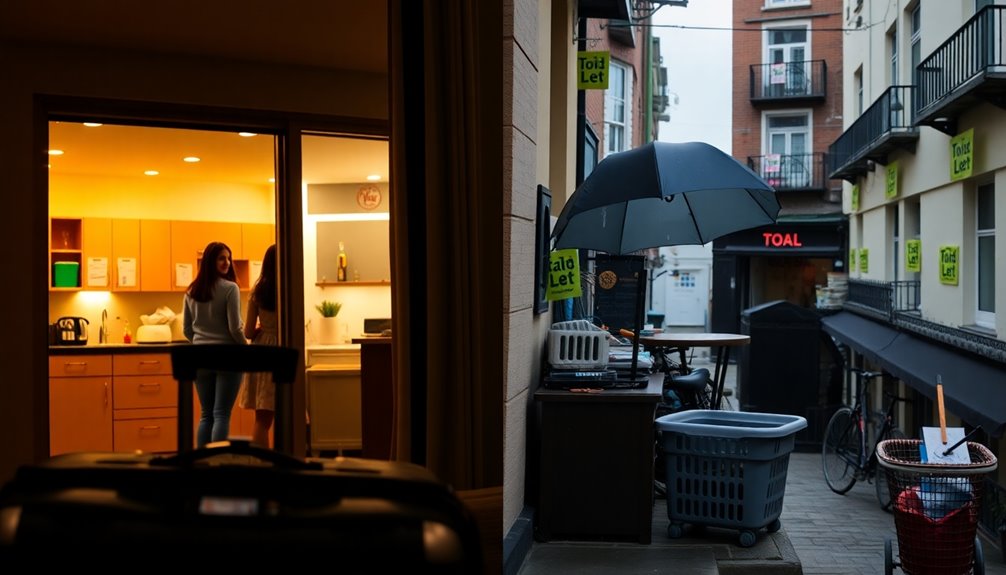
While you’ll find a range of options—from university dorms and homestays to private flats and shared houses—each has different costs, levels of independence, and social opportunities, so pick what matches your budget and study needs. Decide your student housing and accommodation preferences early: dorms offer easy social life and support, homestays give cultural immersion, flats grant independence, shared houses cut costs. Inspect contracts, check bills included, and confirm internet speed. Prioritize safety, proximity to classes, and quiet study spaces. Don’t rush; visit places if you can, ask current tenants for honest feedback, and read agreements carefully.
Getting around urban Ireland is straightforward thanks to a mix of reliable public transport, biking options, and walkable city centres, so you can choose what fits your budget and schedule. You’ll find buses, trams and suburban trains that run on predictable timetables, with passes that cut costs if you commute often. Cycling’s popular and practical for short trips, while walking’s easiest in compact areas. Expect occasional delays and higher fares outside peak zones, so plan flexibly. Urban commuting is generally efficient, giving you freedom to explore, study and work without needing a car.
Choosing where to study in Ireland comes down to trade-offs between cost, campus life, and career opportunities, so weigh what matters most to you — affordability and friendly student communities in Galway or Limerick, vibrant nightlife and internship access in Dublin, historic charm and smaller classes in Cork, or the quieter, research-focused environment of Maynooth. You’ll find Dublin nightlife and job networks, Cork cuisine and intimate seminar settings, Galway festivals and a relaxed arts scene, plus Limerick history with lower living costs. Pick the city that matches your social energy, study goals, and desire for independence while abroad.
Before you book a course, check the student visa requirements for your nationality and the length of your program, since short courses and full-time programs have different rules. You’ll also need to understand work permission: some visas let you work part-time during term and full-time during holidays, while others don’t. Make sure you meet official documentation and enrollment conditions so your right to study and work in Ireland stays valid.
A student visa is your key to studying in Ireland, but it also comes with specific conditions you’ll need to follow—from course length and financial proof to permitted work hours and immigration checks. You should learn about student visa types and the application process early so you can plan freedom-friendly studies. Decide on full-time, accredited courses that match visa rules, gather bank statements, letters, and health insurance, then submit accurate documents to avoid delays. Once granted, you’ll need to register with immigration and respect visa limits. Being prepared lets you focus on learning English and enjoying life abroad.
Now that you’ve got the basics of student visas down, you should understand how work rights tie into your stay. You can work part-time during term and full-time during scheduled breaks if your visa allows it, but you must follow work permits guidance and Irish employment regulations. Check limits on hours, tax obligations, and whether your course level qualifies you to work. Some internships need employer sponsorship or separate permits. Authorities expect you to keep documentation handy and renew permissions on time. Knowing these rules protects your freedom to earn while studying without jeopardising immigration status.
While you can choose from private language schools or university programs, it’s important to understand how each option is structured and accredited so you get the quality and recognition you need. You’ll find private language schools offering flexible, short-term courses aimed at practical fluency, often with varied class sizes and social activities. Universities provide longer, credit-bearing programs with formal university accreditation, useful if you want academic progression or CV weight. Check accreditation bodies, course length, assessment methods, and visa implications. Balance cost, seriousness, and freedom: pick the path that matches your goals, timeline, and desire for recognised credentials.
If you want to improve your English and enjoy your time in Ireland, getting involved in student clubs, community groups, and local events will make a big difference. You’ll find social clubs that match hobbies—sports, arts, music—so you can practice language naturally and meet locals. Cultural events offer chances to learn traditions, hear accents, and broaden perspectives. Balance your schedule: join a few activities but keep study time. Expect friendly people but also occasional cultural misunderstandings; they’re learning moments. If you value freedom, pick groups that fit your pace and interests to grow socially and linguistically.

Wondering what to do if you get sick or face an emergency in Ireland? You’ll find reliable healthcare access through public GPs, student health services, and private clinics—register early, carry insurance, and know your entitlements. Emergency response is efficient: dial 999 or 112 for ambulance, police, or fire; universities usually have on-campus protocols and contact points. Stay aware of local safety norms, keep emergency numbers handy, and register with your embassy if you want extra support. For minor issues, pharmacies and walk-in clinics are convenient. Planning ahead gives you freedom to explore while staying protected and ready.
Because working while you study can boost your experience and help cover costs, it’s important to know the rules, opportunities, and practical steps for finding part-time jobs, internships, and career support in Ireland. You can work limited hours on a student visa and tap into internship opportunities through colleges or local firms. The job market is competitive but varied—hospitality, retail, and tech often hire students. Career services, networking events, and online platforms help you find roles that build skills and freedom. Balance study and work, know your rights, and prioritize placements that advance your long-term goals.
When you arrive, finding affordable accommodation will be one of your top priorities, so compare student halls, shared flats, and homestays to match budget and location. Learn the basics of public transport — Leap Card fares, bus and tram routes, and bike-share options — to save time and money. Track daily expenses with a simple budget to avoid surprises and make the most of student discounts.
Finding affordable accommodation in Ireland means balancing cost, location and convenience so you can focus on studies without stretching your budget. You’ll consider budget friendly hostels for short stays while scouting longer-term options like shared accommodations, student residences or private rooms. Check local listings, university noticeboards and trusted Facebook groups, and visit properties to confirm conditions. Factor utilities, internet and proximity to classes into monthly costs. Be clear on lease terms and deposit protections, and get receipts. If you value freedom, choose flexible arrangements that let you explore neighborhoods without locking you into costly contracts.
Once you’ve settled on a place to live, getting around Ireland reliably becomes a daily concern—especially as a student juggling classes, part-time work and social life. You’ll learn local bus routes, timetables and peak times so you can plan study and leisure without stress. Cities often have integrated networks with trains and trams; rural areas rely on less frequent buses. Check student discounts and season ticket options to save, but weigh flexibility vs commitment. Use real-time apps, keep a contactless card or paper ticket handy, and build buffer time into journeys so you’re free to explore.
A few simple habits will make a big difference to your weekly budget in Ireland: track your spending, prioritise essentials like rent and groceries, and set a modest weekly allowance for socialising. You’ll save if you use budgeting tips: cook at home, buy seasonal produce, and shop local markets. Use apps for expense tracking and review categories weekly so choices stay intentional. Share bills with flatmates, choose pay-as-you-go plans, and hunt student discounts for food, travel, and classes. These practical steps give you control without sacrificing freedom — you’ll live well while keeping finances predictable and flexible.
Yes — Irish accents can influence your IELTS/TOEFL comprehension, but they rarely derail scores. You’ll face dialect comprehension challenges from regional pronunciation and language nuances, yet tests use varied accents. Learning cultural context helps you predict meanings and eases listening. If you practice with Irish speakers and diverse recordings, you’ll adapt quickly. Balanced exposure keeps you free to understand accents without letting them limit your test performance.
Yes — family members can often accompany you on short courses, but rules vary. Like a passport to shared memories, family participation brightens study stays, yet visa requirements may limit duration or work rights. You’ll check each school and Ireland’s immigration rules: dependents might need visitor visas or separate permits. Balance your freedom to travel together with practical limits on length, enrollment proof, and financial evidence before you book.
Yes — you’ll often get student discounts for cultural festivals and events, though it varies by organizer and city. Student benefits usually include reduced tickets, special passes, or combo deals, improving festival accessibility. Check your school’s noticeboards, student unions, or festival websites for proof requirements and limited-time offers. Balance cost savings with schedule flexibility; some discounts need advance booking or ID, so plan ahead to make the most of them.
Rural connectivity varies, so you shouldn’t expect flawless service everywhere; internet reliability is generally good in small towns but can be spotty in remote countryside. You’ll often get decent 4G and broadband near villages, yet dead zones and slower speeds occur on isolated routes. Plan for occasional outages, use local SIMs with multiple providers, and keep offline resources ready so you stay free to study and explore without being stranded.
Yes — many Irish schools offer specialized courses targeting professional exams and workplace skills. You’ll find exam-focused classes (IELTS, TOEIC, legal/medical English) plus professional development modules like business communication, report writing, and interview prep. Programs vary by school in intensity, duration, and certification, so you’ll want to compare syllabuses, teacher qualifications, and flexible schedules. This helps you balance exam goals with personal freedom and career growth.
So you want to learn English in Ireland — brilliant choice, if you enjoy charming accents, unpredictable weather, and pubs that moonlight as cultural centers. You’ll gain language skills, cozy friendships, and maybe a rainproof jacket. Sure, rent bites and job hunts can sting, but you’ll come away fluent, resilient, and oddly fond of queueing politely. In short: it’s worth it — provided you bring patience, euros, and a wicked sense of humor.