
Cultural Experiences While Studying English
Study English In Ireland
February 23, 2026

When you study English abroad, choose cultural activities that match your goals and personality. Stay with a host family for daily immersion or share a flat for independence. Pick a city for fast-paced variety or a small town for deeper local ties. Combine formal classes with conversation meetups, and balance museums, theatre, pubs, festivals, tours and solo exploration to build real skills. Keep exploring these options and you’ll discover tips to boost learning further.
Wondering whether a homestay or a shared flat will give you a better cultural experience while studying English? You’ll weigh homestay benefits like daily immersion, family meals, and real-life accents that force you to adapt quickly. If you crave structure and deeper local ties, a host household can teach customs and phrases you wouldn’t pick up alone. On the other hand, shared flat considerations center on independence: you’ll set your schedule, choose roommates, and create social circles from classmates or locals. That option gives freedom to explore evenings and weekends without family expectations. Decide by how much daily cultural guidance you want versus how much autonomy you need to live and practice language on your own terms.
You’ll notice city life moves fast with lots of events and transport, while small towns offer a slower pace and closer community ties. Cities usually give more chances to practice varied English accents and meet speakers, but small towns can force deeper daily immersion through routine interactions. Think about budget and travel: cities are often pricier and more connected, whereas small towns can be cheaper but less accessible.
While city life pulses with nonstop activity, small towns offer a slower, more deliberate rhythm that can change how you learn and live, from commute times and social calendars to study habits and downtime. You’ll notice different cultural norms shaping daily routines: in the city you’ll adapt to hurried breakfasts, shared coworking spots, and nightlife that stretches late; in a small town you’ll find mornings that unfold slowly, neighbors who know your name, and evenings meant for reflection. Choose what frees you—constant options and quick connections, or spacious days and deeper local ties. Both teach flexibility: you’ll learn to structure study blocks, claim personal time, and design a lifestyle that supports curiosity without feeling boxed in.
Having settled into a rhythm—whether hurried city days or relaxed small-town evenings—you’ll notice how environment shapes chances to practice English. City life throws you into bustling language cafes, spontaneous meetups, and fast cultural workshops that push quick conversation. Small towns offer slower, deeper exchanges—neighbors, local markets, community events—where your voice expands naturally.
| Setting | Social Scene | Learning Style |
|---|---|---|
| City | Nightlife, pop-ups | Rapid, varied |
| Town | Community, markets | Slow, immersive |
| Hybrid | Short trips | Mixed pace |
You’ll choose freedom: dart between scenes or settle into one. Both let you experiment, borrow phrases, and shape your own pace of fluency without pressure.
Because cost and accessibility often pull in different directions, choosing city life or a small town will shape not just your daily routine but your budget and options for learning support. You’ll find city life gives richer accessibility options: varied classes, tutors, cultural events, and transport that keeps you mobile. That convenience usually costs more, so if you’re watching budget constraints you’ll need to prioritize what you want most. Small towns often offer cheaper living and deeper local immersion, but fewer formal programs and less public transit—so you’ll trade immediate access for quieter focus and community ties. Decide whether you value convenience and choice or lower costs and authenticity, then design your study plan to match that freedom.
When you choose between formal classes and conversation meetups, think about your goals: classes give structure, grammar explanations, and regular feedback, while meetups offer real-world practice, spontaneity, and cultural exchange. You’ll want formal structure when you need clear progress and certified outcomes, but you’ll love casual interaction when you crave freedom, improv, and cultural insight. Balance both to suit your pace.
Choose what lets you grow without feeling boxed in; mix methods to keep learning lively and liberating.

If you need quick immersion or want to test a new city, short-term courses give intense, focused practice over weeks, while semester programs offer deeper grammar foundations, steady skill-building, and more chances to live the culture; pick short stints for fast gains and flexibility, longer terms for sustained progress and campus life. You’ll enjoy short term benefits like rapid confidence boosts, varied host-family stays, and nimble travel plans that keep options open. Semester challenges include longer commitments, visa logistics, and adapting to routine, but they let you form friendships, join clubs, and work on nuanced fluency. Choose based on how much freedom you want: go short to explore broadly, or commit to a semester when you’re ready to root yourself and grow steadily.
Although festivals grab your attention with bright parades, loud music, and concentrated bursts of tradition, everyday local practices—like market routines, meal customs, and greeting habits—shape how people actually live and speak over time. You’ll love cultural festivals for energy and spectacle, but everyday traditions teach subtle vocabulary, body language, and timing that freedom-seeking learners value. To balance both, try focused observation and casual participation:
You’ll gain fluency from steady, lived routines and inspiration from festivals, choosing how deeply you want to engage.
Because volunteering usually puts you in community settings and part-time jobs put you in customer- or workplace-focused ones, each offers different kinds of language practice: volunteers get conversational, contextual exposure and chances to practice empathy-driven phrases, while paid work forces you to use task-specific vocabulary, follow fast-paced interactions, and pick up workplace norms. You’ll choose volunteer work if you want flexible hours, authentic community engagement, and low-pressure chances to try new expressions. You’ll pick paid part-time work if you need income, routine, and repeated use of professional terms that speed up fluency for specific roles. Both boost skill development: volunteering broadens social vocabulary and confidence, while paid jobs sharpen accuracy and efficiency. Decide by what freedom you want—time, growth, or structure.
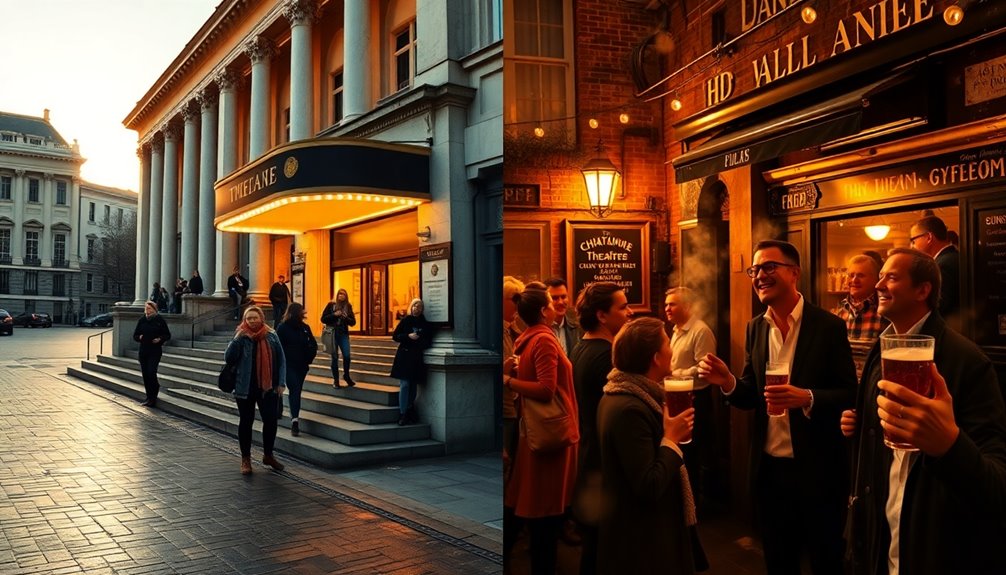
One visit to a museum or theatre and one night at a pub will give you very different listening practice: museums and theatres expose you to clear, often formal language—guided tours, lectures, scripted dialogue—while pubs immerse you in rapid, informal speech, accents, interruptions, and slang. You’ll choose freedom in how you learn: controlled exposure or messy realism. Compare benefits:
One museum or theatre visit versus a pub night: controlled, clear speech against fast, slang-filled, accent-rich realism.
When you join a guided tour, you’ll get context, local stories, and chances to ask questions that boost your listening and vocabulary. Exploring a site on your own lets you set the pace, focus on details that interest you, and practice speaking or reading without interruptions. Which balance of guidance and independence do you think would help your language goals most?
Although you can discover plenty on your own, joining a guided tour offers context, expert insights, and logistical ease that make historical sites come alive in ways solo exploration often doesn’t. You’ll get cultural insights from local guides who frame stories, point out subtle details, and answer questions you wouldn’t have thought to ask. Tours save time and reduce friction, letting you focus on absorbing rather than planning.
You’ll still feel free, but better informed and less burdened.
If you prefer setting your own pace and following curiosities as they arise, solo exploration gives you freedom guided only by your interests. You’ll choose which ruins to linger at, which cafés to try, and when to pause for photos or simply soak in atmosphere. Solo adventures let you detour from scripted paths, strike up spontaneous conversations, and revisit spots that resonate without checking a group’s timetable. That independence accelerates personal growth: you learn decision-making, adaptability, and confidence traversing unfamiliar streets and histories. You’ll also practice language naturally, bargaining or asking directions at your own tempo. If you crave autonomy, independent exploration of historical sites rewards curiosity and builds skills you’ll carry beyond the trip.
Deciding between language exchange partners and professional tutors comes down to your goals, budget, and preferred learning style: exchanges offer free, informal practice and cultural give‑and‑take, while tutors provide structured lessons, feedback, and faster progress. You’ll choose freedom if you want flexible, conversational practice, or choose structure to hit specific targets quickly. Consider these points:
Choose exchanges for free, casual conversation and culture; choose tutors for structure, feedback, and faster progress.
Balance both for a liberating, efficient learning journey.
You can work only if your visa restrictions allow it; check your work eligibility limits, hours, and job types. Don’t risk overstaying or breaching rules—seek flexible options and legal advice so you’ll keep freedom and mobility.
Yes—you’ll usually have options: homestays and campus dining commonly honor meal preferences and offer dietary accommodations; be clear about needs upfront, ask for flexibility, and expect respectful solutions that let you keep your freedom and comfort.
It depends — neighborhood safety varies, so you should check local crime maps and ask locals. Use late night precautions: stay in well-lit areas, share your location, avoid headphones, and trust your instincts to keep freedom and safety balanced.
Absolutely — you can, but don’t expect it to be as easy as sneaking a piano onto a plane; check import regulations and customs procedures, declare items, carry proof of ownership, and you’ll keep your freedom to perform abroad.
You should get private insurance that includes extensive travel coverage, so you’re free to move, study, and explore without worry; pick plans covering medical, evacuation, and COVID-19, and confirm they meet your host country’s requirements.