Master English Through Ireland’s Vibrant Festivals
Study English In Ireland
January 9, 2026

You’ll learn heaps of real, usable English by jumping into Ireland’s festivals, where music, jokes and storytelling turn every chat into practice. You’ll overhear accents, mimic rhythms, ask about food and costumes, and pick up idioms without pressure. Short, bold questions spark warm replies and new friendships, and swapping photos or songs keeps conversations going after the parade. Plan tickets and transport, note new phrases, then try flashcards and retellings to lock them in — keep going for practical tips.
When you step into an Irish festival, the air feels like a conversation waiting to happen — music, laughter, and storytelling braided together so tightly you can’t help but listen and join in. You wander between sessions and stalls, soaking up cultural immersion that’s immediate and tactile: songs learned over pints, poems recited on street corners, accents shifting like weather. You’ll find informal language exchange everywhere — locals enthusiastic to trade phrases, visitors practicing jokes. This is freedom in practice: you speak, stumble, laugh, recover, and grow. Every encounter becomes a lesson you choose, alive and unpressured.
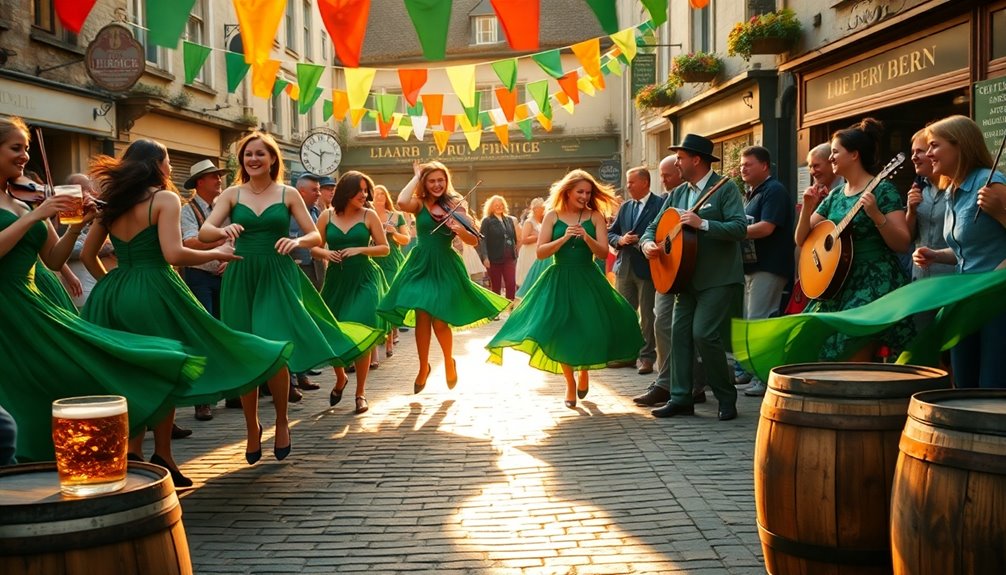
You’ll feel the pulse of Ireland in the St. Patrick’s Day Parade, where green crowds and spontaneous conversations make it easy to practice greetings and small talk. In Galway Arts Festival you’ll eavesdrop on theatre rehearsals and artist Q&As that stretch your vocabulary into storytelling. At Fleadh Cheoil sessions you’ll pick up rhythmic phrases and local slang while swapping song requests with musicians and neighbours.
Although the air smells of fried dough and green paint, you’ll notice the real heartbeat of St. Patrick’s in the drumbeats and neighborly shouts as you walk beside the route. You’ll follow parade traditions — bunting, brass bands, and sudden bursts of laughter — learning phrases, accents, and local jokes as people trade greetings. You’ll feel free to mimic chants, ask about floats, and swap stories with strangers who become teachers. Language comes alive in movement and music; your vocabulary grows between steps, in the pauses where someone points out history, and in the shared silence when confetti settles.
After the drumbeats fade and confetti settles, head west to Galway, where the arts festival turns streets and theaters into classrooms of sound, speech, and story. You’ll wander alleyways alive with Galway performances, overhearing monologues, laughter, and accents you’ll mimic in cafes between shows. Join informal workshops, trade lines with actors, and savor Cultural exchanges that sharpen listening and bolden your voice. Nights spill into impromptu conversations under string lights; mornings are for jotting new phrases. You leave lighter, braver with language — free to speak, to improvise, to claim English as your own through lived, theatrical practice.
When the fiddles and tin whistles start calling from every corner of a village green, you’ll find the Fleadh Cheoil is less a festival and more a living classroom of Irish English — full of rapid greetings, storytelling between sets, and slang threaded through lyrics. You wander between sessions, catching colloquial phrases as musicians tune, practicing your ear against reels and airs. Traditional music becomes your tutor; conversations spill into lanes and pubs, generous with humor and local perspective. This cultural exchange lets you speak freely, experiment with idioms, and return home with language that’s lively, rooted, and unmistakably Irish.
If you step into a festival with your ears tuned for conversation as much as for music, you’ll find countless short, real-world chances to practice English—ordering food, asking about costumes, or commenting on a performance turn into natural prompts for questions, responses, and small talk. You wander, listen, and try conversation starters that feel like seeds: “What’s that dish?” “Who made that costume?” Each brief exchange becomes a cultural exchange, revealing idioms, laughter, rhythm. You notice local pace, mimic intonation, and let mistakes fade. Freedom here means speaking boldly, learning from each fleeting, vivid encounter.
You’ll find the easiest openings are simple observations—comment on the music, the food, or the line you’re both in—and watch a conversation take shape. Keep your questions light and specific so people feel invited, not interrogated. Afterward, ask for a contact or suggest meeting at another event to turn a brief chat into a real connection.
Curious how a single smile can flip a room from intimidating to inviting? You drift into a crowded tent, pulse steady, and offer an easy question about the band — small, specific, honest. Notice pauses, mirror gestures, and let curiosity guide you: ask about favorite festival moments, suggest a quick language exchange game, or invite someone to a walking tour for cultural immersion. Use short stories about your travels to spark laughter; listen for openings. You’ll find confidence grows when you risk warmth over perfection, choosing connection and freedom over flawless lines. Conversations then become invitations to belong.
Someone you met by the food stall might become the person who shows you the best coffee shop next week — but only if you follow up. You jot a number, send a quick message, and promise to swap festival memories over a walk. Invite them to a low-key meetup, mention a detail from your chat, and you’ll feel that connection grow. Keep it easy: a photo, a song link, or a reminder about a future cultural exchanges event keeps momentum without pressure. These small acts turn fleeting encounters into friendships that broaden your English and your world.
When planning to immerse yourself in a festival, think of logistics as the quiet choreography behind the spectacle: snagging tickets early, mapping transport, and learning small cultural cues will keep you present for the music, food, and moments that matter. You’ll treat ticket purchasing as freedom’s first promise — secure a pass, then roam. Scout transport options: buses, bikes, or friendly lifts that let you linger past last sets. Study cultural norms and pocket etiquette tips so you can laugh, clap, and toast without stumbling. With plans in place, you move lighter, open to surprise, ready to learn through living.
You’ve packed your bag and followed the crowd home, but the learning doesn’t stop at the festival gates — it’s really where the harvest begins. You jot festival reflections in a notebook, clip audio from street performers, and tag new words to moments that moved you. Build a simple routine: review clips, transcribe phrases, swap notes with friends you met. Turn memories into lessons—create flashcards, record yourself retelling a scene, join online forums where locals unpack slang. These post event activities keep language alive, letting your curiosity roam free while you turn vivid experience into lasting fluency.
Yes — you can usually attend festivals on a student visa or short tourist stay, but you’ll need to check visa regulations and festival eligibility rules first. You’ll wander through music and light, feeling free, yet wise, knowing conditions or work bans might apply. Keep documents, confirm ticket terms, and respect local limits. That mindful curiosity lets you embrace Ireland’s nights without risking your stay.
Yes — you can find affordable stays near big festival sites: think budget hostels humming with travelers and camping options under wide skies. You’ll slip into communal dorms, swap stories by dawn, or pitch a tent where music and stars meet. You’ll choose freedom over formality, backpack light, and wake to festival sounds. These choices keep costs low and your experience open, spontaneous, and richly lived.
Yes — many festivals offer language-specific workshops and beginner-friendly sessions. You’ll find language immersion classes tucked between music sets, designed for cultural exchange and hands-on practice. You’ll wander into storytelling circles, basic conversation labs, and guided tours where locals coax your first words. It feels freeing: you learn by doing, sharing, laughing. These relaxed, observational sessions welcome mistakes and invite you to roam, speak, and connect without fear.
It’s usually pretty safe, but trust instincts and stay alert: festival safety depends on crowd, lighting, and local vibe. As a solo traveler, you’ll blend curiosity with caution—keep friends’ contacts, plan exits, carry a charged phone, and avoid isolated alleys. Enjoy the music and late-night buzz, but set boundaries, hydrate, and watch your drink. These solo traveler tips let you roam freely while staying grounded and aware.
Absolutely — you can volunteer, and yes, it’s mostly brilliant: you’ll trade chores for free passes and suspiciously good snacks. You’ll get volunteer benefits like free entry, meals, and insider access, plus true language immersion as you chat with staff and locals. You’ll work, laugh, and observe scenes you’d never buy a ticket for, gaining freedom, confidence, and stories that teach more than any classroom ever could.
You’ll leave Ireland’s festivals with more than phrases—you’ll have stories, laughter, and real friends who correct your grammar kindly. If you’re worried crowds or accents will overwhelm you, remember most locals slow down, smile, and love helping visitors; let curiosity lead. Wander from trad sessions to street food stalls, listen more than you speak at first, then join in. These festivals are living classrooms—sensory, social, and utterly human—waiting for your voice.