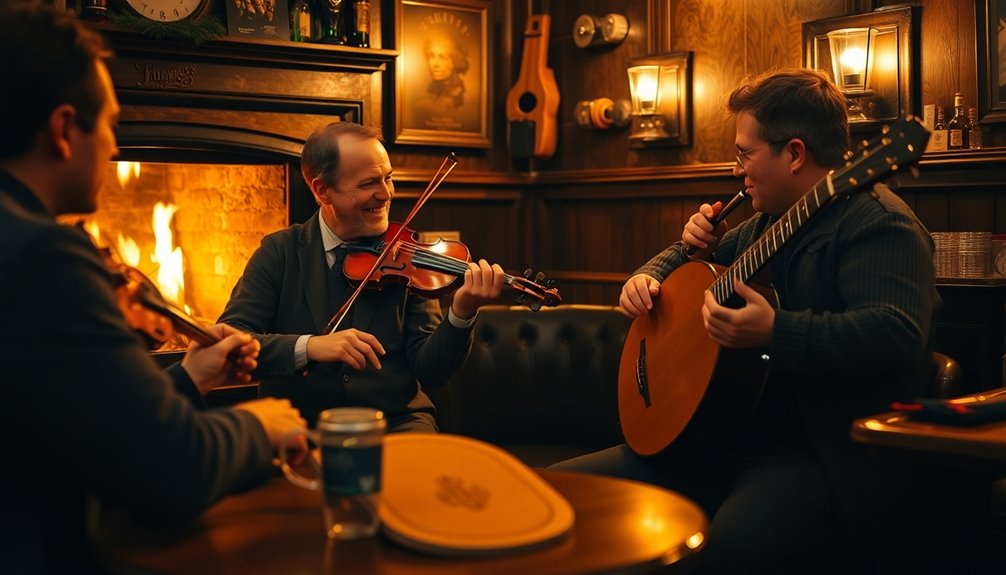
Master English Through Expert-Led Irish Music Sessions
Study English In Ireland
January 26, 2026

Join expert-led Irish music sessions and you’ll pick up natural English through songs, stories, and warm conversation. You’ll hear real accents, idioms, and rhythm in context, so pronunciation and listening improve without pressure. Musicians mix explanation with storytelling, so vocabulary sticks to melody and memory. You’ll practice phrases in choruses and casual chat, gain cultural insight, and build confidence speaking. Keep going and you’ll uncover practical tips, session formats, and follow-up activities to boost progress.
Because sessions mix music, conversation, and local color, they’ll sharpen your English listening far more naturally than a classroom does. You’ll tune into melodic patterns that repeat across reels and airs, which anchors vocabulary and rhythm so words arrive in context rather than isolated drills. As musicians trade tunes and stories, you’ll catch colloquial turns, idioms, and pacing that textbooks usually omit. Lyrical themes in ballads expose cultural references and emotional language, helping you recognize tone and intention. You’ll also learn to listen for cues: a singer’s breath, a fiddle’s phrasing, or a laugh that changes meaning. Sessions are welcoming spaces where mistakes are safe, so you can test comprehension without pressure. By focusing on pattern, story, and feeling, you’ll strengthen auditory processing and cultural understanding together. Over time, casual listening at sessions will make real-world English feel less foreign and more familiar.
When you step into a live Irish music session, you’re not just hearing songs—you’re joining a conversational rhythm where music and talk flow together, so your confidence grows naturally. You’ll notice how musicians chat between tunes, offer gentle corrections, and invite newcomers to join—this live interaction gives you low-pressure chances to speak, ask, and respond. Confidence building happens through repetition: you try a phrase, hear it echoed, and try again with support. Cultural warmth matters—hosts value kindness and inclusion, so mistakes are treated as part of learning, not failure. Storytelling between sets shows everyday speech, idioms, and timing in a safe context, helping you practice tone and pacing without judgment. Over time, casual greetings, small talk, and brief song introductions become familiar; your voice steadies, responses come quicker, and social risk feels smaller. In short, sessions turn language practice into shared experience, making confidence feel earned and communal.
Language in traditional Irish songs is a living archive—listen closely and you’ll find regional accents, idioms, and grammatical patterns that differ from everyday speech yet reveal how people thought and felt. When you pay attention, you’ll notice lyrical themes like longing, travel, and local history recurring with poetic phrasing. These themes teach you metaphor, narrative tense, and culturally specific images that enrich vocabulary and comprehension.
Also focus on musical vocabulary embedded in lyrics — terms for reels, airs, and reels’ phrasing sometimes shape sentence rhythm. You’ll hear contractions, elisions, and nonstandard word order that mirror conversational speech, so you can learn natural reductions and emphasis. Observe how chorus and verse alternate to highlight repetition, rhyme, and mnemonic devices; that repetition helps you remember phrases safely and comfortably. By noting accent markers and idiomatic turns, you’ll gain cultural insight into how language carries community identity, making your learning both linguistic and empathetic.
If you want to get the most from sessions, start by listening more than you speak and letting the music teach you phrasing and pronunciation. When you join, settle in quietly at first: note rhythm, stress, and local accents. Treat each tune as a language immersion exercise—hum along, repeat short lines, and mimic intonation before attempting full verses.
Ask gentle questions about lyrics or song interpretation; hosts usually welcome curious learners and will correct you kindly. Volunteer for simple parts, like a chorus or clapping pattern, to build confidence in a safe setting. Use a notebook for new vocabulary and short phonetic cues, then practice between sessions.
Respect space and pace—don’t push dialogue if others are focused on playing. Over time, participating this way will improve your listening comprehension, pronunciation, and comfort in English, while keeping the session enjoyable and secure for everyone.
Although you might come for the music, you’ll quickly find sessions are miniature culture lessons where locals share stories, customs, and attitudes as naturally as they swap tunes. You’ll notice how cultural expressions appear in anecdotes, song choices, and the casual humor between players; listening closely helps you pick up idioms, tone, and polite ways of joining a group. Conversations between sets reveal values like hospitality, modesty, and respect for tradition, giving you context for words and gestures you might otherwise miss. As you participate, you form community connections that make language learning feel safe and supported — people correct kindly, invite you to try a tune, or explain a phrase over a cup of tea. That steady, gentle exposure teaches socially appropriate language use and nonverbal cues, so you leave sessions with more than vocabulary: you leave with practical cultural understanding that helps you communicate confidently and respectfully outside the room.
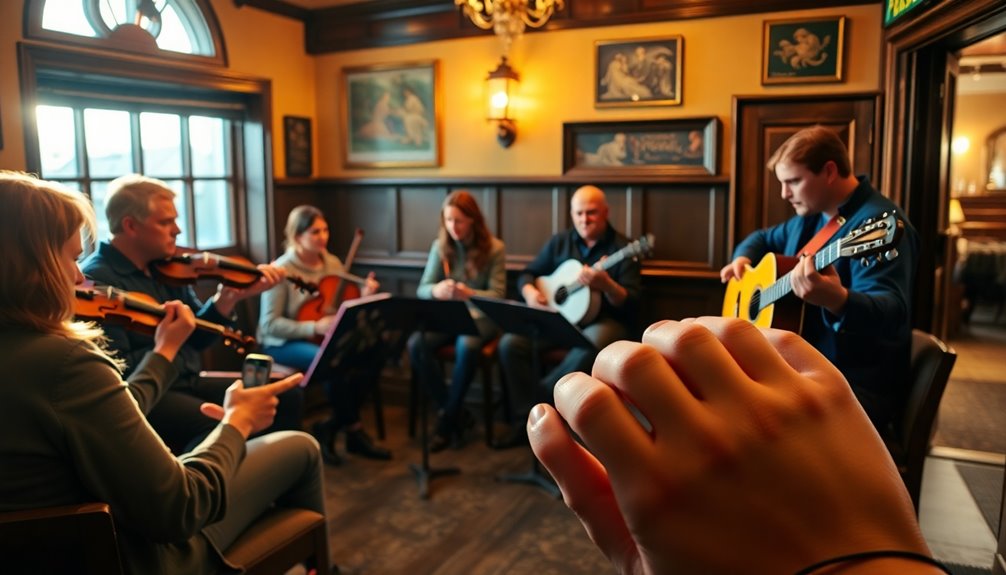
Because sessions can vary so much—from quiet living-room gatherings to lively pub circles, you’ll want to tailor how you prepare for each setting. Think about space, volume, and the group’s mood: bring a softer touch for intimate sessions and a stronger presence for noisier venues. Learn basic session etiquette in advance—when to join a tune, how to follow a leader, and when to offer accompaniment—to keep everyone comfortable and safe.
Set clear setting expectations by checking start times, whether music sheets are shared, and any age or accessibility notes. Arrive a bit early to tune, introduce yourself, and gauge the group’s pace. If you’re nervous about language, focus on listening first; the music gives you natural pauses to ask simple questions. Respect personal space and venue rules, and be ready to adapt: each session is a lesson in culture as much as language, and your thoughtful preparation helps it stay welcoming for everyone.
After the session ends, you’ll want to lock in what you picked up while it’s still fresh—music sessions give you short, natural windows of concentrated listening and speech that are perfect for practice. Spend ten minutes on post session reflections: jot lyrics you understood, phrases that surprised you, and new vocabulary in a dedicated notebook or voice memo. Then replay short clips to mimic pronunciation and rhythm; Irish tunes reveal idioms and cadence that won’t stick if you don’t revisit them.
Turn reflection into collaborative learning by sharing observations in a small, supportive group chat or with a trusted partner. Discuss cultural notes—why a phrase appears in a chorus, or how a storyteller frames a verse—and practice asking and answering simple questions about the content. These safe, repeatable activities help you convert fleeting exposure into reliable speaking confidence, and they keep the joy of music tied to measurable language progress.
Yes — you can join effectively even without prior skill. You’ll learn musical fundamentals gently, building beginner confidence through patient instructors and simple, guided activities. The sessions blend clear explanations with cultural stories about Irish tunes, so you feel safe and supported while practising. You’ll progress through small, achievable steps, share encouraging moments with others, and gain both language and musical comfort without pressure, making the experience welcoming and steady.
Yes — by coincidence, you’ll find that tapping rhythms and singing along naturally supports accent reduction while you’re enjoying music, so you’ll feel safe practicing. You’ll get linguistic immersion through repeated, contextual phrases, clear instructor feedback, and gentle cultural notes that explain pronunciation choices. You’ll build confidence in a supportive group, notice gradual shifts in vowel and consonant patterns, and benefit from fun, low-pressure repetition that’s both educational and comforting.
Yes — online sessions can offer the same benefits as in-person ones if you choose wisely. You’ll get similar online engagement and can experience rich session dynamics through good audio, interactive activities, and cultural storytelling that preserves safety and inclusivity. You’ll still improve listening, pronunciation, and cultural understanding, though you might miss some physical nuances. With attentive facilitators and clear guidelines, the virtual space becomes a secure, lively place to learn and connect.
Yes — they’re adaptable: playful yet structured. You’ll get age appropriate adaptations like simplified songs, shorter modules, and visuals, paired with interactive learning techniques such as call-and-response and movement. You’ll feel safe as pacing, clear expectations, and gentle feedback are built in. Culturally, kids connect through stories behind tunes; teens explore themes and language nuances. You’ll watch confidence grow as music makes learning vivid, social, and reassuring.
No, you don’t need prior knowledge of Irish culture to join. You’ll be guided gently through musical immersion that introduces songs, stories, and customs at a safe, welcoming pace. Lessons blend clear explanations with cultural insight and engaging storytelling, so you’ll learn context as you sing and listen. You’ll feel supported, able to ask questions, and gradually build confidence while enjoying authentic Irish culture in a beginner-friendly setting.
You’ll find that joining Irish music sessions does more than sharpen your English listening — it drops you into living conversation, rhythm, and story. As the adage goes, “music is the shortest route between friends,” and when you participate you’ll gain confidence, pick up idioms, and notice pronunciation patterns naturally. Don’t worry about perfection; listen, ask questions, and sing along. Each session becomes a friendly classroom full of culture, stories, and steady progress.