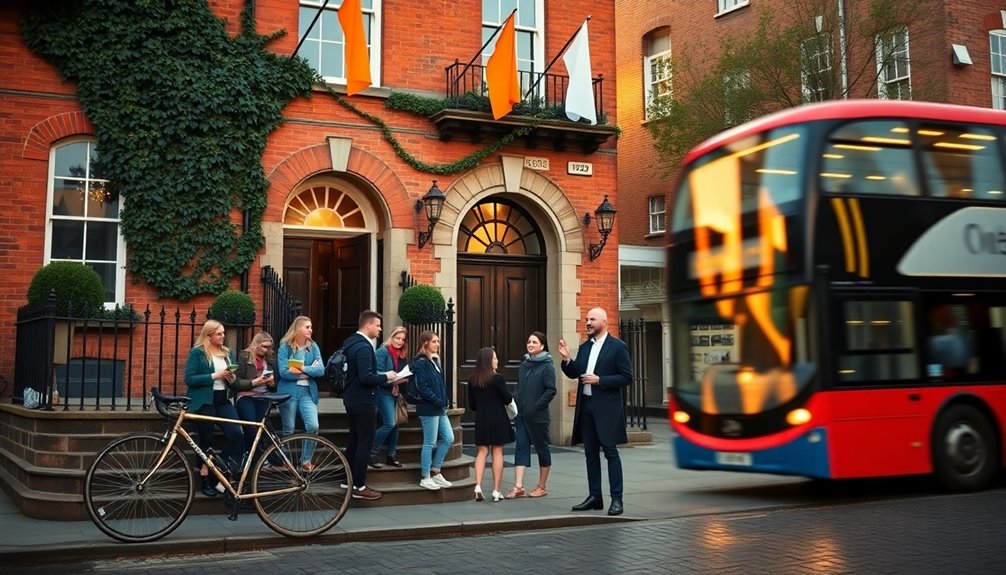
Best English Schools in Ireland for Beginners
Study English In Ireland
November 26, 2025

If you’re new to English, Ireland’s friendly schools give you small classes, patient teachers, and lots of real-world practice to build confidence fast. Choose schools with beginner-focused curricula, clear progression, and extra conversation sessions so you won’t feel overwhelmed. Look for placement tests, peer mentoring, and easy administrative support to help settle in. Compare costs, homestay options, and cultural activities to get the best fit—keep going to see specific schools, cities, and application tips.
Because Ireland is an English-speaking country with a warm, learner-friendly culture, it’s an excellent choice if you’re starting out with English. You’ll find supportive teachers and small classes that let you practice confidently. Ireland offers rich cultural experiences — festivals, music, and everyday conversation — so you can learn beyond textbooks. Language immersion happens naturally: cafés, markets, and friendly locals give real contexts for new words. If you want freedom to explore while improving quickly, Ireland fits. You’ll gain practical skills, build confidence, and enjoy a welcoming environment that turns learning into living.
When choosing a beginner-friendly school in Ireland, you’ll want teachers who specialize in beginners and use proven techniques to build confidence. Check that the curriculum is clearly leveled so your progress is measurable and lessons match your needs. Also look for a supportive language environment — plenty of practice opportunities, patient staff, and peer support make a big difference.
If you’re starting out, the most important factor is that teachers are trained specifically to work with beginners and know how to build confidence while teaching fundamentals. You want instructors whose teacher qualifications show experience with adult beginners, clear certification, and ongoing professional development. They’ll use varied teaching methods that match your pace, focus on communication, and encourage risk-taking without pressure. Look for patience, adaptability, and feedback that frees you to experiment with language. When teachers prioritize your comfort and autonomy, you learn faster and enjoy more freedom in how you use English — practical, supportive teaching matters most.
Good teachers set the tone, but you also need a clear, leveled curriculum to guide your progress. You want a program that maps skills from absolute beginner to independent user, so you can see milestones and choose pace. Look for curriculum flexibility that adapts to your goals—travel, study, or work—without locking you into unnecessary modules. Clear descriptors for each level help you pick the right class and measure gains. Ask about regular assessment methods that track speaking, listening, reading and writing, and that give actionable feedback. That way you keep control of your learning and move forward with confidence.
Because you’ll build confidence as much from atmosphere as from lessons, a truly supportive language environment makes all the difference for beginners. You’ll want schools where teachers encourage risk-taking, peers celebrate progress, and mistakes are treated as steps forward. Look for regular language exchange meetups and active community involvement that let you practice casually beyond the classroom. Flexible social activities, volunteer projects, and buddy systems help you choose how and when you engage, so learning fits your lifestyle. That freedom to explore low-pressure settings speeds progress and keeps motivation high as you gain real-world speaking confidence.
When you’re choosing a city to begin your English studies in Ireland, think about how each location shapes daily life, learning opportunities, and social experiences. You’ll find Dublin hotspots that blend modern energy with historic charm, great for nightlife, museums, and networking. Galway attractions offer a relaxed, creative vibe, perfect for practicing conversation in cafés, festivals, and coastal walks. Consider commute times, housing options, and local language immersion—smaller cities let you feel freer to explore, while the capital gives broader course choices. Pick the city that matches your pace, social needs, and desire for independence.
After you’ve picked the city that fits your pace and social goals, the next step is choosing a school whose class size and beginner support match your needs. Look for schools advertising small class sizes so you’ll get more speaking time and personalized feedback. Check beginner programs that offer clear progression, extra conversation practice, and patient teachers. Ask about placement tests, class turnover, and available materials to guarantee you won’t be overwhelmed. Visit if you can, or join trial lessons online to sense the culture. Pick a program that balances structure with freedom, letting you learn confidently at your own pace.
When you’re choosing an intensive beginner course, look for a clear course structure that balances daily grammar, vocabulary, speaking practice, and regular progress checks. Check what beginner support services are offered—think tailored placement, extra tutoring, language labs, and pastoral care to help you settle in. These details tell you how quickly and comfortably you’ll build a strong foundation in English.
Although you might be new to English study, intensive beginner courses are designed to get you progressing quickly with a clear, structured schedule that balances core skills, practical practice, and feedback. You’ll follow focused course content that covers listening, speaking, reading, writing, pronunciation, and everyday vocabulary. Teaching methods mix short lectures, pair work, role-plays, and real-life tasks so you can practice freely and confidently. Daily reviews and weekly progress checks keep you aware of gains and next steps. Class sizes stay small to guarantee attention, and lesson plans let you move at a steady, efficient pace toward independence.
Many schools pair their intensive beginner courses with robust support services to help you settle in and stay motivated. You’ll find tailored tutoring options for grammar, pronunciation and exam prep, often available one-to-one or in small groups so you progress fast. Peer support programs connect you with fellow beginners and local volunteers, creating practice opportunities and social freedom to explore without pressure. Additional services like orientation sessions, language cafés and study plans let you balance learning with travel and life. Ask schools about counsellors, flexible timetables and progress reviews so your course matches your pace and goals.
If you want more than classroom lessons, these school profiles highlight English programs that pair structured language classes with cultural immersion—homestays, city tours, volunteer options, and specialized workshops—so you can practice real-life English while experiencing Irish life. You’ll find concise comparisons showing program length, daily schedules, and available cultural activities that let you choose freedom-focused options. Look for immersion experiences like local music nights, guided heritage walks, and community volunteering that push you to speak naturally. Each profile notes accommodation style, airport transfer, and adult learner support so you can pick a program that fits your pace and interests.
You’ve seen how programs pair lessons with homestays, tours, and volunteer options to boost your everyday English — now you’ll want to weigh what that immersive experience will cost and where you can get help paying for it. Do a clear cost analysis: tuition, homestay, meals, transport, and extras like excursions. Compare schools by total weekly or monthly budgets so you can choose freedom without surprise fees. Look into scholarship options from schools, government grants, and cultural exchange funds. Apply early, prepare a concise personal statement, and prioritize programs that match your learning goals and financial limits.

Because starting out in a new country and language can feel overwhelming, schools should offer clear, practical support for beginner learners so you can focus on learning. Look for programs with focused beginner workshops that teach survival language, campus navigation, and local culture. You’ll benefit from peer mentoring schemes connecting you with current students who understand early challenges and can show you freedoms like solo travel or independent study tips. Extra services—small study groups, accessible counselling, and clear administrative help—let you build confidence quickly. Choose a school that gives structure without control, so you stay independent while getting the support you need.
When you’re ready to apply, start by checking each school’s entry requirements, application deadlines, and whether they need placement tests or supporting documents like passports, visas, and proof of funds; this helps you avoid last‑minute stress and guarantees your place is secured. Follow the application process carefully: complete forms, upload documents, and pay fees early. Arrange accommodation and travel, and read orientation details. For first term preparation, pack essentials, set learning goals, and practice basic English phrases. Contact student services with questions and join pre-course groups online. This keeps you independent, confident, and ready to enjoy study and life in Ireland.
Yes — many schools do offer exam preparation for IELTS or TOEIC tailored to beginners. You’ll find beginner courses that include exam resources, step-by-step skill building, mock tests and focused feedback. These programs balance grammar and practical strategies so you can progress at your own pace and feel confident on test day. Ask schools about class size, materials and flexible scheduling to match your desire for freedom and steady improvement.
Yes — many schools offer childcare options and family involvement programs alongside adult classes. You’ll find flexible drop-in care, supervised play, and parent-child workshops so you can study without worry. Schools often encourage family involvement through cultural activities, language sessions for children, and family social events. This lets you pursue learning freely while keeping kids engaged and connected, making study and family life fit together smoothly.
A student once moved mid-term and kept most progress. You can usually transfer between schools, but it depends on transfer policies and whether course credits are recognized. You’ll want written confirmation that credits’ll carry over and that placement testing won’t push you back. Check refund rules, class schedules, and visa implications. Ask both schools for detailed transfer policies, get everything documented, and keep copies so your learning stays continuous.
Yes — many schools offer part-time job placement assistance for beginners. You’ll get job search resources like CV workshops, interview practice, and local job listings, plus guidance on work permits. Some schools connect students with internship opportunities or local employers, helping you gain experience and flexibility while studying. Expect varying support levels, so ask each school about specific services, success rates, and any fees before you enroll.
Yes — some schools include medical insurance in tuition packages, but it varies. You’ll often find basic coverage bundled with enrollment, while more extensive plans cost extra or are optional add-ons. Check policy limits, emergency care, and waiting periods before you commit. If freedom’s important, pick a package that lets you upgrade or opt out so you’re not tied to a plan that doesn’t suit your travel style or health needs.
Ready to start your English journey in Ireland? You’ll find beginner-focused schools with small classes, supportive staff, and cultural programs to boost your confidence fast. Imagine stepping into a classroom where every word you say is encouraged — doesn’t that spark excitement? Use the evaluation tips here to compare locations, costs, and services, then apply early and pack an open mind; with the right school, you’ll be speaking and exploring in no time.