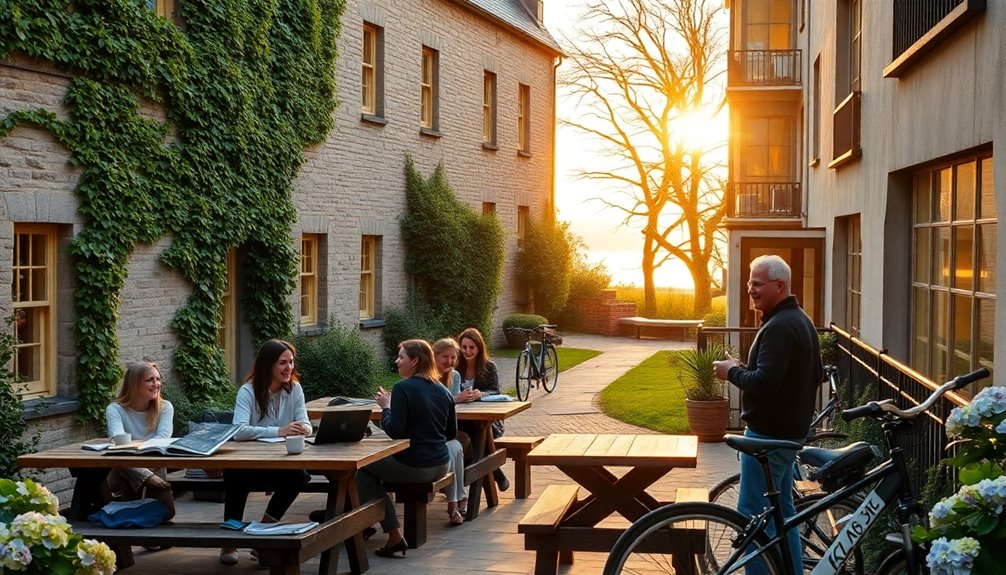
How English Schools With Student Residences Ireland Can Improve Your Study Abroad Experience
Study English In Ireland
January 14, 2026

When you choose an English school in Ireland that offers student residences, you’ll cut commute time, feel safer, and settle into local life faster. You’ll have predictable costs, reliable support staff, and built‑in social opportunities that boost language practice and cultural immersion. Pick residences near campus, check security and transport links, and set clear study‑social boundaries with flatmates. Stay mindful of leases and tenant rights, and keep exploring practical tips ahead to make the most of your stay.
When you’re picking a neighborhood for campus life and social opportunities, prioritize proximity to campus, reliable public transport, and a mix of student-friendly cafes, pubs, and cultural spots so you can balance study time with socializing. You’ll want neighborhood culture that feels open and varied — think live music, markets, and community arts — so you can plug into social events without sacrificing independence. Check safety, cost, and walkability, and ask current students about evening vibes and weekend scenes. Choose a place that lets you study when needed, join the local rhythm, and explore Ireland on your own terms.
Because you’re closer to lectures, libraries, and study groups, living near campus cuts commute time and gives you more predictable hours for work and downtime. You’ll gain commute efficiency that frees mornings for extra sleep, exercise, or a relaxed coffee before class. Shorter trips mean fewer delays and more control over your schedule, so you can protect concentrated blocks for assignments and revision. That consistency sharpens your study focus and helps you join impromptu group sessions or campus events without sacrificing productivity. Choose a residence that supports routine, spontaneity, and independence so your time feels yours while learning abroad.
When choosing accommodation in Ireland, make sure the building has secure access—key fob entry, well-lit entrances, and visible security measures help you feel safe. Also prioritise a comfortable private space where you can study and unwind without constant noise or interruptions. These basics will keep you focused on academics and enjoying local life with greater peace of mind.
Although you want to feel at home, secure building access is the baseline that keeps you safe and comfortable while studying in Ireland. You’ll want residences using secure technology—keycards, PINs, or mobile credentials—that log entries and let staff monitor issues. Look for layered access control: main doors, lift and floor restrictions, and controlled visitor policies so you can move freely without worrying. Emergency exits should remain functional but alarmed. Ask about staff response times and CCTV coverage balancing privacy. With sensible systems, you’ll enjoy independence while knowing your living space is professionally safeguarded.
Secure entry systems keep you safe, but you also need private rooms where you can study, sleep and reset without interruptions. You’ll want a layout that supports private study—good lighting, quiet corners, and a desk that’s yours. Personal space matters: lockable doors, storage for valuables, and noise control let you unwind after classes or nightlife. Look for flexible furnishings so you can make the room feel like home without losing freedom. Ask about roommate policies and visitor rules to protect boundaries. When your residence respects private study and personal space, you’ll focus better and enjoy life abroad.
Because rent and everyday costs vary widely across Ireland, you’ll want a clear budget before you arrive: factor in rent, utilities, grocery and transport costs, a modest social allowance, and a small emergency fund. Start with simple budgeting strategies: track spending for a month, set weekly limits, and prioritise essentials. When viewing properties, read rental agreements closely — note deposit rules, notice periods, and included bills. Consider student residences for predictable costs or shared flats to save, but confirm bills split fairly. Keep an eye on local transport passes and student discounts to stretch your freedom and funds.
When you move into shared housing in Ireland, agree on quiet zones and a simple schedule so everyone knows when noise should be kept to a minimum. Set clear roommate study norms—like headphones, no late-night group hangouts in study areas, and designated silent hours before exams. These small, respectful rules help you study effectively while keeping a friendly social life.
If you and your flatmates set a clear quiet-zones schedule, everyone gets predictable study time without sacrificing social life; pick core hours for focused work, rotate weekend flexibility, and post the plan where it’s visible. You’ll shape fair study environments by agreeing on morning and evening blocks, short break windows, and group-free zones. Use simple signs or a shared calendar for noise management and respect early/late preferences. Keep rules minimal, revisit monthly, and allow spontaneous exceptions with quick check-ins. That balance lets you enjoy freedom, protect deep work, and maintain a friendly, cooperative shared housing culture.
Quiet-zones schedules set the framework, but roommate study norms are what make shared learning realistic and respectful day-to-day. You’ll want clear roommate agreements that spell out quiet hours, shared spaces, and noise limits so everyone feels free to focus or relax. Agree on individual study schedules and a visible calendar to avoid clashes during exam weeks. Respect cultural differences: ask rather than assume silence preferences. Build flexibility—swap quiet time for social evenings sometimes. If conflicts arise, address them early and calmly. That way you keep freedom, protect concentration, and maintain a friendly communal home.
Although Ireland’s cities vary in size and layout, getting around is straightforward once you know the options: reliable city buses, light rail in Dublin (Luas), regional trains (Iarnród Éireann), and extensive rural bus routes (Bus Éireann) plus plenty of walkable town centres. You’ll find public transport options that suit study schedules and weekend plans; buy leap cards or regional passes to save. Embrace walkability benefits—short, scenic walks cut costs, boost wellbeing, and help you explore neighborhoods freely. Plan journeys with apps, leave extra time in rural areas, and choose residences near stops to keep your independent lifestyle smooth and flexible.
When you settle into a new Irish town, make a quick map of nearby amenities — shops, libraries, student unions, GP surgeries, and parks — so you know where to go for study needs and everyday life. Use that map to plan routines: study at a quiet library, pop to a market for fresh food, or refresh in a local park between lectures. Join community engagement groups and attend local events to meet neighbours, practise English, and learn customs. Stay open-minded, respect cultural norms, and balance exploration with focused study so you’ll enjoy freedom without losing academic momentum.
Because renting in Ireland follows specific rules and local practices, it’s essential you know your rights, understand lease basics, and spot common rental scams before signing anything. Check tenant agreements for rent, deposit, notice periods, and who pays utilities. Insist on written contracts and an inventory. Know local tenancy boards and dispute processes; they protect your freedom to leave or request repairs. Beware of rental scams: never transfer full deposits without viewing, verify landlord identity, and use reputable platforms or school-recommended listings. Ask peers and staff for references. Staying informed lets you choose safe, flexible housing that matches your study-abroad goals.
Generally no — most Irish student residences ban pets, though rules vary. You’ll need to check specific pet policies before signing; some allow small animals with permissions or in family-style housing. If you rely on an animal for emotional support, provide documentation and request reasonable accommodation early. Be prepared for deposits, extra fees or alternative arrangements if housing won’t permit pets, and consider nearby pet-friendly rentals for greater freedom.
Usually yes — but not always. Often you’ll find utility costs and internet access rolled into rent, which makes budgeting easy and gives you freedom to focus on studies and social life. Still, check contracts: some places charge extra for electricity or fast broadband tiers. Ask about average bills, who pays for repairs, and whether there’s reliable internet speed for streaming or remote work before you commit.
Residences usually accept mail delivery at a central office or reception, so you’ll get notified by email, text, or a slip in your door. For package collection, larger or tracked parcels are held at reception or a secure locker until you pick them up with ID. You’ll be told pickup times and hold periods; some places charge after a grace period. Always update your address and tracking info to avoid missed items.
Usually you can’t sublet or list your room on Airbnb without permission — most residences have strict subletting policies and holiday arrangements to protect safety, insurance and tenancy rules. Check your contract and ask residence management well before you leave; some places offer official short‑term handover programs or authorised guest stays. If you crave freedom, negotiate written permission and clear terms to avoid fines, deposit loss or eviction.
Want rooms that actually work for you? You’ll get allergy accommodations like hypoallergenic bedding, fragrance-free cleaning, HEPA filters and clear cleaning schedules, plus options to avoid carpets. For mobility or sensory needs, accessibility features include step-free access, wider doors, grab bars, visual alarms and accessible bathrooms. You’ll be asked about needs during booking, offered documentation support, and can request reasonable adjustments so you’re free to study comfortably and confidently.
Choose a residence near campus — it cuts commute time and boosts study hours: students living on or close to campus report up to 30% more time for coursework. Prioritize safety, quiet study corners, and good transport links while staying within budget; learn tenant rights and watch for scams. Balance social life with focused routines, use local amenities to connect, and pick neighborhoods that match your lifestyle so your study-abroad year in Ireland feels secure, rewarding, and efficient.