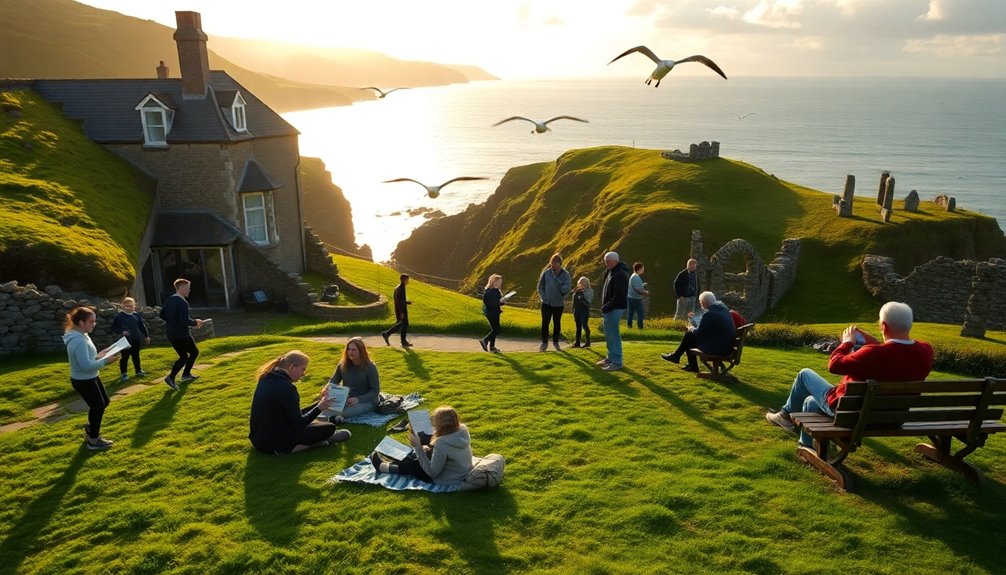
Is Ireland Only for Adult Summer Language Courses?
Study English In Ireland
January 2, 2026

No — Ireland isn’t just for adult summer language camps. You can study year‑round, from short intensive English and exam prep to vocational modules, evening or blended courses, and full university certificates, diplomas and degrees. Regional hubs like Cork and Galway offer different vibes, and accommodation ranges from homestays to student residences. Plan for visa rules, part‑time work limits, transport and health cover. Keep going and you’ll find practical tips on choosing programs, budgets and student services.
Because Ireland offers more than just summer sunshine, you’ll find students arriving throughout the year to study English, pursue short-term specialist courses, or prepare for exams. You’ll appreciate flexible schedules, year round activities and tailored programs that fit ambitions for travel, work, or study. You can join intensive exam prep in autumn, take niche vocational modules in winter, or combine language lessons with internships in spring. Cultural festivals punctuate the calendar, letting you practice language in real settings and explore creative freedom. This steady flow guarantees learning continuity, diverse peer networks, and authentic immersion beyond tourist seasons.
Don’t limit your search to Dublin — Cork offers a busy student life with campuses, affordable housing options, and social scenes that make everyday learning practical and engaging. You’ll find Galway’s festivals, music, and strong arts scene turn language study into cultural immersion that complements classroom work. Comparing these regional hubs helps you match the city vibe and resources to your learning goals.
While Dublin often grabs the headlines, Cork offers a compact, student-centered experience that balances academic rigor with a lively social scene. You’ll find manageable campus sizes, frequent Cork events that connect students with local arts and startups, and study options that let you shape your schedule. Practical transport and affordable housing free you to explore beyond class. Cork cuisine fuels late-night study sessions and social gatherings, blending market-fresh ingredients with inventive dining. Academically focused yet socially generous, Cork gives you autonomy to pursue research, internships, or relaxed learning—making it a genuine student life hub outside the capital.
Moving west from Cork’s student-centered vibe, Galway offers a different kind of learning atmosphere where culture and campus life are tightly woven together. You’ll find a compact city that rewards curiosity: frequent cultural events give you choices to explore music, theatre, and local arts between classes. Academic programs link with community initiatives, so your language immersion feels purposeful and social rather than isolated. If you value freedom, Galway lets you structure study and leisure flexibly—stroll the cobbled streets, join pop-up workshops, or practice Irish in cafés. It’s a practical, creative hub for engaged learners seeking more than textbook training.
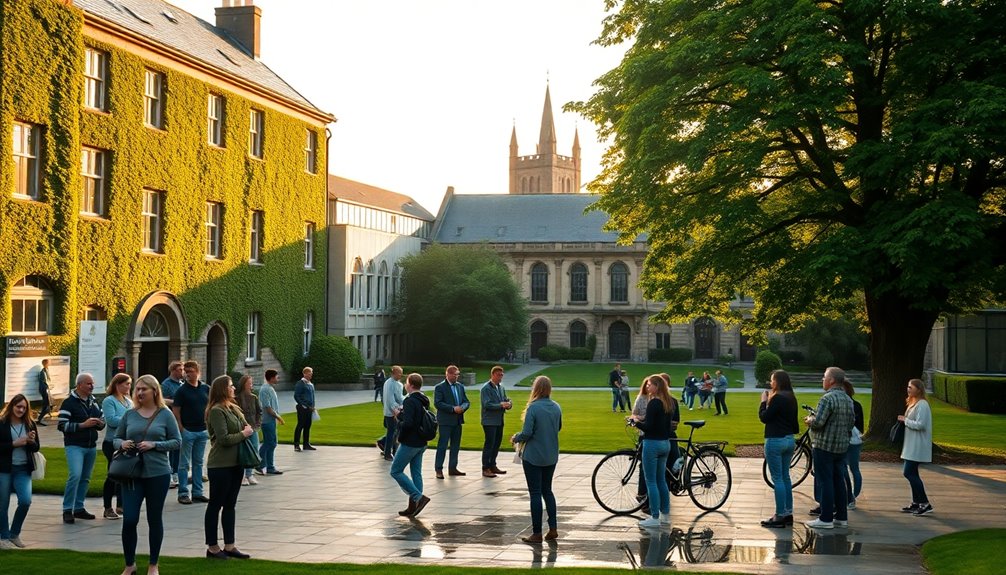
Because you’re likely weighing language immersion against formal study, this section looks at Ireland’s higher-education landscape and the academic pathways available to international students, including adults seeking language credentials. You’ll find diverse academic programs—short certificates, postgraduate diplomas, and full degrees—across campuses that balance practical skills with research. Check university rankings for reputation, but also probe course content, flexible entry, and credit transfer options so you keep mobility. Many institutions offer evening, part-time, and blended formats, letting you study without sacrificing travel or work. Choose programs that protect your autonomy and open professional or cultural doors.
You’ll want to weigh homestay family stays, student residence options, and short-term rentals based on how much immersion, privacy, and flexibility you need. Each choice affects your daily routine, budget, and opportunities to practice English, so consider length of stay and personal learning goals. We’ll compare costs, typical contract lengths, and pros/cons to help you pick the best fit.
1 common choice for both short and long stays is a homestay with an Irish family, which gives you daily immersion in language, routines, and local culture while offering structured support like regular meals, laundry, and host contact. You’ll find homestay experiences let you test conversational skills, negotiate boundaries, and access local knowledge without losing independence. Analyze match quality: host personality, house rules, commute, and privacy. Expect clear agreements on guests’ freedom—meals, visitors, quiet hours. Cultural immersion is practical and immediate, but you should weigh comfort against flexibility so your stay matches both learning goals and lifestyle needs.
Student residences offer a middle ground between homestays and private rentals, giving you on-site services, peer interaction, and predictable costs that suit both short and long stays. You’ll find student housing that balances privacy with community: self-catered flats, en-suite rooms, and shared kitchens let you control routines while meeting peers. Contracts vary, so check length, bills included, and visitor rules to keep flexibility. For shorter stays, look for rolling contracts; for longer ones, negotiated terms can secure lower rates. Many residences qualify as budget accommodations without sacrificing security or social life, ideal if you value independence and structure.
If you liked the balance student residences offer between community and independence, short-term rentals give you even more control over location, privacy and budget for stays ranging from a few days to several months. You can choose central city flats, coastal cottages or vacation apartments that suit your routine and study needs. Evaluate total cost, cancellation terms and included utilities, and check transport links to classes. Short term rentals suit independent learners who value freedom to set schedules, cook, host or work remotely. Use reputable platforms, read recent reviews and confirm deposits to avoid surprises.
Because living costs vary widely across Ireland, you’ll want a realistic monthly budget before you arrive: Dublin and other major cities are noticeably more expensive for rent, transport, and eating out than smaller towns where many summer language schools are located. You should use budgeting strategies like tracking fixed costs (rent, utilities, tuition) and variable spending (food, leisure), and run cost comparisons between host towns. Prioritize flexible choices—shared housing, cooking, and low-cost social options—to keep freedom without overspending. Build a small emergency fund and monitor exchange rates; that way you’ll adapt quickly and keep study-time stress minimal.
You’ll find that urban areas have frequent local bus networks that make hopping between classes, shops, and social spots easy and affordable. In rural areas, services are sparser—community transport, scheduled rural routes, or shared taxis often replace regular buses, so planning is essential. Consider route maps, timetables, and student discounts to judge how transport will affect your daily routine and costs.
Across towns in Ireland, local bus networks form the backbone of public transport, connecting residential areas with schools, shops, and train stations on predictable timetables. You’ll find local transport systems designed for straightforward use: clear routes, frequent stops in urban centers, and integrated ticketing where available. Check bus schedules ahead to plan flexible days without a car. Services suit commuters, students, and visitors seeking independence, though frequency varies by town size. You can rely on smartphone apps or printed timetables to optimize connections and save time. Embrace the freedom to move efficiently while staying informed about timings.
When you venture beyond towns, public transport in rural Ireland shifts from frequent, fixed-route services to a mix of scheduled buses, demand-response routes, and community transport schemes that you’ll need to plan around. You’ll assess timetables, connect with local operators, and book demand-response rides in advance. Rural bus routes can be infrequent but essential; they link villages to market towns and train stations. If you value freedom, combine buses with cycling options: bring or rent a bike to bridge gaps, explore lanes, and control timing. Plan contingencies for evenings and weather, and you’ll navigate rural areas confidently.
Although adult summer courses in Ireland are popular and often straightforward, understanding student visas, work rights, and basic immigration rules is essential before you book a program. You’ll need to check student visa requirements early: length of course, visa type, financial proof, and acceptance letters. Immigration regulations determine whether you can work part-time, intern, or extend your stay; they vary by nationality and course level. Plan for permits, GRÉ (GNIB) registration, and clear documentation. Knowing limits on hours, eligibility for paid work, and renewal procedures gives you freedom to choose programs that fit study, travel, and short-term earning goals.
Because healthcare systems and insurance rules differ from your home country, you should check what cover you’ll have before you leave and what you’ll need to arrange on arrival. You’ll want clear facts about healthcare access: public GP services, emergency care, and prescription costs vary by residency. Consider insurance options that suit short courses—travel policies, student health plans, or private top-ups—to avoid surprises. Think about mental wellbeing supports too: university clinics, counseling services, and local charities. Plan documentation: EHIC/GHIC if eligible, policy details, and local contact numbers. That gives you freedom to focus on learning, not logistics.
Good planning for health and insurance also helps you get out and enjoy campus life without worrying about unexpected costs or access to support. You’ll find social events and clubs that fit your interests, from sports to arts, letting you choose how to spend free time. Clubs boost social capital and create networking opportunities that can lead to part‑time roles or volunteer placements. If you want flexibility, target organizations with clear time commitments and local employers used to student schedules. Evaluate job legality and hours before committing. With selective engagement, you’ll enjoy freedom while building experience and connections.

When you arrive, check what language support and tutoring options the program and host institutions offer so you can plug into the right resources fast. You’ll want clear pathways: formal tutoring services for structured progress and informal language exchange to practice casually. Evaluate schedules, costs, tutor qualifications, and group sizes, plus whether support continues after initial orientation. Look for integration services that connect you with local communities, housing help, and cultural orientation — they cut friction and expand autonomy. Prioritize programs that let you tailor intensity and mode of learning, so you control your pace while maximizing immersion and practical results.
Yes — you can find family-friendly language programs that let parents learn while kids enjoy supervised activities. You’ll get tailored classes, family activities, and separate kids’ camps so everyone advances at their own pace. Programs emphasize cultural immersion through local excursions, homestays, and shared events, giving you freedom to explore together or independently. You’ll evaluate options by age range, course intensity, accommodation, and extra-curricular offerings to match your family’s needs.
Can seniors enroll in community language classes? Yes — you can, and they’re often tailored for senior engagement with flexible pacing and social activities. You’ll gain clear community benefits: mental stimulation, new friendships, and practical language skills for travel or daily life. Classes usually offer accessible schedules, comfortable settings, and peer-focused teaching, so you’ll feel free to learn at your own pace while staying connected and valued in a supportive local community.
Yes — there are accredited online Irish language courses you can take. You’ll find programs with online course accreditation from universities and recognized institutes, combined with virtual language practice sessions for speaking and immersion. Compare syllabi, assessment methods, and credential recognition so you retain freedom to choose what fits your goals. Look for flexible schedules, live tutor hours, and certificate transferability if you might use credits elsewhere or for professional purposes.
Yes — many language schools offer preparatory courses tailored for exam preparation and university readiness. You’ll find focused classes that sharpen academic writing, subject-specific vocabulary, and test strategies for entrance exams like TOEFL, IELTS or local university assessments. These programs balance intensive study with flexible scheduling so you can maintain autonomy. Expect assessments, mock exams, and guidance on application requirements to help you confidently meet university standards and deadlines.
Yes — private tuition and homestay immersion experiences are available year-round. You can hire private tutors for tailored lessons whenever you want, and many hosts offer continuous homestay immersion experiences beyond summer. This gives you flexibility to study intensively or casually, fit learning around work or travel, and choose duration and focus. If you value freedom, search providers who offer customizable schedules, trial periods, and clear cancellation or rescheduling policies.
Ireland isn’t just for summer language courses; it’s a year‑round option that serves your academic, social, and work goals. Like a well‑stocked toolkit, it offers varied cities, universities, flexible accommodation, and clear visa and healthcare pathways to fit different needs. You’ll find student supports, part‑time work, and language help to ease integration. Weigh costs, plan essentials, and you’ll make a practical, informed choice that matches your study timeline and lifestyle.