
Student Tips for English Schools Updates Ireland
Study English In Ireland
January 7, 2026

You’ll want to get your visa and key documents organised early—passport, acceptance letter, financial proof and scans—and book embassy or school appointments straight away. Find budget housing near transit, inspect places or request video tours, and keep written records of deposits and repairs. Pick a course level that challenges you but allows communication. Open a student bank account, register with a local GP, join clubs and check part‑time job rules. Keep going to learn practical steps and checklists.
Before you apply, gather all required documents so you don’t waste time hunting them down later. You’ll feel freer when you’ve got a clear document checklist: passport, acceptance letter, financial proof, accommodation details, and any medical or insurance records. Follow simple visa application tips: make copies, scan everything, name files clearly, and confirm photo and form specs. Book appointments early and keep digital backups in the cloud so you can access them anywhere. If a requirement seems vague, ask the embassy or your school — don’t guess. Stay organized with a single folder or app that tracks deadlines and submission receipts. Move efficiently, and you’ll minimize stress while keeping your options open.
Looking for a place that won’t blow your budget? You’ll want to prioritise budget accommodation options close to transit and schools so you can spend more on experiences, not rent. Search student housing listings, university noticeboards, and local Facebook groups — you’ll find shared flats, homestays, and purpose-built residences at different price points. Inspect places in person or request a video tour, and ask about bills, contract length, and deposit rules before you commit. Consider short-term stays to scout neighbourhoods, then move to a longer lease if it feels right. Be ready to negotiate, split utilities, and trade size for location. With smart searching, you’ll secure affordable student housing that lets you stay flexible and free.
How do you know which course level will actually help you progress? You’ll want a clear sense of where you stand and where you want to go. Start with honest self-assessment and check the school’s course assessment methods so you don’t get stuck in an easy class or thrown into something too hard. Ask whether they use placement interviews, written diagnostics, or language proficiency tests recognized internationally. Choose a level that challenges you but still lets you communicate and explore freely — not one that traps you in repetition. Balance practical needs (work, travel) with goals (fluency, academic study). If possible, negotiate trial lessons or flexible transfers between levels so your learning stays aligned with your ambitions.

You’ll need ID, proof of address, and your student visa or acceptance letter to open an account quickly. Look for banks that offer instant student accounts or online-only providers that let you sign up with minimal paperwork. Ask your school’s admin which banks other students use to save time.
Before you can open an account, gather a few key documents so the process goes smoothly: your passport, student visa or residence permit, proof of university enrollment (like an acceptance letter or student ID), and proof of local address (a rental contract or a recent utility bill). Know local visa requirements and keep a clear document checklist so you won’t be held up at the branch. Bring an additional photo ID if you have one, and a printed enrollment confirmation to show you’re a student. If your substitute address is a landlord letter, get it signed and dated. Scan everything to your phone for backup. With these papers ready, you can set up banking fast and keep control of your money while you explore.
With your documents scanned and ready, you can focus on the quickest ways to get an account so you’re not left without access to cash. You’ll want a bank that lets you start online or via an app, so you can be mobile and independent from day one. Look for digital banking solutions that verify ID quickly and issue virtual cards instantly. Check policies on limited student accounts — some let you deposit funds and spend before a full UK/EU address is confirmed. Compare international transaction fees if you’re moving money from home; low fees keep your freedom intact. Keep one traditional bank as backup, but prioritize speed: quick verification, instant card access, and clear fee info will get you settled fast.

Although registering with a local GP might seem like a low priority compared with sorting classes or housing, it’s important to do it soon after you arrive so you can access NHS services, get prescriptions, and receive emergency care if needed. You’ll want to understand local healthcare options, find a nearby practice, and complete the registration process — often online or with a simple form and ID. Registering gives you freedom to seek care without delay, book appointments, and get referrals when needed. Keep proof of address and your student ID handy, ask about out-of-hours services, and note how to request repeat prescriptions. If you move, update registration promptly so your records stay current and care remains uninterrupted.
Once you’ve sorted your GP registration, getting to know local public transport will make daily life much easier. You’ll want to learn main bus routes, timetables and peak times so you can move freely without wasting cash or time. Use travel apps for real-time updates, mobile tickets and route planning — they let you choose faster, cheaper options and avoid delays. Keep a contactless card or app set up, note night services and cycle-share spots for spontaneous trips. Stay aware of student discounts and saver passes to stretch your budget while keeping independence.
| Tip | Why it helps |
|---|---|
| Check bus routes early | Saves time |
| Use travel apps | Real-time info |
| Buy passes | Cuts cost |
| Note night buses | Keeps freedom |
When you arrive, sorting a mobile plan quickly will keep you connected for job hunts, university admin and meeting new people. You’ll want freedom to pick a provider that suits your lifestyle: prepaid sims for short stays, pay-monthly plans for longer ones, or flexible eSIMs if your phone supports them. Compare mobile plan options for data, coverage and no-contract terms so you can move or change when you want. Ask about student discounts — many operators offer lower rates or extra data with student ID or university email. Bring ID and proof of address if needed, but many places let you set up online. Choose a plan that gives you reliable service without locking you in, so you stay flexible.

If you want to stay in control of your money, set a simple monthly budget that covers rent, utilities, food, transport and a bit for socialising or emergencies. You’ll feel freer when you do basic budget tracking and practical expense management each week. Use a phone app or a simple spreadsheet to log spending, so choices stay intentional.
Review your budget weekly, adjust categories, and cut low-value items. You’ll keep options open — travel, hobbies, or unexpected needs — without feeling stuck or stressed about money.
Budgeting well frees up time and reduces stress, so you can focus on building speaking skills through everyday routines. You’ll choose simple habits that feel freeing: a morning pronunciation drill, asking for directions, or narrating tasks aloud. Consistent practice turns ordinary moments into language immersion and boosts confidence in daily conversations.
| Activity | Moment |
|---|---|
| Greeting practice | Commute |
| Order in English | Cafés |
| Describe errands | Shopping |
| Phone phrases | Calls |
| Reflection | Evening |
Keep goals small and flexible so you won’t feel tied down. Record short voice notes, replay them, and notice progress. Seek variety—different accents, topics, and speeds—to keep learning liberating. You’ll gain phrase fluency without pressure, making English a natural part of your free life.
You should start by getting to know friendly classmates who can study and practice English with you. Try joining local activities or clubs to meet people outside school and build confidence. Also make use of community services—libraries, cultural centers, and student groups—to find resources and support.
Looking to make connections that’ll get you through classes and weekends? You’ll want friendly classmates who respect your independence and help you grow. Start small: join icebreaker activities, chat after class, and invite people to a casual group study so everyone wins. Be open, clear about your schedule, and offer help when you can.
You’ll build a reliable circle without losing freedom—choose who adds value and keep your boundaries.
1 easy way to feel at home faster is to join local activities that match your interests — think language exchanges, sports clubs, volunteer groups, or meetup events. You’ll meet people who share your pace and curiosity, so you can explore freely without sticking to rigid plans. Attend cultural exchange nights to practice English and share your background, or drop into local festivals to soak up music, food, and community spirit. Choose activities that let you come and go as you please — casual commitments help you stay independent while building reliable contacts. Over time those contacts become a practical support network: classmates, neighbors, and friends who offer tips, company, and invitations without tying you down.
Local community services — like libraries, student centers, health clinics, and cultural hubs — can become your go-to support system when you’re new in town. You’ll find community resources and service organizations that help with language practice, housing advice, and health referrals. Reach out confidently, pick what fits your lifestyle, and keep your options open so you can move freely.
These choices let you build a flexible, practical local network that respects your independence.
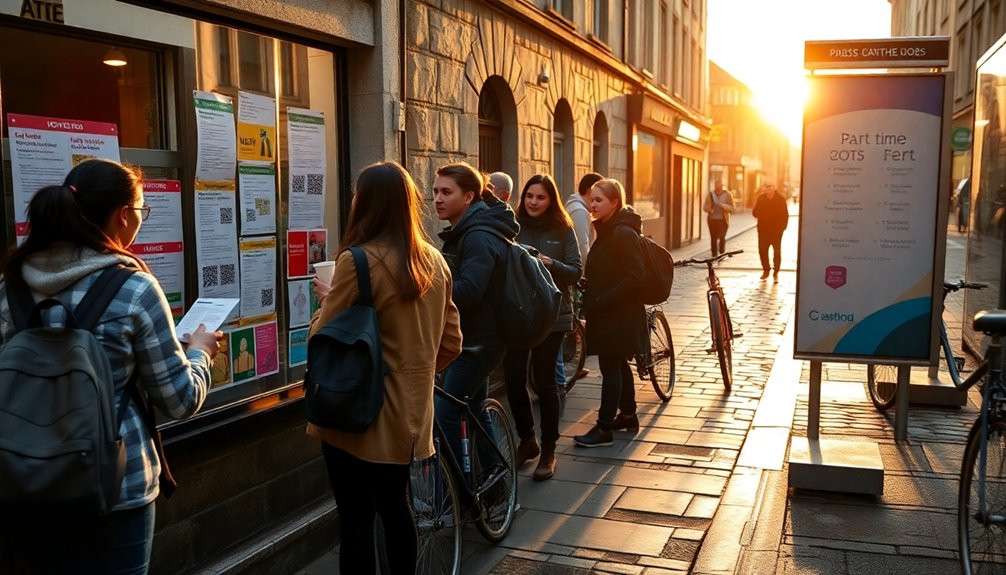
If you’re planning to study English abroad, finding part-time work can help cover expenses and give you real-world language practice; start by checking your visa restrictions and your school’s job board so you know what’s allowed and what’s available. Then focus your job search on local businesses and online platforms that list part time positions for students. Use clear resume tips to highlight language ability and adaptable skills, and visit student resources for CV templates and work permits guidance. Attend networking events to meet employers and practice pitch lines. Prepare for interviews with mock questions and punctual follow-ups. Choose roles that boost skill development—customer service, tutoring, hospitality—so you earn, improve English, and keep the freedom to explore life outside class.
Read your lease carefully so you know rent amounts, notice periods, and any rules about guests or subletting. Keep records of your deposit and take photos when you move in so you can challenge unfair deductions, and report repairs to your landlord in writing so there’s a paper trail. If repairs aren’t handled, know your rights and where to get student housing advice.
Before you sign, make sure you understand exactly what the lease says about rent, deposits, and how long you’re committed—these are the rules that will affect your budget and options during your stay. Read every clause so you can act freely: know rent due dates, allowed guests, and any bills included. Learn your rights around lease negotiation so you can ask for favorable terms before committing. Note conditions for lease termination and notice periods; that freedom to leave matters.
Once you’ve signed and kept your lease copy, the next thing to sort is deposits and repairs so you’re not left out of pocket. You’ll want to register your deposit with the approved scheme promptly and keep proof of check‑in condition to avoid deposit disputes later. Take dated photos, note existing marks, and email the inventory back to your landlord if anything’s missed. For repair responsibilities, clarify who’s responsible for routine fixes versus structural issues before you move in. Report problems in writing, request timelines, and follow up if deadlines slip. Staying organised and assertive protects your money and freedom — you’ll move out without hassle and won’t have to fight over withheld funds or unpaid maintenance.
If you’ve enjoyed short, intensive courses and want deeper progress, moving to a longer program means adjusting your study habits, expectations, and schedule. You’ll need clear course expectations and realistic academic adjustments so you don’t burn out. Think of the shift as gaining time and choice, not losing freedom.
Keep decisions flexible: choose modules and pacing that let you grow while keeping independence at the center.
No — you shouldn’t. Ireland’s prescription regulations and medication guidelines require paperwork for controlled or prescription drugs; bring prescriptions and original packaging, check customs rules, and carry supporting letters to avoid seizure or legal issues while preserving your freedom.
As a non‑EU/EEA student, you usually aren’t eligible for public healthcare, so you’ll need private cover; check insurance requirements, verify your policy meets visa conditions, and you’ll keep freedom to choose providers and plans.
Yes — you’ll often get student discounts for cultural activities and sports events; use your student ID, join student unions or societies, and explore city cards to save money and enrich student life while keeping your independence and flexibility.
Think of backup angels: save Emergency contacts like 112/999, local Garda station, your embassy, campus security and a trusted local friend; follow Safety protocols, keep numbers handy, and don’t hesitate to call if things go sideways.
Yes — you can often switch schools mid-term, but you’ll need to follow the visa transfer process and check school change implications; you’ll want to act quickly, inform immigration, and keep freedom-friendly options open.
You’ve got the essentials down: sort visa papers fast, pick the right course level, and find affordable digs — like a savvy Tudor scholar with a smartphone. Set up a bank account, register with a GP, and know your tenancy rights so you’re covered. Build local friends for support and hunt part-time work that fits your studies. If you plan to stay, shift from short courses into longer programs to make the most of your time in Ireland.