
The Complete Guide to Affordable English Courses in Ireland
Study English In Ireland
November 1, 2025

Ireland’s friendly schools give you high-quality English at lower living costs than other anglophone countries, and you can pick budget options in smaller towns or universities. Compare private schools, university programs and homestays for class size, intensity and immersion. Factor tuition, accommodation and transport—student cards, cooking and homestays cut costs. Check visa work limits and financial aid, book off‑peak or early for discounts, and negotiate fees; keep going to find specific tips and price ranges.
Because Ireland blends high-quality English instruction with lower living costs than many other English-speaking countries, it’s an ideal choice if you’re studying on a budget. You’ll find programs that let you learn quickly while keeping your expenses down, so you can spend more on experiences that matter. You’ll enjoy genuine cultural immersion through conversational classes, homestays, and community events that help you speak naturally. Small class sizes and friendly tutors give you freedom to explore topics you care about and pace your learning. Outside class, local attractions — parks, festivals, cafés — are affordable places to practice English and meet locals. Choosing Ireland means you can study effectively without sacrificing the independence to live and travel as you please.
1 main factor that shapes what you’ll pay for English courses in Ireland is where you study—city centers like Dublin and Galway usually cost more than smaller towns—and the type of school you choose (language academy, university-affiliated program, or private tutor). You want freedom to learn without overspending, so weigh course length, intensity, and language school reputation against city living costs. Expect weekly group classes in cities to run higher; smaller towns and independent tutors can be cheaper.
Compare options, prioritize value, and keep your independent goals front and center.
When weighing your options, you’ll find private language schools usually charge more per week for intensive, exam-focused or high-contact classes, while university programs often offer lower per-week rates, longer-term stability, and added access to campus facilities; compare class size, credentialing, and what’s included (materials, social activities, exams) to see which gives you the best value for your goals. You’ll want flexible scheduling if you’re balancing travel or work, so check refund and transfer policies. Private language providers may give rapid progress and tailored attention, while university programs deliver structured curricula and recognized transcripts. Think about freedom to change pace, track record of outcomes, teacher qualifications, and real costs beyond tuition. Pick the option that matches your timeline and independence.

Your choice of accommodation can change your total study costs as much as tuition does, so factor housing style, location and included utilities into your budget. You’ll weigh freedom against price: student residences offer convenience but higher fees, homestays give cultural immersion with modest living costs, and private rentals grant independence at varying rates. Think about commute, bills, and flexibility when planning your stay.
Your accommodation choice can shape costs and lifestyle — balance location, bills, and freedom when planning where to live.
Compare accommodation types, estimate monthly living costs, and pick what reveals the lifestyle and study freedom you want.
Studying in Ireland means you’ll need the right student visa, proof of health insurance, and budget for some mandatory fees, so sort these essentials early to avoid delays. You’ll start with the visa application—gather acceptance letters, financial proof, and passport documents promptly to keep control of your timeline. Health coverage is mandatory; choose a plan that covers emergency care and repatriation, and confirm whether your school offers group rates. Expect extra mandatory fees like registration, student levy, and sometimes Garda immigration charges; these are predictable costs you should factor into your budget. Staying organized lets you keep mobility and independence. Plan payments, scan documents, and set reminders so administrative tasks don’t clip your freedom while you focus on studying and exploring Ireland.
When studying in Ireland you’ll usually be limited to a set number of work hours per week, so plan your schedule around those limits. You’ll find most students take roles in hospitality, retail, or campus jobs that match visa rules and your skills. Also check tax obligations and whether you need permits so your earnings stay legal and hassle-free.
Because student visas limit the hours you can work, understanding Ireland’s part-time rules is key to estimating how much you can earn while studying. You’ll want clarity on visa regulations and how they affect your work life balance, so you can plan studies, savings, and time for exploring. Typically, you can work up to 20 hours per week during term and full-time during holidays, but confirm current rules for your visa type.
Keep records, follow rules, and prioritize academics so work doesn’t jeopardize your stay.
Now that you know how many hours you can work, it helps to look at the kinds of part-time jobs you can actually take and how much they’ll pay. You’ll find hospitality, retail, and administrative gigs that fit flexible schedules and let you earn while studying. If you prefer freedom, seek casual roles—barista shifts, event staff, or freelance gigs—where you control hours. Teaching opportunities exist too: conversational practice sessions, tutoring other students, or assisting in language schools if your language proficiency is strong enough. Pay varies by role and location; tourism centers often pay higher rates. Remember to match jobs to your energy and study priorities so work supports mobility and learning without trapping you in rigid schedules.
If you plan to work part-time while studying in Ireland, you’ll need to understand the tax rules and permit conditions that affect how much you actually take home and what work you’re legally allowed to do. You’ll face tax implications like income tax and USC once you earn above thresholds, so budget for deductions and request a correct tax credit certificate. Your student permission limits weekly hours and eligible job types, and a clear permit application is essential if your status requires one. Know renewal timelines to avoid interruptions.
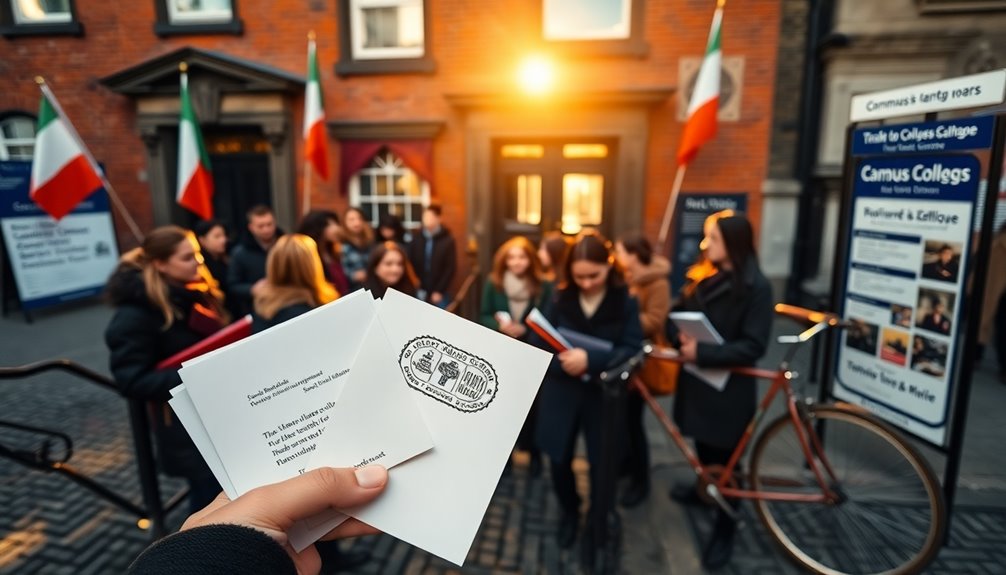
While tuition in Ireland can be affordable, you still might need extra help to cover living costs and fees, and scholarships, grants, and subsidies can make a major difference; many universities, government programs, and private organizations offer funding specifically for international students based on merit, need, or country of origin. You’ll want to hunt for scholarship opportunities at universities, consulates, and international foundations, and apply early with clear goals. Look into government schemes and local council aids that subsidize housing or travel for learners. Some NGOs and language schools provide need-based financial aid or discounts tied to community work. Be proactive: compare eligibility, prepare concise applications, and keep copies of transcripts and references to secure support that preserves your freedom to study.
Because textbooks and materials can quickly eat into your budget, knowing where to find cheaper or free resources is essential: check used-bookshops, university noticeboards, online marketplaces like Facebook Marketplace or Gumtree, and library reserves for loanable copies. You’ll want to mix used bookstores and digital finds so you stay flexible and free to choose. Hunt for past editions, photocopiable course packs, and share lists with classmates. Use online resources and student groups to swap or barter materials.
Keep receipts and track what truly helps your progress so you buy only what’s necessary.
You can save a lot by using Ireland’s cheap public transport options like monthly Leap cards and student discounts. Cooking at home and shopping at budget grocers or markets will cut food costs considerably. Combine smart travel passes with meal planning to keep your daily living expenses low.
If you’re trying to stretch your budget in Ireland, cheap public transport will be one of your best allies, since it cuts travel costs and makes getting to work, school, and groceries easier. You’ll feel freer when you know public transport options and transportation discounts that save you every week. Get a Leap Card for buses, trams, and trains to access lower fares, and look into student or monthly passes if you’re staying longer. Plan trips off-peak, ride-share for occasional routes, and use apps for real-time updates so you won’t waste time or money. Small choices add up, giving you more cash and freedom to enjoy life while studying.
A few simple habits can cut your weekly food bill without making meals boring: plan meals around sales and seasonal produce, buy staples in bulk, and cook from scratch instead of buying ready meals. You’ll taste better food and keep money for experiences. Use budget meal planning to map dinners, reuse ingredients across recipes, and freeze portions so nothing goes to waste. Learn grocery store hacks: shop end-of-day reduced racks, compare unit prices, and avoid pre-cut or branded items. Bring a list and set a spending limit so impulse buys don’t derail you. Grow a few herbs on a windowsill to add flavor for pennies. With these tactics you’ll eat well, stay flexible, and enjoy more freedom while studying.
Although shorter courses can jumpstart your speaking skills, choosing the right length and intensity depends on your goals, budget, and schedule. You’ll weigh course intensity against available time: intensive classes speed progress but demand focus, while part-time options suit those craving travel or work freedom. Look for flexible scheduling so you can mix study with exploring Ireland.
Decide what freedom means to you—rapid improvement, steady growth, or adaptable hours—and pick the course that gives the best value.

You’ll get the best rates by booking well in advance, which often locks in lower fees and more accommodation choices. Consider off-peak enrolment times when demand — and prices — drop. If your dates are flexible, keep an eye out for last-minute deals that can slash costs further.
Early-bird planning pays off: if you book your English course several months ahead, you’ll usually lock in lower tuition and get more choice of start dates and accommodation. You want flexibility and peace of mind, and early registration benefits give you both — securing discounts, preferred housing, and the freedom to plan travel without stress. By acting now, you’ll avoid last-minute price hikes and limited options.
Book early, claim the best rates, and keep your journey free and flexible.
Choosing to enroll during off-peak months can cut your tuition and living costs considerably, since schools lower prices and offer more flexible schedules when demand is down. You’ll enjoy off peak savings and flexible scheduling that let you shape study around travel or work. Aim for late autumn or early spring when campuses are calm and accommodation is cheaper. Booking slightly earlier within off-peak windows still gives discounts without peak-season crowds. Check course start dates and ask about reduced extras like activity fees. Use quieter months to practice English in real-life settings without pressure, so you get freedom to explore Ireland while studying.
| Month | Advantage | Tip |
|---|---|---|
| Nov | Lower fees | Reserve early |
| Feb | Fewer students | Flexible scheduling |
| Jan | Cheaper housing | Ask for discounts |
| Mar | Mild weather | Combine travel |
If your schedule’s flexible, last-minute deal hunting can score you significant savings on English courses and accommodation, especially when schools need to fill remaining seats. You can grab sudden discounts by watching school newsletters, social channels, and booking platforms for flash sales. With smart last minute tips, you’ll stay nimble, ready to enroll and enjoy lower rates without giving up choice. Combine this with solid budget strategies — compare packages, ask about shared housing, and confirm refund terms before committing.
Act fast, trust instincts, and keep a small emergency fund for true freedom.
When you’re comparing schools, don’t assume the listed price is final — many providers expect some back-and-forth and offer discounts for payment plans, group bookings, or longer stays. You can use clear negotiation tactics: ask for a breakdown of fees, propose a realistic counteroffer, and mention competing quotes to nudge them. Request fee discounts for committing to more weeks, paying upfront, or bringing friends. Be polite but firm, set a walk-away limit, and prioritize options that preserve your independence. Don’t forget seasonal promotions or scholarship possibilities; a short, direct email often works better than long calls. If a school won’t budge, ask for added value — free materials, extra sessions, or airport pickup — to keep costs low without sacrificing freedom.
Yes — you can combine English courses with volunteer opportunities for real language immersion; you’ll gain practical experience, flexible schedules, cultural freedom, meaningful connections, and improved fluency while contributing locally and shaping your own learning adventure.
Yes — but wait: eligibility hinges on dependent visa requirements and timing; you’ll need proof of relationship, finances and course length. If you value freedom, know family member eligibility isn’t automatic, so plan paperwork carefully and assert your choices.
Yes — many language schools offer accredited certificates meeting accreditation standards, and you’ll find employer recognition varies; check school accreditation, course level, and local industry acceptance so you can freely choose programs that employers respect.
You’ll find many schools provide disability accommodations and strong course accessibility, but availability varies — you’ll want to ask providers directly, review policies, and pick flexible programs that respect your independence and learning preferences.
Yes — you can often transfer credits, but it depends on credit transfer policies and program compatibility; you’ll want to check each institution’s rules, keep syllabi handy, and negotiate flexible arrangements so you’re free to shape your own path.
You’ll get more than lessons in Ireland — you’ll gather stories. Think of Liam, who swapped a pricey Dublin program for a Galway community school and saved €1,200, turning that money into weekend trips that became his classroom. Like his small detour, choosing wisely stretches your budget and your experience. With the right course length, accommodation, and timing, you’ll leave fluent in language and rich in memories, not bills.
https://shorturl.fm/V2XCR
https://shorturl.fm/XWrQL
https://shorturl.fm/7r0nD
https://shorturl.fm/dL9OD
https://shorturl.fm/dL9OD
https://shorturl.fm/8EGKs
https://shorturl.fm/LoNI0
https://shorturl.fm/96GGP
https://shorturl.fm/o7wj1
https://shorturl.fm/QweHS
https://shorturl.fm/Vz4OX
https://shorturl.fm/FeInk
https://shorturl.fm/QLGnQ