
Latest Trends in How Much Does It Cost to Study English in Ireland
Study English In Ireland
January 3, 2026

You’ll typically pay €150–€300 per week for group English courses, with one-to-one lessons about €25–€60 an hour. Expect higher rates for intensive or exam-prep programs. Add rent, food, transport, visa fees and health insurance — Dublin costs much more than smaller towns. Shared housing and student discounts cut expenses, while textbooks and insurance add fixed costs. Keep a clear monthly budget to spot savings, and continue for specific cost examples and budgeting tips.
Tuition fees for English language courses in Ireland vary widely depending on course type, school reputation, location and duration, typically ranging from about €150–€300 per week for group general English and €25–€60 per hour for one-to-one lessons; specialist exam-preparation or intensive programs can cost more. You’ll compare English course formats—group, one-to-one, blended, intensive—and assess cost per hour, curriculum depth, and accreditation. Weigh reputation against price and expected outcomes, considering visa rules and flexibility. International student experiences vary: budgeting for tuition, choosing flexible timetables, and prioritising accredited providers helps you maximise learning value and autonomy.
You’ll need to budget for rent, utilities and other accommodation-related costs, which vary widely between city centers and smaller towns. Plan for daily living expenses like groceries, eating out and mobile data, plus regular transport costs for buses, trains or bikes. Comparing typical monthly totals for different locations will help you choose realistic options.
If you’re planning to study English in Ireland, housing will be one of your biggest regular expenses and choices you make about location and type—student halls, shared flat, host family, or private studio—will determine monthly costs and commute times. You’ll compare rent levels across cities: Dublin is highest, regional towns are cheaper. Shared accommodations cut costs and offer flexibility, but you’ll trade privacy. Host families include utilities and meals, simplifying budgeting. Private studios give independence at a premium. Factor in deposits, lease lengths, and local rental markets when choosing. Prioritize what freedom you value: cost, location, or autonomy.
While housing will often be your biggest single cost, daily living expenses—food, local transport, utilities and occasional extras—shape your weekly budget and quality of life. You’ll plan meals to control grocery bills, choose energy-efficient habits to lower utilities, and balance occasional dining out against saving. Use public transport passes or cycle to reduce commuting costs; occasional taxis add significant unpredictability. Do a cost comparison between supermarkets, markets and takeaway options, and compare mobile/internet deals to avoid overpaying. Track spending weekly to maintain freedom: small consistent adjustments free up funds for study, travel or leisure.

You’ll need to factor in visa application fees, which vary by nationality and processing speed. Health insurance is often mandatory and can add several hundred euros per year depending on coverage. Also budget for textbooks and course materials, which are recurring but generally modest compared with tuition.
Because visa application fees vary by nationality and visa type, you should budget for both the charge itself and any related administrative costs. You’ll need to check visa requirements early so you can map timelines and fees into your plans. The application process may include online fees, biometric charges, document translation or notarisation costs, and courier or appointment fees. Some visas demand proof of funds or backing letters that carry incidental expenses. Plan contingencies for fee changes and refunds that aren’t guaranteed. Being informed lets you retain flexibility and control over your budget while pursuing study in Ireland.
Factor in health insurance as a fixed, often mandatory, component of your budget when studying in Ireland, since costs vary by provider, policy scope, age and any pre-existing conditions. You’ll compare health insurance providers for premiums, deductibles and network access. Short-term plans aimed at students cost less but offer limited coverage options; extensive plans cost more but reduce out-of-pocket risk. Check whether your visa or school requires specific minimums. Factor in emergency repatriation and chronic-condition coverage when evaluating value. Shop, compare quotes and confirm claim procedures so you keep financial freedom without unexpected medical bills while studying abroad.
While visa and health insurance fees are predictable line items, books and course materials add variable but unavoidable costs you’ll want to plan for; prices depend on course level, whether texts are compulsory, and if digital editions or bundles are offered. You’ll evaluate required course materials against budget and freedom goals, choosing new purchases, used books, or digital licences. Many schools offer book rentals or institutional copies to reduce upfront expense. Factor in photocopying, workbook access codes, and occasional specialist texts for exam preparation. Compare provider packages and ask about included materials to avoid surprise charges.
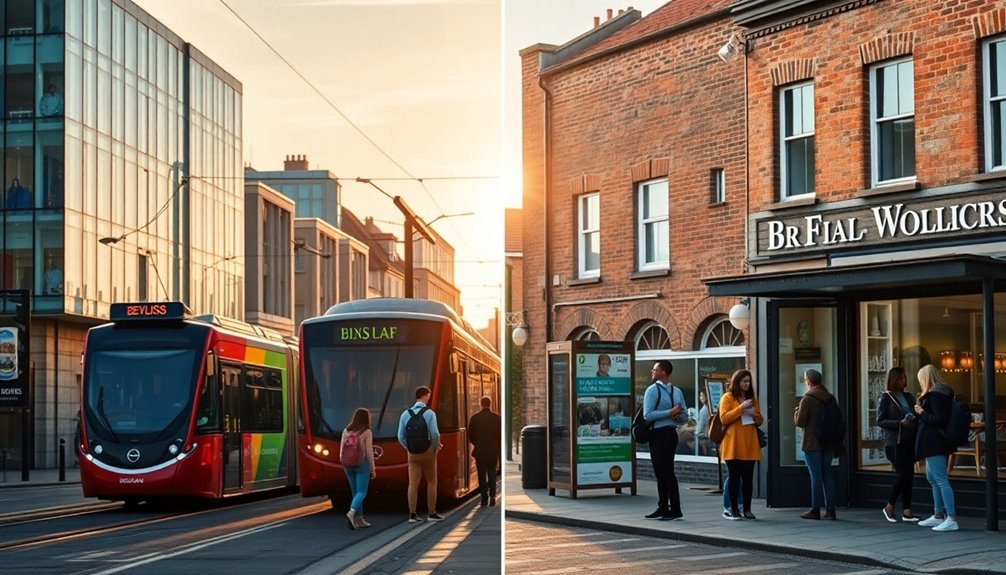
If you’re budgeting for an English course in Ireland, expect noticeable price differences between Dublin and other cities or towns. You’ll see regional education disparities reflected in tuition, accommodation and ancillary fees; Dublin’s demand drives higher prices while smaller cities offer lower baseline costs. City living comparisons show you’ll pay more for rent, transport and social activities in the capital, though course quality can be comparable across locations. Choose based on lifestyle and mobility: if you value freedom and urban opportunity, Dublin fits; if you prefer lower cost and quieter study, consider Cork, Galway or smaller towns.
Because living costs and course fees can vary widely across Ireland, it’s important to build a realistic budget before you arrive that separates fixed expenses (tuition, visa, insurance) from variable ones (rent, food, transport, leisure). Track spending with budgeting apps to identify leakages, set weekly limits for variable categories, and prioritise essentials. Choose shared accommodation or homestays to lower rent, cook more to reduce food costs, and use public transport passes. Use student discounts for cultural activities and services, and plan leisure around free events. Review and adjust your budget monthly to preserve flexibility and financial autonomy.
Although funding options vary by institution and course level, knowing where to look and how applications are assessed will let you reduce overall costs considerably. You should survey institutional scholarship opportunities, government schemes, and external foundations; compare eligibility, duration, and coverage. For grant applications, prepare concise budgets, clear learning outcomes, and evidence of need or merit. Consider shorter accredited courses, community college pathways, and blended or online options to lower living and tuition expenses while keeping flexibility. Assess application deadlines, required documentation, and selection criteria objectively so you can allocate effort to the highest-probability funding sources.
Yes — you can work part-time while studying English in Ireland, but you’ll need to follow student visa regulations. Typically, students on long-term study visas are allowed limited weekly hours; short-course visitors usually aren’t permitted to work. Check eligibility, permitted hours, and any employer requirements before accepting part time job opportunities. You’ll want to balance work with studies, verify rules for your visa type, and keep documentation to avoid compliance issues.
Yes — but it depends. You’ll often find discount eligibility tied to course duration, so shorter courses may get fewer perks. Some schools offer early-bird, group, or repeat-student discounts even for short-term programmes, while others reserve savings for longer enrolments. You should compare providers, check terms for minimum weeks, and ask about hidden fees. That way you’ll confidently choose the option that best preserves your freedom and budget.
Yes — many language schools offer airport pickup services. You’ll find varied airport transfer options: private taxis, shared shuttles, or coach transfers arranged by language school services. Costs, advance-booking rules and meeting points differ, so you’ll want to compare fees and cancellation policies. Choosing a school that handles transfers lets you arrive with less hassle and more autonomy, especially if you value streamlined logistics and predictable arrival arrangements.
Usually, yes — schools often help arrange accommodation. Like a compass pointing north, they’ll map options: homestays, student flats, private rentals — varied accommodation types guided by school partnerships with host families and residences. You’ll get choices, contracts and basic vetting; you’re free to accept or seek alternatives independently. Expect fees, placement details and limited liability from the school, so check cancellation policies and visit reviews before committing.
You’ll find student neighborhoods in Irish cities generally safe, though it varies by area and time of day. Student safety is supported by visible policing, campus security, and active student communities. Neighborhood amenities—shops, transport links, cafes and parks—are common near colleges, improving convenience and informal surveillance. Use common-sense precautions, check local crime maps, and ask peers or school staff about specific streets to match your personal comfort and freedom.
You’ve seen the numbers — from tuition to rent, visas to textbooks — and you’ll know Ireland can range from modest to pricey depending on city and choices. Like a map with both peaks and plains, costs vary by course length, location, and lifestyle, so plan carefully, compare programs, and use scholarships, part-time work, and budgeting tricks to flatten the peaks. That way, study stays affordable without surprises.