Ireland’s Best Beaches: A Student’s Weekend Escape Guide
Study English In Ireland
January 21, 2026

You can score golden sands, surf lessons and quiet study nooks just a short trip from most campuses—think Strandhill for beginner surf, Inchydoney for long walks, and Salthill for promenade views. Pack layers, sunscreen, a waterproof pouch for your phone and check tide times; lifeguards and facilities vary. You’ll find budget hostels, bike hire and student discounts nearby, plus sheltered bays for paddleboarding. Keep going to find specific beaches, routes and safety tips for each spot.
Looking for the perfect Irish beach day? You’ll find golden sand, brisk Atlantic air, and walks that steady your breath — ideal if you value safety and simplicity. Pick beaches with lifeguards or clear signage, scope tide times, and choose picnic spots near dunes or car parks for easy exits. Bring layers, a waterproof layer, and a first-aid kit; weather shifts fast, so a waterproof blanket keeps your food dry and your group warm. For low-risk fun, set up beach games like frisbee or bocce in wide, wind-sheltered stretches away from cliffs and strong currents. Keep valuables secured and phones in dry pouches; note nearest parking and emergency access. Observe local rules about dogs, fires, and swimming zones. You’ll leave feeling refreshed, with practical knowledge for a safe repeat: reliable beaches, sensible gear, thoughtful site selection, and simple activities that let you enjoy Ireland’s coastline without unnecessary risk.
When you need sea air without blowing your student budget, Ireland’s university towns sit surprisingly close to wallet-friendly beaches that deliver sand, surf and quick escapes between lectures. You’ll find short trains or bus rides from campuses in Galway, Cork and Belfast that drop you near safe, family-friendly strands where lifeguards often patrol in summer and clear paths lead down from car parks. Look for budget accommodations a short walk from the shore—hostels and guesthouses that offer secure storage and simple kitchens let you stretch funds and stay safe overnight. Always check tide times and local signage before you go, and take advantage of student discounts for transport, museum stops or gear hire when available. Pack a small first-aid kit, a charged phone and layers for sudden Atlantic weather. These nearby beaches give you quick restorative breaks between study sessions without compromising safety or your bank balance.
If you crave waves that challenge and exhilarate, Ireland’s coast delivers world-class surf spots and sheltered bays for every skill level. You’ll find Mullaghmore and Bundoran for powerful breaks, Lahinch for consistent beach breaks, and more forgiving coves like Strandhill where lessons are common. Check local surf forecasts, tides, and rip warnings before you paddle out — conditions change fast.
For other water sports, sheltered estuaries and bays offer kayaking, paddleboarding, and windsurfing with rental options and guided tours. Choose beaches with lifeguards in season and ask about designated launch areas. Pack a good wetsuit, a leash, and a personal flotation device if you’re not a strong swimmer. Respect posted safety signs and local surf etiquette to keep yourself and others safe. With preparation and awareness, you’ll enjoy Ireland’s spectacular coastline, progress your skills, and leave with stories of crisp waves and dramatic sea air.
Though the coast buzzes with surfers and sunseekers, you can still find quiet coves and grassy headlands perfect for studying, reading, or just unwinding — places where the only interruptions are gull calls and the steady hiss of waves. You’ll spot hidden benches, sheltered dunes, and low cliffs that make ideal study spots away from crowds. Pick a flat, dry patch and set a lightweight blanket; check tide times and weather forecasts so you’re not boxed in by rising water or sudden wind. Bring a small pack with water, layers, and a charged phone for safety. Respect private land and follow local signs—many peaceful retreats sit near dairy farms or walking paths. If you need wi‑fi, scout cafés in nearby villages rather than relying on uncertain signals. Stay aware of your surroundings, keep valuables discreet, and you’ll find these coastal quiet zones refresh your focus and calm, offering a simple, safe backdrop for study or slow, intentional rest.
While daytime crowds fade, some Irish beaches take on a different kind of life after dusk — a hush broken by rhythmic surf, distant laughter from a pub, or the soft glow of lights on the cliffs — and they’re perfect for night walks, stargazing, or quiet bonfires where allowed. You’ll find pockets of coastline—wide sands and sheltered coves—ideal for moonlit strolls that clear your mind between lectures. Choose beaches with clear access points, good footing, and nearby signage so you can stay safe after dark; bring a torch, a charged phone, and a light jacket against sea breezes. If you’re tempted by beach bonfires, always check local rules and tidal times, keep fires small and controlled, and leave no trace. For calmer evenings, pick beaches with distant village lights or minimal artificial glow to maximise stargazing. You’ll leave feeling refreshed, connected to the sea, and confident you stayed sensible while enjoying Ireland’s gentler nocturnal rhythms.
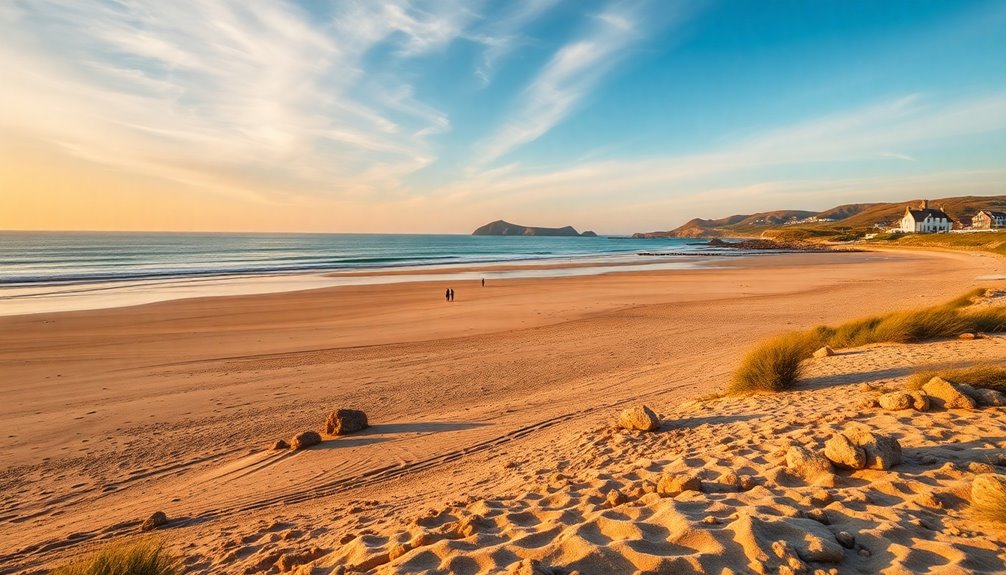
When you’re travelling with friends, siblings or a mixed-age crowd, pick beaches that balance safe swimming, easy access and little extras that keep everyone happy — wide, gently sloping sands for sandcastles and games, sheltered coves or marked swimming areas for younger kids, and nearby facilities like toilets, picnic spots and a café for breaks. You’ll want lifeguard-supervised stretches, clear signage about tides, and easy parking or drop-off points so nobody’s hauling gear too far. Look for beaches offering family friendly activities — paddleboard rentals, playgrounds, or organised beach games — that let you plan days without constant supervision stress. Pick spots with shaded areas and clean changing facilities to manage naps, snacks and sunscreen breaks. These choices make outings calmer and safer, and they encourage group bonding through shared picnics, cooperative sand builds and relaxed swims. Scout seasonal timetables for lifeguard hours, know emergency contacts, and set simple ground rules so everyone enjoys the trip with confidence.
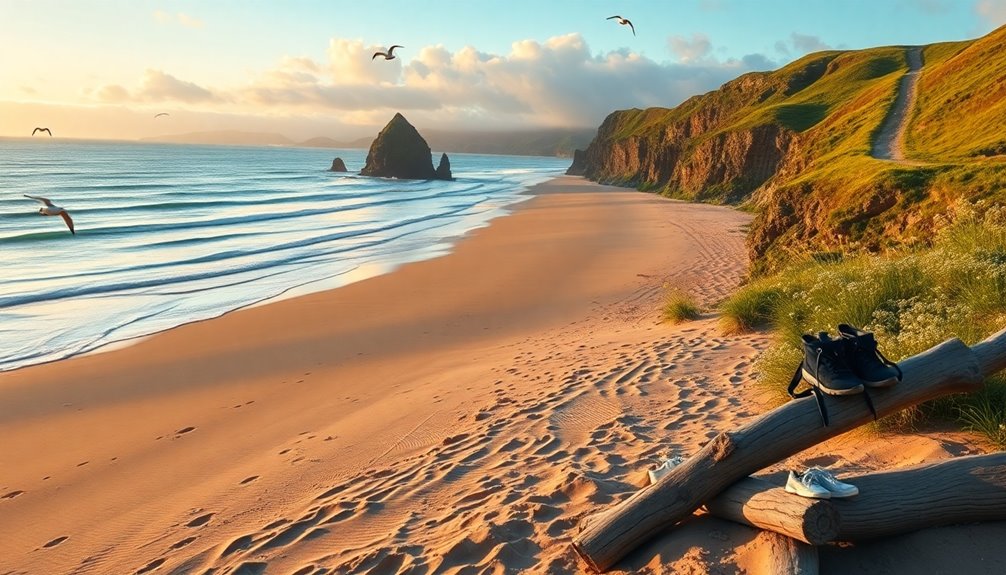
If you want picture-perfect memories with minimal detours, Ireland’s coastal walks deliver dramatic cliffs, sweeping sandbanks and quiet headlands that are all framed for great photos — think golden light on basalt stacks, foamy surf tracing crescent bays, and sheep-dotted fields that tumble to the sea. As you follow marked paths, seek out scenic viewpoints where compositions naturally form: a lone rock stack, a sinuous beach, or a headland curving into the Atlantic. Keep safety front of mind — stay behind fences, watch footing on wet rocks, and check tide times before you wander lower shorelines. For sharper images, bring a small tripod or steady yourself on a wall at sunrise or sunset; use leading lines like fences and streams to guide the eye. If you’re shooting on your phone, tap to lock exposure, use burst mode for waves, and carry a lightweight rain cover. These coastal walks reward patience and observant framing with unforgettable, safe photo ops.
One clear thing to know before you pack is how you’ll actually get to Ireland’s beaches — transport choices shape the whole trip, from a relaxed sunrise shoot to a hurried weekend dash. Decide whether you’ll rely on public transport options or a private car: many coastal towns are served by buses and regional trains, but schedules thin out on Sundays and late evenings, so check timetables in advance. If you drive, research parking availability at car parks or roadside bays and consider arrival times to secure a safe spot close to the beach. Cycle-friendly routes are common around seaside towns, and bike hire can bridge that last mile. For remote strands, arrange drop-offs or local taxis rather than risking poor visibility drives after dusk. Keep phone chargers, route maps, and emergency contacts handy. Planning routes and backup transport keeps your weekend flexible, efficient, and, above all, safe.
Getting to the beach safely is only half the story — once you arrive, knowing how to look after yourself and what to bring makes the difference between a great day and a stressful one. You’ll want to scan for lifeguard flags, read any safety notices, and pick a spot with clear exits and firm sand. Keep valuables out of sight, stay within sight of companions, and check tide times so you’re not cut off.
Facilities vary: public toilets, showers, and bins aren’t guaranteed, so note nearby car parks, cafés, and phone signal. For beach safety, carry a small first-aid kit, whistle, and a charged phone in a waterproof pouch.
Packing essentials should be compact and practical: sunscreen, hat, refillable water bottle, a lightweight towel, windproof layer, and sturdy footwear for rocks. If you plan to swim, bring a bright swim cap and never go alone. Leave no trace and you’ll have a safe, relaxed escape.
Yes — you can often bring your bike on public transport, but rules vary, so check schedules and carriage policies first. You’ll want to fold or secure your bike if required, aim for off-peak times, and use bike transport straps or racks when available. Stay observant loading and unloading, keep pathways clear, and wear reflective gear. Planning ahead keeps you and fellow travelers safe and lets you enjoy the beach ride stress-free.
Yes — you’ll find pet-friendly beaches that tighten rules off-season, so check local pet regulations first. You’ll notice dog friendly amenities like bins, fresh-water taps and marked leash zones at busiest spots, while quieter coves may ask you to keep pets under control year-round. Stay observant of seasonal signage and local bylaws, bring a leash and waste bags, and you’ll keep your dog safe and welcome even during restricted months.
You’ll find lively beach festivals and seasonal events at spots like Bundoran’s surf festivals, Tramore’s summer music weekends, and Lahinch’s surf-and-music gatherings. You’ll also spot smaller seasonal events — lifeguard open days, family fun fairs, and autumn kite festivals — at Ballybunion, Brittas Bay, and Inch. You’ll want to check dates, safety advisories, and dog rules before you go, so you’ll enjoy festivities without risking crowds or unsafe conditions.
You can charge at cafés, visitor centres, and some lifeguard stations that offer charging stations; ask staff before leaving devices. Public hotspots are common in town squares, libraries and larger beach car parks—look for official network names and avoid unsecured connections. Keep devices close, use a portable battery pack and enable a VPN for safer browsing. Note opening hours, bring a short cable and don’t leave your phone unattended.
Yes — but not like you’re in a teen movie: most beaches forbid overnight camping and beach bonfires without permits. You’ll need to check local camping regulations and apply where allowed, usually at designated sites or remote wild camping spots with landowner permission. Respect bonfire safety rules, keep fires small, use established fire pits if present, and fully extinguish embers. Be observant, legal, and considerate to protect dunes, wildlife, and other visitors.
You’ll find your own tide of memories here — sandy notebooks for late-night study breaks, wind-tousled hair that makes lectures feel far away, and waves that clap like a stadium when you nail a surf streak. Let the coastline be your quiet classroom and wild playground; pack light, bring friends, and keep your phone charged for golden-hour shots. When exams roar, these beaches will be the sea-salted breath that steadies you.