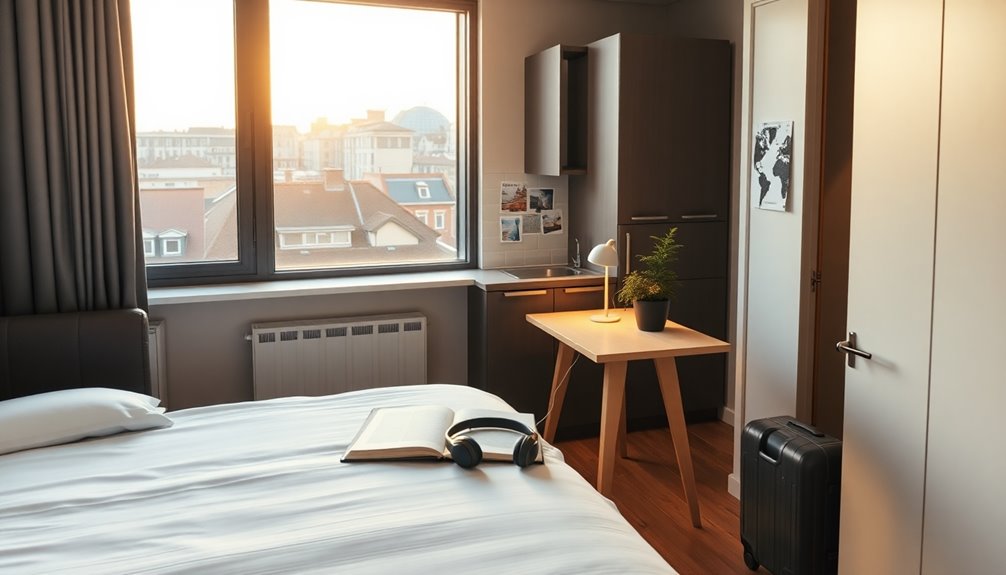
Private Studio Flats for Language Students Backed Recommendations
Study English In Ireland
January 4, 2026

Private studio flats give you quiet, predictable space to study and recharge while keeping independence and a compact kitchen for flexible hours. Pick one near your language school and public transport to cut commute stress and save time. Confirm included utilities, fast reliable internet, secure entry, and clear lease terms before you sign. Budget for deposit, first month’s rent, and an emergency buffer. Keep social plans active and you’ll find practical tips and deeper checks ahead.
Because you’ll be juggling classes, homework and exploring a new country, a private studio flat gives you the quiet, predictable space you need to focus and recharge. You’ll appreciate affordable housing that fits a student lifestyle without sacrificing independence — your routines stay intact, your things stay where you left them, and you control your study environment. A compact kitchen and private bathroom mean flexible hours and fewer compromises with flatmates. You’ll save time, reduce stress, and have a base for social plans when you want them. It’s practical freedom: study hard, explore freely, return to your own calm.
When you’re choosing a studio, think about how close it is to your language school so you can save time and stress on busy mornings. Also check nearby bus, tram or train links so you’ll be able to explore the city and get to work or social events easily. Prioritising both school proximity and reliable public transport makes daily life simpler and helps you get the most from your course.
If you’re prioritizing study time and easy commuting, choose a flat that’s within a short walk or a single transit ride of your language school; this cuts travel stress, saves money, and gives you extra hours for classes or rest. You want freedom to structure days, so check language school locations against student accommodation options, mapping realistic door-to-door times. Visit at different times to sense noise and safety. Prioritise flats near cafés, libraries, and study spaces so you can shift scenes without long trips. A short commute lets you sleep more, socialise, study smarter, and stay independent.
A short list of transport priorities will save you time and stress: pick a flat that’s a quick walk to buses, trams, or metro stations serving your school and key city hubs, and check evening and weekend schedules so you’re not left stranded. You’ll want clear public transport options mapped from your door — faster routes to classes, supermarkets, and social spots. Look for reliable connections, bike-share docks, and affordable season passes. Commuting tips: test the route at peak times, note alternatives for strikes or delays, and pick a place that gives you freedom to explore without long daily rides.
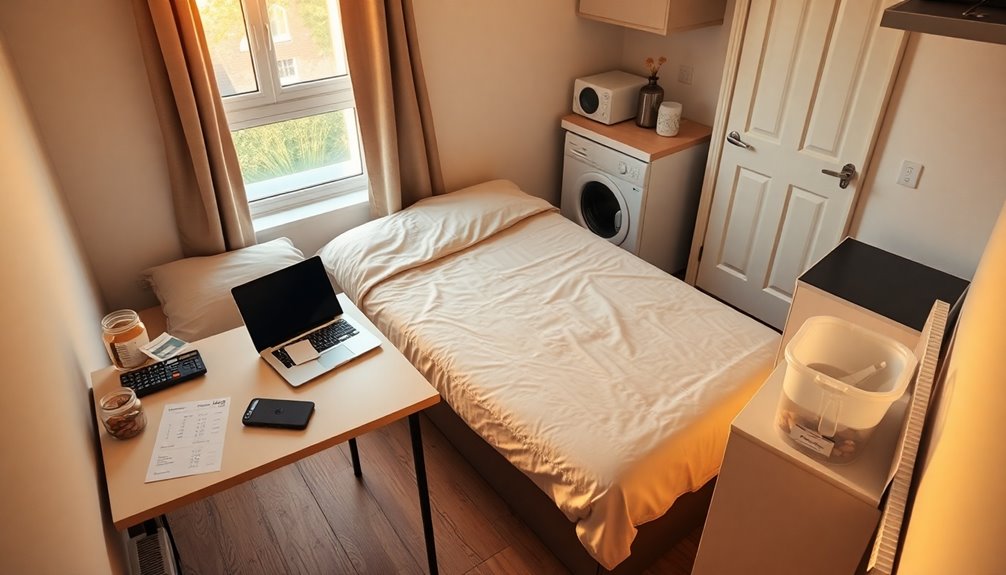
You’ll want to budget for the big upfront costs — first month’s rent, a security deposit, and any agency or admin fees — before you sign. Break down your expected monthly outgoings into rent, utilities (gas, electricity, water), and extras like internet, TV licences, or laundry. Knowing these figures ahead of time will help you compare flats realistically and avoid nasty surprises.
Because moving into a private studio means you’ll face more than just the first month’s rent, it’s important to budget for upfront costs like security deposits, utility setup fees, and any required agency or administration charges. You’ll want to list upfront payments: deposit requirements, any holding fee, first utility estimates, and initial internet or insurance costs. Check what’s refundable and what isn’t, and ask for receipts. Prioritize an emergency buffer so a single unexpected fee doesn’t derail your plan. Being clear on these numbers lets you move in confidently and keep the freedom a private studio is meant to give.
When budgeting for a private studio, break monthly costs into clear line items — rent, utilities, internet, renter’s insurance, and any building fees — so you’ll know exactly what to expect each month and won’t mistake the headline rent for your true living cost. Tally rent, set aside a buffer for irregular bills, and factor any refundable deposits spread over months to see true monthly impact. If you value freedom, plan for occasional travel and short-term lease flexibility. Practice rent negotiation politely; compare shared accommodations to confirm the studio’s value. Update your monthly budget and stick to it.
Now that you’ve broken down monthly rent, it’s time to account for utilities and one-off extras that can change your actual cost of living. You’ll want to estimate bills for electricity, heating, water, internet and TV licensing; ask whether utilities are included. Factor in initial deposits, administration fees and possible agency charges. Practice simple utility management: track usage, set budgets, compare suppliers and switch if savings justify effort. Consider optional extra services like cleaning, laundry or bike storage only if they increase your freedom. Build a small buffer (one month’s rent or 10–20% of monthly costs) for surprises.
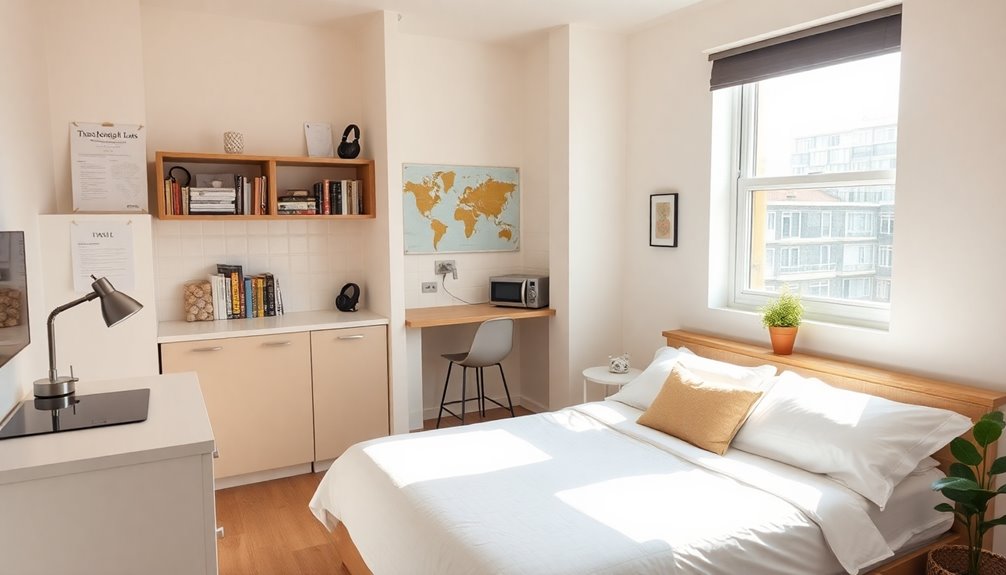
If you’re touring a studio, focus first on the basics that affect daily life: natural light and ventilation, storage space, reliable heating/cooling, and a functional kitchenette and bathroom. You’ll want clear studio amenities details: laundry options, internet speed, and included appliances. Think about space optimization—can a bed loft, foldable table, or built-in shelving free movement? Check surface durability, outlet placement, and water pressure. Picture daily routines: cooking, studying, hosting a friend. Ask about maintenance response times. Choose a flat that supports independence and simple living, so you can study, explore, and live with minimal friction.
Because you’ll be living and studying alone, safety and building accessibility should be top priorities: check secure entry systems (key fob, intercom, or coded locks), well-lit common areas and pathways, functioning smoke and carbon-monoxide detectors, and clear emergency exits. You want freedom, but not risk — confirm building emergency protocols, local contact points, and whether staff respond 24/7. Test locks and ask about visitor policies and delivered packages. Look for ramps, elevators, and step-free access if you value mobility. Note visible security features like cameras and on-site staff; they shouldn’t feel intrusive, just reliable and reassuring.
Feeling safe in a building is only part of the picture — you also want lease terms that match your study schedule and give you flexibility if plans change. Look for short-term leases, month-to-month options, or academic-year contracts that end around term breaks. Confirm notice periods are clear and reasonable so you can leave early without penalties. Ask about student discounts, refundable deposits, and subletting policies if you’ll travel. Negotiate lease flexibility upfront: probationary periods, extensions, or transfer clauses can protect you. Read every clause, keep copies, and insist on simple, fair terms that respect your freedom.
You’ll want to know which bills your rent covers (heating, water, electricity) and which you’ll need to set up and pay separately. Check for fast, reliable home internet options or whether the landlord provides a router and service—poor Wi‑Fi can wreck study time. Also compare student-friendly mobile plans with good local coverage and easy top‑up or contract terms so you’re always reachable.
When you book a private studio, check exactly which bills are included so you’re not surprised by extra costs — some landlords cover water and heating, others only include council tax or a flat-rate utilities fee. You’ll want a clear bills breakdown listing gas, electricity, water, rubbish collection, and any service charges. Ask whether heating is seasonal or metered, and if invoices go in your name. Included utilities save hassle, but if not, estimate monthly costs before you commit. Confirm payment method, responsibility for repairs, and how meter readings are handled so your independence stays affordable and stress-free.
If you need to study, stream lessons, or video-call family, make sure the studio has fast, reliable internet before you sign — unstable or slow connections can wreck your schedule and add unexpected costs if you’re forced to buy mobile data or upgrade plans. Check advertised speeds vs. real-world tests, ask neighbors or the landlord about internet reliability, and confirm whether the building uses fiber, cable, or shared ADSL. Look for included router quality, symmetry for uploads, and any data caps. Prioritize fast connectivity for uninterrupted classes and creative freedom, and negotiate installation or speed guarantees into your lease.
Although mobile plans can feel overwhelming, choosing the right one will keep you connected for study, social life, and emergencies without breaking your budget. You’ll want a student mobile option with flexible data, strong coverage, and no long contracts so you can move or switch as you please. Compare budget plans for data caps, tethering, and international add-ons if you call home. Look for student discounts, autopay savings, and pay-as-you-go options that match semester rhythms. Keep your plan simple, monitor usage, and upgrade only when necessary. That way you stay free, reachable, and focused on learning.
Because you’ll likely be on a tight budget and a tight schedule, focus on versatile, space-saving pieces that do double duty — think a sofa bed, foldable desk, or stacking storage — and prioritize essentials: a comfortable mattress, a sturdy table, adequate lighting, and good curtains for privacy. You’ll want simple furniture styles that feel airy and mobile. Check budget stores, secondhand markets, and student groups for bargains. Buy key items new for durability, source extras used. Measure carefully, plan layout, and keep tools and basic repair kits. This lets you create a personal, flexible flat without breaking the bank.
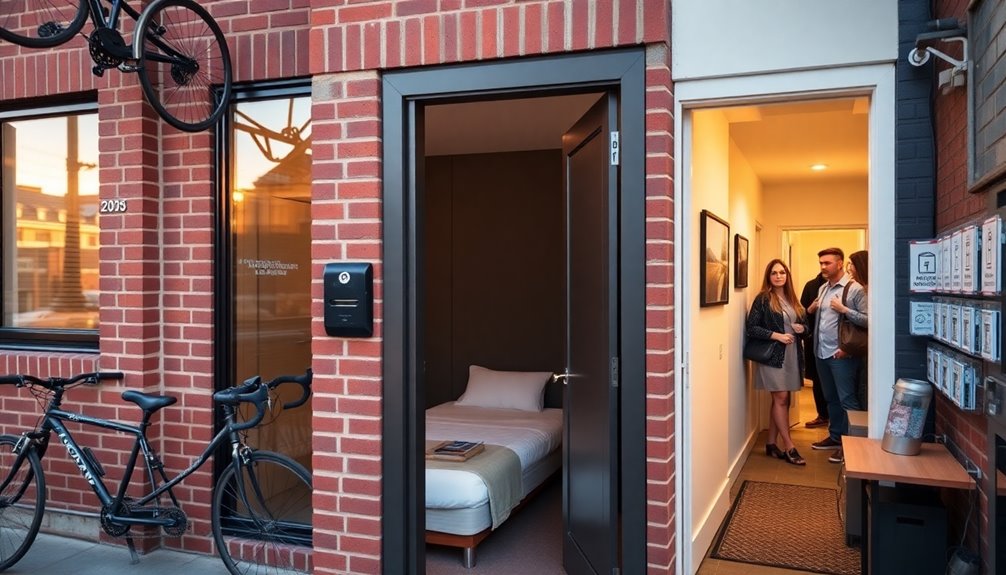
When you start looking at tenancies in Ireland, pay close attention to the contract and what rights you actually have as a tenant; knowing the basics will save you stress and money later. Read clauses on rent, deposits, notice periods, and repairs. You’ll want written records of inventories and communications. Understand your tenant responsibilities—cleaning, reasonable wear, and reporting issues promptly—to avoid disputes. Learn statutory legal protections like deposit schemes and notice rules so you can push back if needed. If something’s unclear, ask for clarification or seek free advice from local tenant unions. Stay informed and you’ll keep freedom and security.
Now that you know what to look for in a tenancy agreement and your rights, the next step is finding listings you can actually trust. You’ll want to use reputable platforms that show verified photos, clear pricing, and landlord contact details — they save time and risk. Don’t ignore local agencies: they often know neighbourhood quirks, short-term options, and can negotiate on your behalf. Compare both sources, ask for references, and verify IDs before paying. Trust your instincts; choose freedom-friendly options with transparent terms, flexible move-in dates, and responsive support so you can focus on studying and exploring.
Although living alone gives you independence, it doesn’t mean you have to be isolated — there are simple, reliable ways to keep a social life while staying in your studio. You can join language meetups or campus groups to find social events that match your interests. Invite classmates for coffee or a study swap; low-pressure hosting keeps connections casual. Use apps and noticeboards to stay aware of pop-ups and cultural nights. Volunteer or take short courses to broaden circles and practice language skills. Be proactive but set boundaries so your freedom and downtime stay respected as you enjoy making friends.
Spending time with new friends is great, but keeping your budget intact matters just as much — especially when you’re juggling rent, bills, and language classes. You can stretch funds with simple grocery budgeting: plan weekly menus, buy staples in bulk, and track prices at nearby stores. Adopt cooking strategies like batch-cooking, versatile recipes, and freezing portions to save time and money. Hunt local discounts—student cards, markets near closing, and apps with coupons—and combine offers. Stay flexible: swap ingredients, share bulk buys with roommates or classmates, and keep meals tasty but affordable so your independence doesn’t cost you freedom.
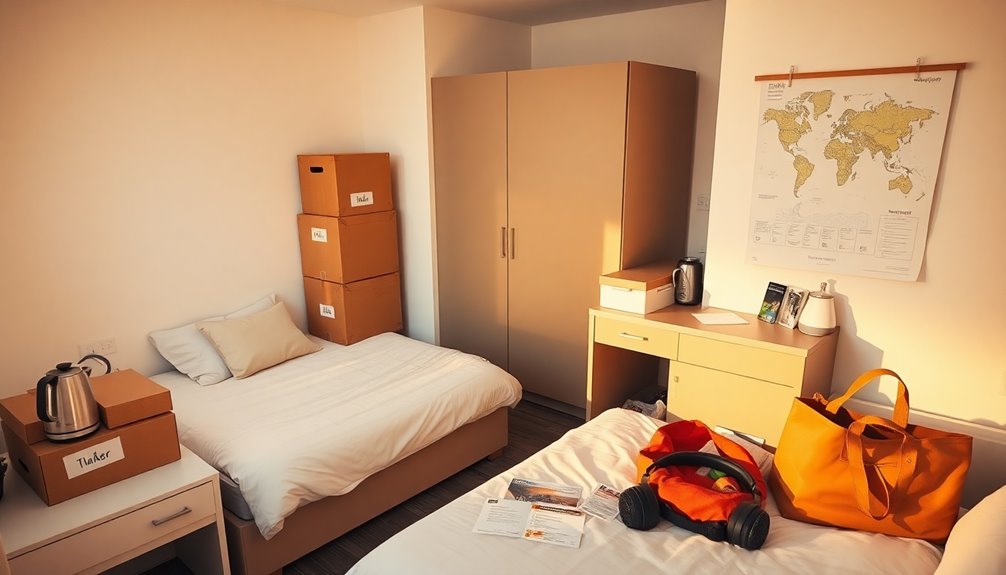
If you want to settle in smoothly, prioritize essentials the first day—keys, utilities, Wi‑Fi, and a quick clean of high‑traffic areas—then tackle paperwork, safety checks, and a basic grocery run over the next few days. You’ll want a short moving checklist: confirm lease details, register your address, note emergency exits, test smoke detectors, and set up billing. Pack essential items into an easy-access box: chargers, toiletries, basic cookware, bedding, and a small tool kit. These moving tips help you stay calm and free. Focus on comfort first, then personalize the space gradually.
Yes, you can often sublet your studio temporarily, but you’ll need to check subletting rules in your lease and local laws first. You’ll want a clear temporary arrangements plan: get written consent from your landlord, screen the student, set dates, and outline responsibilities for rent, utilities, and damage. That protects your freedom while staying responsible and minimizes surprises for everyone involved.
Usually yes, but it depends on pet policies and the specific student accommodations. You’ll want to check your lease and ask management — some places allow small pets or emotional support animals, others ban them or charge deposits. If freedom matters to you, look for pet-friendly listings up front and get permission in writing. Be ready to follow rules on noise, cleaning, and damage to keep your freedom without risking your housing.
Like tying a ribbon on a package, you’ll register your residence for immigration by notifying local authorities and submitting required immigration documentation. You’ll usually fill a residence registration form, show ID and lease or proof of address, and provide your visa or permit. Go to the town hall or immigration office, book an appointment if needed, bring originals and copies, and keep confirmations safe. Ask for help if anything feels unclear.
You can book short term leases or look for exam accommodations through universities, language schools, or specialized homestay services. You’ll find private studios, student halls offering nightly stays, or furnished sublets near test centers. Ask about flexible check-in/out, secure storage for materials, and quiet-study guarantees. If you crave freedom, prioritize month-to-month contracts, refundable deposits, and clear cancellation terms so you can focus solely on exams.
Yes — you can get student-specific rent insurance. You’ll find student insurance policies and coverage options that protect your belongings, liability, and sometimes temporary housing if you’re displaced. Compare campus-backed plans, private insurers, and add-ons for short-term stays. Read exclusions, claim limits, and cancellation terms so you’re not locked in. Pick flexible coverage that fits exam-only timelines and keeps you free to move without losing protection or peace of mind.
You’ll get independence, convenience, and focus in a private studio—close to class, close to transport, close to what matters. You’ll budget carefully, inspect utilities, and lock down safety features. You’ll use trusted platforms, meet people through classes and local groups, and cook simple meals to save. You’ll move in prepared, prioritize essentials, and make time for social life. You’ll study hard, live smart, and enjoy Ireland while you learn.