Student Tips for Ireland Coastal Attractions
Study English In Ireland
February 18, 2026

Pack light with layers, a waterproof shell, quick-dry trousers and grippy shoes so you’ll stay warm and mobile on clifftops and pebble beaches. Use buses, trains or shared taxis to save cash and time, pick a base town, and loop sights to avoid backtracking. Picnic local seafood, scout lifeguarded bays, check tide tables, and respect wildlife. Snap crisp golden-hour photos and claim student discounts where offered — keep going and you’ll find route maps, safety tips and sustainable hacks.
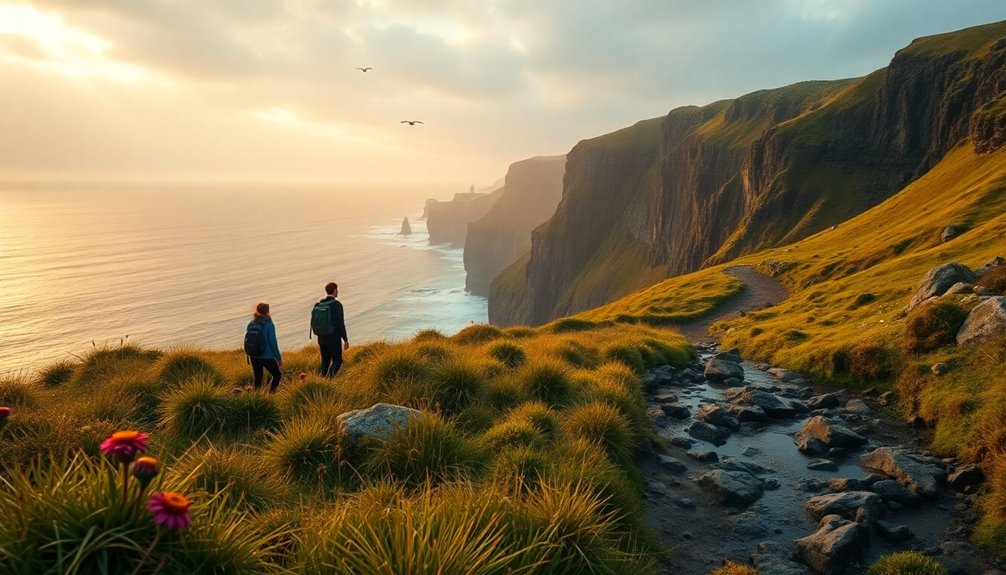
Even if the sun peeks through, Ireland’s coast can flip to wind and drizzle in minutes, so pack layers you can shed or pile on without fuss. You’ll want layering clothes that trap warmth yet breathe: a light merino base, a fleece mid-layer, and a packable down or synthetic jacket. Choose quick-dry trousers and moisture-wicking socks to prevent chill from damp fabric. Stash compact rain gear — a waterproof shell with taped seams and a hood — and a small umbrella for calmer promenades. Footwear should be sturdy, grippy, and water-resistant; add gaiters if you’ll tackle boggy paths. Keep a headlamp, spare gloves, and a buff in an exterior pocket for sudden temperature drops. Balance weight and readiness: you’re aiming for safety and mobility, not bulk. Before you set out, check the forecast, tell someone your route, and keep essentials accessible so you can respond calmly to changing coastal weather.
When you’re watching your wallet on a coastal trip, Ireland’s mix of local buses, rail links, and shared options keeps travel both cheap and scenic—hop on a regional bus for cliffside routes, catch a train between coastal towns for comfort and views, or split taxi fares and rideshares when schedules don’t match yours. You’ll want to plan with safety in mind: check timetables, avoid isolated stops after dark, and keep emergency numbers handy. Local bus services often connect small villages to larger hubs, so learn the routes and bring exact change or a Leap Card where accepted. For flexibility and exercise, follow marked coastal cycling routes—rent a bike in town, wear hi-vis gear, and secure it when you pause for photos. When trains run, reserve spaces for bikes or use luggage racks. Combine options: bus to the trailhead, cycle a loop, then catch a train back. That mix keeps costs low and your journey stress-free.
If you’re on a tight budget but craving salt air and rugged views, Ireland’s coastline delivers handfuls of memorable, low‑cost activities that won’t break the bank: hike dramatic cliff walks at sunrise, picnic on pebble beaches with locally bought treats, explore free coastal heritage sites and lighthouses, or join a student‑friendly group for a guided birdwatching or geology walk. Walks along marked trails give you panoramic views and time to spot coastal wildlife—bring binoculars, a waterproof layer, and stay behind safety fences. Pack a thermos and map for beach picnics; avoid secluded spots after dark and follow local rules if you light small, permitted beach bonfires, leaving no trace. Join university clubs or community volunteer cleanups to meet people and learn local conservation tips. Photography, sketching rock formations, and identifying seabirds cost nothing and deepen your appreciation while keeping you safe and respectful of fragile shore habitats.
Because tides, currents, and weather change fast along Ireland’s shores, you’ll want to treat every swim or surf session with respect and preparation: check local tide tables and weather forecasts, pick lifeguarded beaches when you can, never swim alone, and tell someone your plans and expected return time. Carry a whistle or waterproof phone case, wear a wetsuit for cold-water protection, and learn to spot rip currents—look for channels of churning water, darker patches, or lines of foam heading seaward. If you get caught, don’t fight it; float or swim parallel to shore until you’re out of the pull. For surfing, follow basic surfing etiquette: wait your turn, don’t drop in on someone, and signal your intentions clearly. Respect local signs and ask lifeguards about hazards like rocks or sudden sandbanks. Keep your gear secure, warm up before entering the water, and trust conservative judgment—turn back when conditions feel unsafe. Prioritise swimming safety and courteous surf behaviour to protect yourself and others.
Five quick tweaks will up your coastal shots for socials: scout for golden-hour light or dramatic cloud cover, keep horizons level and off-center using the rule of thirds, and use foreground elements like rocks, seaweed, or a lone walker to add depth. When you frame scenes, think photo composition first—place points of interest along thirds, lead the eye with lines in the sand, and leave breathing space toward open water. Use simple lighting techniques: backlight for silhouettes, sidelight to reveal texture in cliffs, and soft diffused light when clouds roll in. Keep gear minimal and secure—strap your phone or camera, avoid slippery edges, and watch tides while composing. Experiment with low angles and wide lenses for drama, then crop carefully for feeds. Edit lightly: boost contrast, correct horizon tilt, and preserve natural tones. Aim for images that feel safe, authentic, and shareable so your coastal memories look great without risking you or your kit.
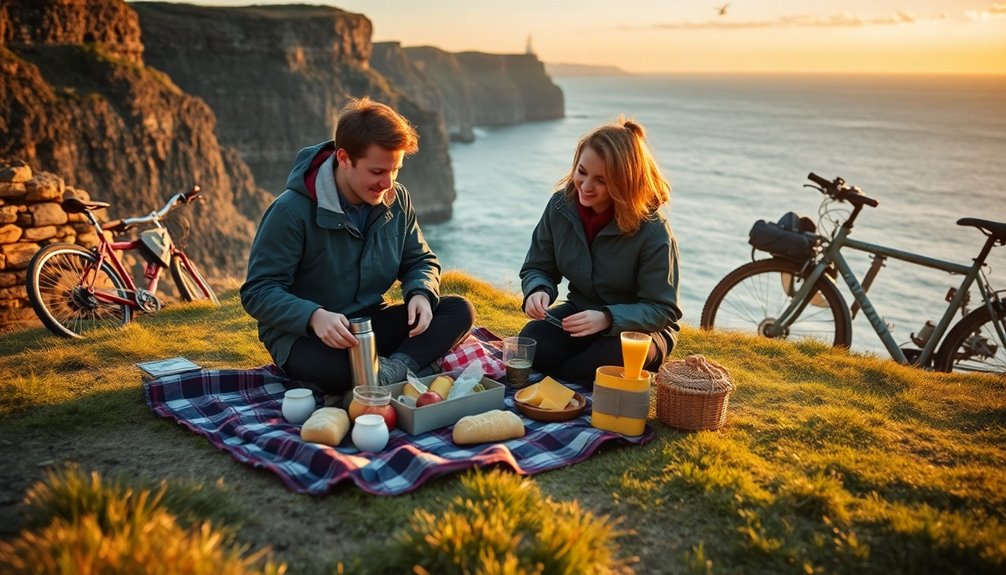
Looking for budget-friendly bites with a sea view? You’ll find that beachside markets are your best friend: grab fresh local seafood at stalls, compare prices, and ask vendors about preparation to avoid surprises. Pack a lightweight blanket, a small cooler, and cutlery so you can eat comfortably and hygienically on dunes or promenade benches. Choose sand-free spots near sheltered coves or designated picnic areas to reduce wind and spray — and stay visible to others for safety.
Plan simple menus: smoked mackerel on soda bread, oysters from a reputable seller, or chilled prawns with lemon. Bring hand sanitizer, napkins, and a reusable bag for rubbish. If you cook on portable stoves, follow local rules and keep a small extinguisher. Finish with local pastries or fruit from the market. Eating by the sea should be relaxed, delicious, and safe — and with a little planning, it’ll be both affordable and memorable.
After you’ve mastered picnic hacks and cheap eats by the water, it’s worth knowing how to stretch your student budget even further with local discounts. You’ll find that discount cards—both national student IDs and city-specific passes—unlock cheaper transport, museum entry, and guided coastal walks. Keep your digital ID and a physical card handy; staff are more comfortable when you present clear, valid proof. Look for local partnerships between universities, hostels, and tour operators: these often mean pop-up deals at visitor centres or reduced kayak hire. Ask politely at ticket offices about student rates and the documents they accept. When booking online, check promo fields for codes tied to student offers or partnership pages on college websites. Save confirmations and screenshots in a folder so you can show them quickly if asked. Stick to well-reviewed providers and official partnerships to stay safe, avoid scams, and enjoy the shorelines without overspending.
Because coastal ecosystems are fragile, you’ll want to plan your visit with care: choose marked paths to protect dunes and nesting birds, bring reusable water bottles and waste bags, and pack only what you need to avoid leaving micro-trash behind. Walk quietly and stay back from roosting areas; your calm presence helps wildlife conservation efforts and reduces stress on seals, terns, and other shore species. Check local guidelines for permitted areas and seasonal restrictions so you don’t disturb breeding sites. Use reef-safe sunscreen and avoid feeding wild animals — human food can harm them and change natural behavior. When choosing transport, favor public transit, cycling, or shared rides to support sustainable tourism and cut emissions. If you join a guided walk, pick operators who practice leave-no-trace and support community conservation projects. Finally, report any hazards or injured wildlife to local authorities and leave the coast in a condition that’s safer and cleaner than when you arrived.
When you’ve only a day to spare, planning routes that cut travel time and highlight a few standout coastal sites will let you see more without feeling rushed; start by picking a geographic base — like Galway, Kinsale, or Dingle — then map a clockwise or counterclockwise loop to minimize backtracking. Choose one or two must-sees and weave in short stops: a clifftop viewpoint, a sheltered cove for a safe shoreline walk, and a café for a warm break. Prioritize time efficient travel by checking ferry timetables, seasonal roadworks, and parking options before you leave. For scenic coastal drives, pick quieter roads at off-peak hours to avoid stress and allow photo pulls safely. Pack a small first-aid kit, charged phone, and weatherproof layers. Keep realistic distances—you’ll enjoy places more if you spend time there rather than rush. Finish with a simple contingency plan so you can adjust the loop if weather or closures force a change.
Check local town centers, train stations, and ferry terminals for cheap luggage storage options near coastal trailheads—you’ll often find lockers, staffed left-luggage desks, or private companies offering secure drop-offs. Look for trailhead amenities like toilets, maps, and sheltered parking when choosing a spot. Pack a small lock, get receipts, note opening hours, and choose options with CCTV or attendants so you’ll feel safe while hiking the coast.
About 68% of students say ocean views boost focus, so yes — you can find quiet study spots with water vistas. You’ll discover study cafes perched on promenades and tucked lanes, offering reliable Wi‑Fi, sockets, and calm hours; and scenic parks with sheltered benches, picnic tables, and coastal windbreaks where you can spread notes. Bring a light waterproof layer, choose daylight hours, and keep valuables close for a safe, productive session.
You’ll find several hostels near surf towns that offer surfboard rentals and secure surfboard or wetsuit storage—places like surf hostels in Bundoran, Lahinch, and Strandhill. They’ll usually provide wetsuit cleaning, drying racks, locked storage and basic repairs, plus safety guidance about tides and transport. Ask ahead about space, lock availability and any extra fee, so your gear stays dry, clean and ready for safe sessions onshore.
Like a tide pulling you into purpose, yes — you can volunteer on coastal conservation projects during breaks. You’ll find volunteering opportunities through local conservation organizations, offering beach cleans, habitat restoration, and species monitoring. You’ll get practical training, safety briefings, and gear so you’re protected. Sign up early, check insurance and age requirements, and ask about accommodation and transport. It’s hands-on, meaningful work that’s organized and safety-conscious.
Yes — you can often get student-friendly ferry passes for cliffside islands. Check ferry schedules early, book passes with student discounts and carry your ID. Opt for morning crossings to avoid rougher seas, pack layers and a lifejacket or approved flotation aid if offered, and note return times. These passes usually limit numbers, so reserve ahead, read safety briefs, and stay within marked paths on landing to keep visits secure and enjoyable.
You’ll pack layers, haggle student fares, and chase cliffs and coves with a cheap camera, but don’t let the checklist flatten the wonder: the oft-mocked theory that “the coast always calms you” isn’t universally true — it’s conditional. The sea soothes when you slow down, learn tides, and respect wildlife; otherwise it can unsettle. So travel prepared, stay curious, and let the coast teach you patience, humility, and unexpected joy on your student adventures.