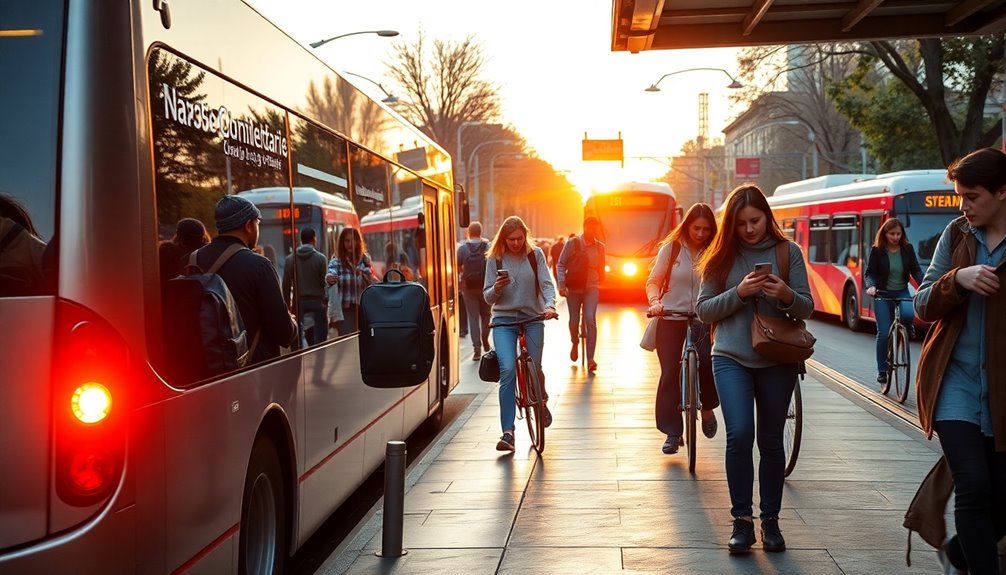
Student Transit Tips: Save More Stress Less
Study English In Ireland
February 25, 2026

You can cut travel costs and stress fast by getting a Student Leap or similar discount card, travelling off‑peak, and using monthly or semester passes when they pay off. Mix walking or cycling for short hops with buses or trains for longer trips, scout simple routes with few transfers, and book intercity fares early. Use transit apps for live times and alerts, keep documents handy, and tweak schedules for savings — keep going to find more practical tricks.
If you’re trying to cut travel costs while studying in Ireland, focus on a few high-impact moves: get a student Leap Card for lower fares, plan journeys off-peak, use monthly or semester passes when they save more than pay-as-you-go, and try cycling or walking for short trips. Embrace freedom by choosing flexible, low-cost options: map reachable neighborhoods so you’re not chained to long commutes, stash a folding bike for spontaneous rides, and pick routes that let you explore. Combine modes—short bus hops plus walking—to keep costs down. Check campus boards and local community apps for carpool options and ride sharing platforms to split fuel and tolls. Stay curious, experiment, and stick with what makes your life lighter.
You’ll want to check eligibility and complete registration early so you don’t miss out on Student Leap and other discount cards. Once you’ve got a card, use it for regular routes, peak-time alternatives, and any partner discounts to get the best value. Keep your details up to date and note renewal dates to avoid gaps in savings.
When you’re getting set up for student transit discounts, the key step is confirming which cards you qualify for and what proof is required. You’ll check eligibility criteria (age, enrollment status, photo ID) and follow the registration process online or at a service desk. Bring concise documents so you don’t waste time and maintain flexibility in your schedule.
| Card Type | Typical Proof |
|---|---|
| Student Leap | Student ID, enrollment letter |
| University Pass | Photo ID, tuition receipt |
| Regional Discount | Age proof, local student card |
After registering, keep digital copies and note renewal dates. That way you stay mobile and free without surprises, ready to show valid credentials when you board.
Although maneuvering different student transit cards can feel confusing at first, a few smart habits will make the Student Leap and other discounts work harder for you. Keep your cards active and loaded, check expiration dates, and link any digital passes to your phone so you’re ready to go. Compare monthly caps and transfer rules to pick the plan that frees you most — sometimes a higher upfront cost saves time and limits hassling. Combine discounted transit with carpooling options or ride sharing platforms when schedules don’t align, and share passes with roommates if allowed. Track your trips for refunds or reimbursements, and subscribe to alerts for fare changes. Stay flexible, choose what gives you mobility, and travel on your terms.
If you plan trips around off-peak hours and smart routes, you can cut transit costs without sacrificing convenience. You’ll want to focus on route optimization and travel timing: pick services with fewer transfers, shorter waits, and predictable schedules. Use apps or transit maps to compare options, then choose times when fares drop or passes stretch farther. Flexibility gives you freedom — shifting a class or study session by an hour can save money and reduce crowding. Buy day or weekly passes when multiple trips are likely, and watch for student discounts tied to specific time windows. Keep a simple plan: check schedules, pick the least complex route during off-peak, and enjoy lower costs and smoother rides.
Pairing walking and biking with public transit makes trips cheaper, faster, and more reliable than relying on buses or trains alone. You’ll gain freedom by choosing walking routes to reach stops, sidestepping crowded transfers and enjoying short detours. Plan a few safe, direct walking routes from campus or housing to transit hubs so you control timing and scenery.
Use biking tips like folding bikes, secure locks, and lightweight panniers to extend your range without fuss. Combine a quick ride to a major stop with a short walk at the other end to avoid transfers. Check transit bike policies and locker options ahead of time, and scout low-traffic streets for smoother rides. Mix modes deliberately so you’re free, punctual, and stress-free.

If you want to travel between cities on a student budget, booking early and being flexible with your dates can cut fares dramatically. Check for student discounts, rail cards, or bus passes that stack with advance fares to save even more. I’ll show how to find the best combos and timing so you don’t overpay.
When you know your travel dates ahead of time, booking buses or trains early will almost always get you the lowest fares — advance tickets are priced to fill seats, so snagging them sooner can cut costs by 30–70% compared with last-minute purchases. Plan a simple search routine: set fare alerts, check multiple carriers, and use aggregate sites for quick fare comparisons so you can jump when prices drop. Early bookings give you control — pick better departure times, seats, and layovers without breaking the bank. Don’t forget student discounts or railcards; stack savings when possible. If plans change, weigh ticket change fees versus the savings you locked in. Book early, stay flexible where it costs nothing, and enjoy more freedom on the road.
Because travel dates are flexible for many students, shifting your trip by a day or two can cut fares dramatically — midweek departures, early mornings, and late evenings often cost less than peak times. You’ll enjoy freedom and save when you embrace flexible itineraries and plan around cheaper windows. Think beyond rigid schedules: small swaps in departure day or time reveal advance fares and lower bus or train rates without sacrificing plans.
Saving a day or two on travel costs is great, but pairing timing tricks with student discounts and travel cards can shrink fares even more. You’ll want to carry proof of enrollment and check discount eligibility early—many buses and trains cap seat numbers for reduced fares. A student card benefits you beyond price: off-peak access, partner deals, and simpler refunds. Buy advance fares with your card, but stay flexible—some cheap tickets are nonrefundable. Look for regional cards that stack with national passes so you can roam freely without overspending.
| Card type | Typical saving | Best use |
|---|---|---|
| University ID | 10–30% | Local trains |
| National student pass | 20–50% | Intercity travel |
| Regional card | 15–40% | Short hops and buses |
If you want to cut transit costs without changing your schedule, start by using smart ticketing apps and digital tools that bundle fares, track discounts, and auto-apply the cheapest option for each trip. You’ll reclaim time and money while staying flexible. Pick apps that show real-time prices, compare routes, and store student passes. Link payment methods for one-tap purchases and enable alerts for promos. Use shared accounts or family plans when allowed to maximize savings.
These tools free you to move without worrying about extra costs.
When you know a few simple habits, transfers and connections become predictable instead of stressful. You’ll plan with transfer strategies that favor buffer time: pick routes with 5–10 minutes spare, scout alternate stops, and use apps to watch vehicle arrivals. Pack essentials where you can grab them quickly so a brief wait doesn’t derail you. Ride with flexible passes that let you hop a later service if you miss a connection. Learn platform layouts and peak patterns so you’re not guessing when a vehicle turns up. Communicate delays to friends or instructors if a tight connection fails. Practice these routines and you’ll move freely, trusting your connection timing and choices instead of scrambling every commute.
Yes — you can, but it depends on operator rules: check pet travel policies; small animals usually need pet carrier requirements met and kept off seats. You’ll want flexibility, freedom, and to confirm specifics before boarding.
Not usually — you won’t find widespread taxi discounts, but some companies and apps offer promo codes, student fares or ride hailing savings through partnerships, student cards, or campus deals, so check providers and local offers.
You file a claim with the operator following their refund process: keep tickets, note delay length, submit an online form or contact customer service, and follow up. For delayed journeys, stay persistent and choose refund or voucher options that suit your freedom.
Fair warning: you can’t usually transfer a student travel card. You’ll need to check card eligibility criteria first; if allowed, follow the transfer process steps from your issuer, keep documentation, and move carefully to protect your freedom.
Yes — you can often get discounted fares if you have a disability; you’ll qualify through student travel assistance programs and accessible transport options, so check eligibility, required documentation, and local transit policies to secure reduced rates.
You can save money and stress by mixing smart choices—student Leap cards, off-peak tickets, walking or cycling for short hops, and booking intercity fares early. If a theory says “cheapest equals most stressful,” try it: many students find planning and tech actually reduce hassle, not add it. With a little prep and the right apps you’ll spend less and breathe easier, proving that affordable travel doesn’t have to mean sacrificing convenience or peace of mind.