
Study English in Ireland With Accommodation Guide
Study English In Ireland
February 23, 2026

You’ll find the right Irish city by balancing language practice, lifestyle, and budget — Dublin’s lively exchanges, Galway’s artsy coast, Cork’s relaxed community or Limerick’s college buzz. Pick neighborhoods that match your study rhythm: busy cultural hubs for social practice or quieter suburbs for focused work. Budget for rent, utilities, transport and a buffer, check safety and amenities, view listings in person, and know your tenancy rights — keep going to get practical tips on each step.
Where will you get the best mix of language practice, culture, and convenience? You’ll weigh cities by vibe and access: lively Dublin for nonstop language exchange and nightlife, Galway for artsy freedom and coastal charm, Cork for a relaxed local pace and strong community ties. Pick a city where cultural immersion happens naturally — markets, pubs, volunteer spots — so you’re learning while living, not just studying. Consider transport, living costs, and school quality, but trust your instincts about which place lets you roam and grow. If you want independence, aim for a city with flexible housing options and easy weekend escapes. Choose the setting that fits your rhythm, then plunge into conversations and experiences that stretch you.
When you pick a neighborhood in Dublin, think about how you want to balance study time, social life, and budget—each area offers a different vibe and practical trade-offs. If you want to be in the heart of action, Temple Bar and Trinity area put you close to Dublin nightlife and cultural spots, but rent can be higher and noise might cut into late-night study. Rathmines and Ranelagh give a relaxed, bohemian feel with cafés good for focused work and regular student events nearby. If you prefer quieter, more affordable options, suburbs like Phibsborough or Drumcondra offer easy transit into the city and calmer evenings. Walk the streets, visit flats, and pick the spot that matches your pace and freedom.
If you’re looking to save on rent, students often find cheap suburbs around Cork like Bishopstown or Mahon that balance price and amenities. You’ll want to check how well each area links to college by bus or train so your commute stays short and affordable. Compare travel times and rent to pick the spot that fits your budget and schedule.
Although central Cork can be pricey, you can still find affordable suburbs within easy reach of campus that suit a student budget. You’ll want budget friendly options that don’t skimp on local amenities, so focus on areas where rents are lower yet cafés, shops and study spots are nearby. You’ll feel free to pick a place that matches your vibe — quiet for focused study or lively for social life. Check flatshares and small houses, and visit at different times to gauge noise and safety. Prioritize walkability and community feel so you’re not tied to schedules.
You’ve looked at budget suburbs near campus; now think about how transport links shape daily life and rent. When you choose transport-linked housing around Cork, you’re buying freedom — shorter commutes, flexible evenings, more weekends exploring. Check bus routes, train timetables and bike lanes so transport options match your schedule; frequent services let you opt for cheaper outskirts without feeling boxed in. Housing accessibility matters too: step-free entrances, nearby stops and safe walking paths cut time and stress. Prioritize spots where rental prices drop but connections stay strong, and you’ll balance savings with spontaneity. Scan maps, time a morning trip, and pick a place that keeps you mobile, independent and within budget.
When you step into Galway, the city’s compact layout and lively neighbourhoods make it easy to find a spot that fits your budget and vibe. You’ll love the freedom to roam between cafes, parks and the river; Galway nightlife and Galway festivals keep energy high without long commutes. Choose where you want to live based on mood: creativity, calm, or social buzz. Each district lets you shape daily life — study, meet friends, or catch music at a corner pub.
Pick a district, then make it yours.
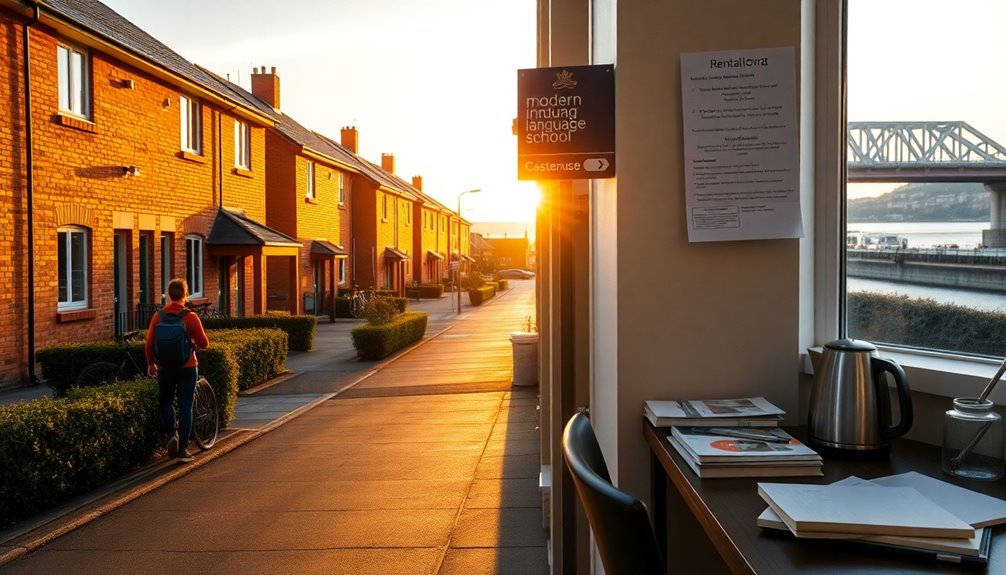
If you’re studying in Limerick, you’ll find neighbourhoods that make getting to colleges and language schools easy while still offering cafés, parks and affordable housing; the close-knit city layout means commutes are short and student life is lively. You’ll love areas like Thomondgate and the Georgian Quarter for their mix of student-friendly flats and social spots where Limerick culture feels alive. King’s Island gives you historic vibes and quiet streets for focused study, while suburbs like Castletroy balance green space with buzzing cafés. You’ll be close to casual weekend Limerick attractions — galleries, riverside walks and live music — so you can explore freely between classes. Pick a neighbourhood that matches your pace and sense of independence.
Because your daily routine will hinge on getting to class reliably, consider how transport links and campus proximity affect both your time and budget. You’ll want to balance independence with practicality: shorter commuting distance saves hours and frees you to explore, while good transport options expand where you can live without feeling tied down. Think about bus routes, cycling lanes, and train connections, and how often they run during evenings. Also factor in pass costs versus occasional rideshares.
Although you might be tempted to book the first place you see, take time to compare rooms, studios, and shared flats so you get the best mix of cost, privacy, and convenience. You’ll find furnished options common, short-term flexibility, and differing levels of social life. Check utilities, deposit terms, and whether bills are included. Read lease agreements carefully — they set notice periods and guest rules. Visit in person or request photos, and trust your instincts about safety and location. If you crave independence, studios give privacy; rooms are cheaper; shared flats offer community. Use local listings, student groups, and agents. Negotiate when possible, and keep communication clear to protect your freedom and budget.
| Option | Consideration |
|---|---|
| Room | Lowest cost |
| Studio | Privacy |
| Shared flat | Social |
| Lease agreements | Read closely |
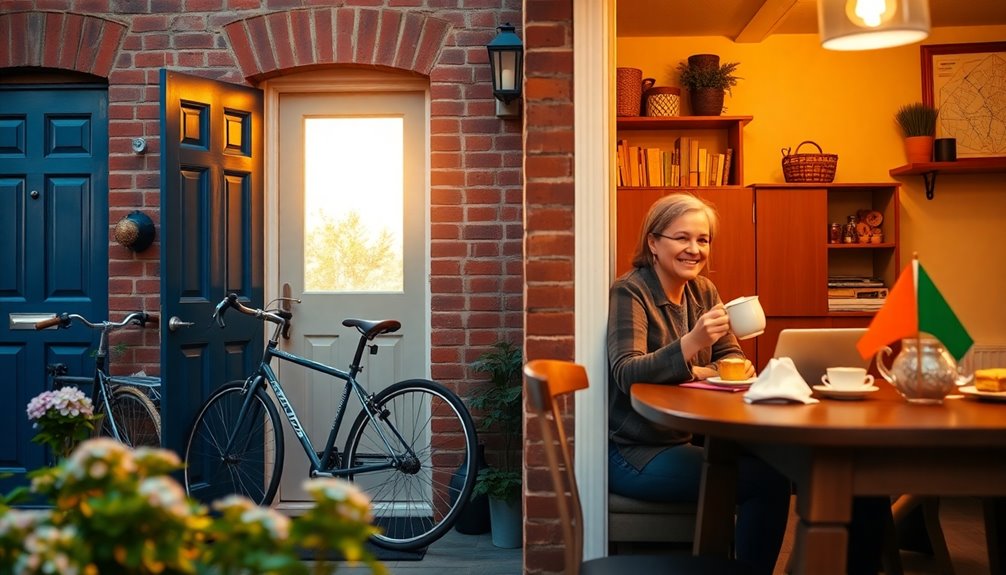
After checking rooms, studios, and shared flats, you might want to contemplate short-term homestays with host families for a different kind of experience. You’ll get direct cultural immersion, practice English at meals, and enjoy built-in family connections without long-term commitment. Homestays suit you if you want structure but still crave independence — you can set boundaries while joining family routines. Look for hosts who respect your schedule and social life, and ask about house rules, meals, and nearby transport. Short stays let you test neighbourhoods and make local friends before choosing longer housing.
Consider short-term homestays: cultural immersion, daily English practice, and family support without long-term commitment.
When planning your stay, set a realistic monthly budget that covers rent, utilities, groceries, transport, and a small emergency fund so you won’t be caught off guard by extra costs. You’ll want clear budgeting tips: list fixed versus variable costs, track spending with an app, and set weekly limits so you can enjoy local life without overspending. For rent, research neighborhood averages and prepare for rent negotiation by knowing comparable listings and offering a longer lease or timely payments. Utilities can fluctuate—ask about typical bills and whether heating or internet is included. Factor in occasional social outings and transport passes. Stick to your plan, but keep a flexible buffer so you can seize opportunities without financial stress.
If you’re choosing where to live while studying in Ireland, check the neighbourhood’s safety, nearby amenities, and access to community services before signing a lease. You’ll want a place where local safety feels real — good lighting, visible transport links, and friendly neighbours — so you can come and go without stress. Think about practical freedom: shops, laundrettes, gyms, parks, and quick bus or bike routes that keep your days flexible. Also scout local community services like student centres, health clinics, and public libraries that support daily life and social ties.
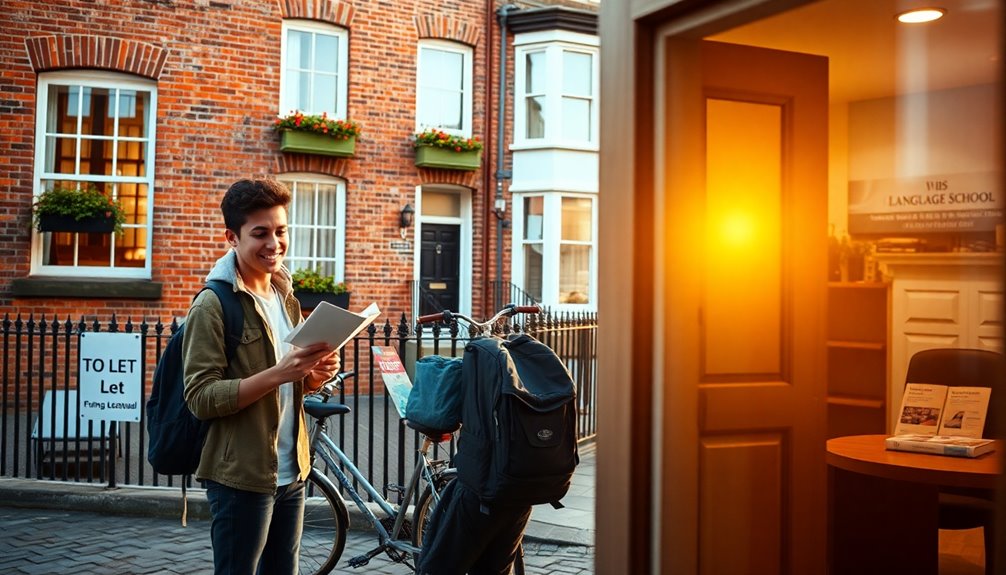
When you’re looking for student rentals, start with trusted listing sites, university noticeboards, and recommendations from fellow students to avoid scams. Always view properties in person or via live video, check the contract carefully, and confirm utilities and deposit terms. Once you’re satisfied, secure the rental with a signed agreement and a documented payment method.
Although searching for student housing can feel overwhelming, you can find trustworthy listings by knowing where to look, what to check, and how to protect yourself from scams. You’ll move faster and keep your independence if you use trusted platforms and connect with vetted local agencies. Start by filtering for verified listings, clear photos, and transparent terms. When you view places, ask specific questions about bills, commute, and house rules. Keep records of messages and receipts so you’re covered.
Now that you know where to find trustworthy listings and how to spot red flags, it’s time to actively search, view, and secure the right place. You’ll scan rental markets for timely listings, set alerts, and prioritize walkable areas that match your study and social life. When viewing, check storage, noise, transport links, and heating; take photos and ask about bills and internet. Be ready to move fast—bring ID, references, and a deposit. During lease negotiations, clarify contract length, notice periods, and responsibilities for repairs. Don’t sign until everything’s written. If something feels restrictive, keep looking; your accommodation should support the freedom you came to Ireland for, not limit it.

Curious about your rights as a tenant in Ireland? You’ll want to know tenant rights and rental regulations before you sign. Read the tenancy agreement carefully — it’s your roadmap to freedom and fair treatment. Know deposit limits, required receipts, inspection rules, and notice periods so you’re never caught off guard.
Curious about tenant rights in Ireland? Read your tenancy agreement, know deposit rules, inspections, and notice periods.
If something’s unclear, ask for clarification or seek local advice. You deserve clear terms and protection — stay assertive, keep documents, and don’t accept unfair clauses.
Yes — you can, but it’s regulated. You’ll need to arrange pet travel, quarantine or vaccinations, and suitable pet accommodation; check airline, Irish import rules and your landlord’s policy so you’re free to bring your companion.
Yes — you can find short term storage options for the summer break; you’ll grab flexible, month-to-month units or student-friendly lockers, letting you travel freely without hauling everything, often near campuses or city centers for convenience.
Generally no — you won’t find detergent or full kitchen supplies waiting like treasure. You’ll get laundry facilities and basic kitchen appliances, so you’ll need to bring or buy detergents and extra utensils to keep your freedom flowing.
Usually you won’t get a refund if you extend your visa, but check the visa extension process and refund policy details; you’ll want clarity on deadlines, documentation, and appeals so you can freely plan without unexpected costs.
Yes — you can access discounts: about 60% of students report savings from shared utility discounts and student internet plans. You’ll find utility discounts and cheaper internet plans if you bundle, share bills, or show your student ID.
Think of your Irish study stay as a ship setting sail: you pick the port (city), chart the safest course (budget, safety, legal rights), and load provisions (neighborhood checks, utilities, community services). You’ll drop anchor where the waters feel right — Dublin’s bustle, Cork’s affordability, Galway’s charm, or Limerick’s convenience. Trust your compass (research, viewings, contracts), and you’ll find a harbor that teaches you English and feels like home.