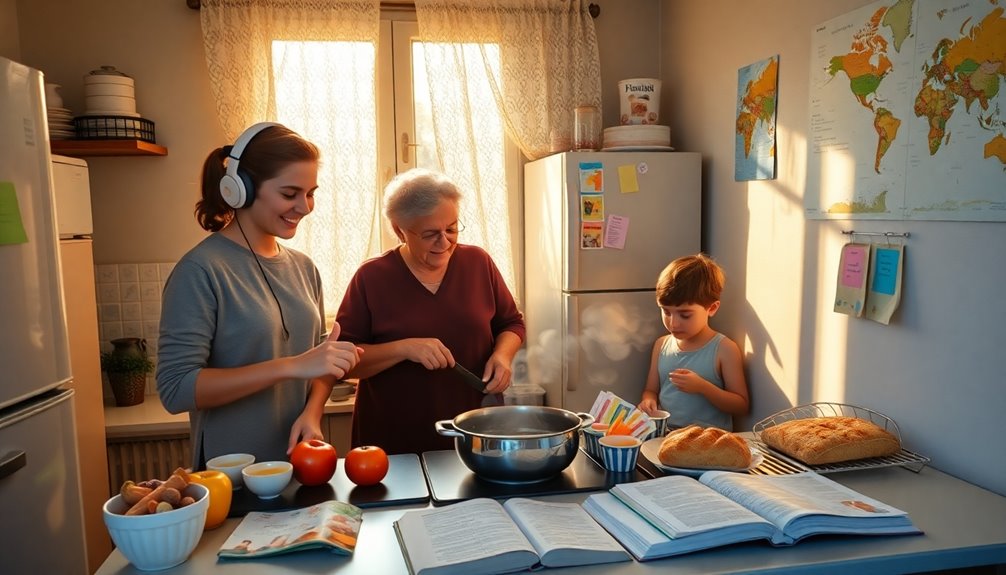
What Are Host Family Stays for Language Study?
Study English In Ireland
December 29, 2025

A host family stay for language study lets you live with a local household, sharing meals and daily life so you practice English naturally every day. You’ll have a private space but join conversations, routines, and local traditions that boost vocabulary and confidence. Families offer gentle corrections, cultural insight, and chances to try idioms in context. You should pick a family whose schedule, rules, and food suit you, and you’ll find practical tips and deeper guidance ahead.
When you stay with a host family in Ireland, you’ll live in a local home, share meals, and practice English naturally every day; it’s a chance to see how Irish families really live, not just the tourist highlights. You’ll step into everyday family dynamics—chit‑chat over breakfast, shared chores, and quiet evenings—so you can move freely within a household rhythm that respects your independence. Expect clear house rules, a private room or comfortable space, and flexible routines that let you explore on your own. Cultural immersion happens through routines: weekend outings, local food, and casual conversations that reveal values and humor. This setup gives you autonomy while keeping you connected to a supportive local network.
Living with an Irish family doesn’t just give you a roof and meals—it gives you constant, natural English practice that accelerates learning far more than classroom hours alone. You’ll be pushed to speak in real situations—chatting at breakfast, helping with errands, or sharing stories after work—so your confidence and fluency grow fast. Language immersion here feels freeing: you can try expressions, make mistakes, and recover without pressure. Cultural exchange enriches your vocabulary with local idioms, humor, and everyday rhythms, while you contribute your perspective. You’ll learn pronunciation, pacing, and conversational cues that textbooks miss, and gain friends who correct you gently. This practical, social learning makes English part of your daily life, not just a subject you study.
Because the right host family can make or break your progress, think carefully about how their routines, communication style, and expectations match your learning goals. You want flexibility to explore, practice, and recharge, so prioritize hosts who support independent study and social outings. Ask about language use at home, opportunities for conversation, and rules around visitors or quiet hours. Assess family compatibility by considering personalities, schedules, and dietary needs; honesty upfront prevents friction later. Request references or trial nights if possible, and clarify chores, internet access, and transport links so you can balance classes with free time. Choose a household that encourages your goals without confining you — freedom to learn matters as much as immersion.

When you stay with an Irish host family, you’ll notice set mealtimes and small traditions like tea rounds or Sunday dinners that shape daily life. You should follow basic household manners—knocking before entering rooms, asking about shoes in the hallway, and helping clear up after meals. Pay attention to the home’s usual rhythms so you can fit in and practice the language naturally.
Although meal times can vary from house to house, you’ll find that Irish families usually treat them as a chance to slow down, share stories, and connect — breakfast and workday lunches tend to be quick, while dinner is often the main family meal where traditions and conversation come together. You’ll be invited to try meal traditions that blend simplicity with comfort: stews, soda bread, and seasonal produce. Hosts often welcome you to learn family recipes handed down through generations, and they’ll appreciate your curiosity. Meals are relaxed, unpressured opportunities to ask about local life and practice language naturally. If you value freedom, you’ll like that participation is voluntary — join in, taste, and take what feels right for you.
If you’re staying with an Irish host family, you’ll notice a relaxed but respectful rhythm to daily life: people tend to keep common areas tidy, remove shoes or ask first about coats in smaller homes, and knock before entering bedrooms or bathrooms. You’ll be free to come and go, but it helps to follow basic household etiquette: tidy up after yourself, ask about meal times, and offer to help with dishes. Daily schedules can be flexible, yet families often appreciate a heads-up if you’ll be late or out overnight. Respecting quiet times in the morning and late evening shows consideration without sacrificing independence. Clear, polite communication keeps boundaries smooth and lets you enjoy authentic home life.

Set clear expectations with your host family from the start—agree on things like mealtimes, guest rules, and how you’ll practice the language together. If a misunderstanding happens, stay calm, ask clarifying questions, and repeat what you think was said to confirm. Use polite language and a bit of humor to keep conversations friendly while you work things out.
When you arrive, have a short, direct conversation with your host about daily routines, meal times, house rules, communication preferences, and any financial or guest-related expectations so misunderstandings don’t snowball into bigger problems. You want clear communication and setting boundaries without sounding rigid — say what you need, ask what they expect, and aim for mutual freedom.
Keep it practical: use simple phrases, confirm understanding, and write down key points. That way you preserve independence and respect the household.
Although misunderstandings are normal in a shared home, how you respond can keep small issues from becoming big ones: stay calm, listen first, and ask clarifying questions before defending yourself. You’ll want practical miscommunication strategies that protect your independence while keeping bonds strong. Use respectful dialogue: describe what you noticed, say how it affected you, and invite the other person’s view. Take breaks when emotions rise, and agree on a time to revisit the topic. Keep solutions simple and flexible so you both retain freedom.
| Step | Action | Goal |
|---|---|---|
| 1 | Pause & breathe | De-escalate |
| 2 | Ask open questions | Clarify intent |
| 3 | Use “I” statements | Avoid blame |
| 4 | Offer options | Preserve autonomy |

Before you commit, understand the main costs, how bookings work, and the safety checks hosts and agencies should provide so you know what you’re paying for and how to protect yourself. You’ll want a clear cost breakdown and documented safety measures before you go. Check cancellation, board options, and extra fees. Know whether agency fees include vetting, emergency support, and insurance.
Trust transparent providers so you stay independent, mobile, and safe while enjoying immersive language practice.
Yes — you can request meal preferences and dietary accommodations; hosts usually accommodate allergies, vegetarian, vegan, or cultural needs. You’ll get flexible options, but be ready to discuss specifics and compromise for household routines.
Yes — you can request pet-free placements, and we’ll prioritize pet allergies and pet preferences; don’t worry about being stuck with animals, we’ll match you to a family that respects your freedom and comfort.
Yes — you’ll usually get basic toiletry supplies and clean bedding; bedding quality varies by family. You’ll also often have access to laundry facilities, letting you stay independent, flexible, and in control of your routine.
Shoot first, ask questions later: you’ll need to check host family policies, since overnight guests are often restricted; you’re free-minded, but you’ll want to get explicit permission to avoid awkward surprises or strained household boundaries.
Yes — you’ll usually have internet reliability adequate for online learning and remote work, though speeds vary by host. You can stream classes, join meetings, and stay flexible; just confirm bandwidth needs with your host beforehand.